
Game For Peace and PUBG Mobile unite cultures as an American player bridges language gaps with Mandarin, forging real connections in 2026.
It's 2026, and the digital borders in gaming are still as real as ever. As an American gamer, I've always heard stories from my Chinese friends about the struggles of playing on high-ping, English-dominated servers. The lag was one thing, but the occasional toxicity born from language barriers was another. I often wondered: what would it be like to experience that in reverse? To be the outsider, the one who doesn't speak the local language, dropped into a server where everyone else shares a common tongue? My curiosity led me on an adventure I'll never forget, inspired by a YouTuber from years past named Xiomanyc. Armed with my hard-earned Mandarin skills, I decided to log into the Chinese version of PUBG Mobile, now known as Game For Peace, to see if I could replicate those heartwarming connections.
My heart was pounding as I queued for my first squad match. The familiar lobby music played, but the voices chattering in my headset were entirely in Mandarin. I stayed silent at first, listening. My random teammates were discussing their drop strategy for the Military Base. One of them, with a youthful voice, suddenly addressed me directly. "Hey, American friend, you have a mic? Can you understand?" he asked in slightly hesitant English. I took a deep breath and switched to Mandarin. "I can understand. Let's go to the Military Base, I'll follow you." The silence that followed was palpable, then erupted into a chorus of surprised laughter and exclamations. "Woah! Your Chinese is so good!" "Where did you learn?" The ice was broken instantly. That initial moment of surprise, that shared laugh at the unexpected, became the perfect social lubricant Xiomanyc described years ago.
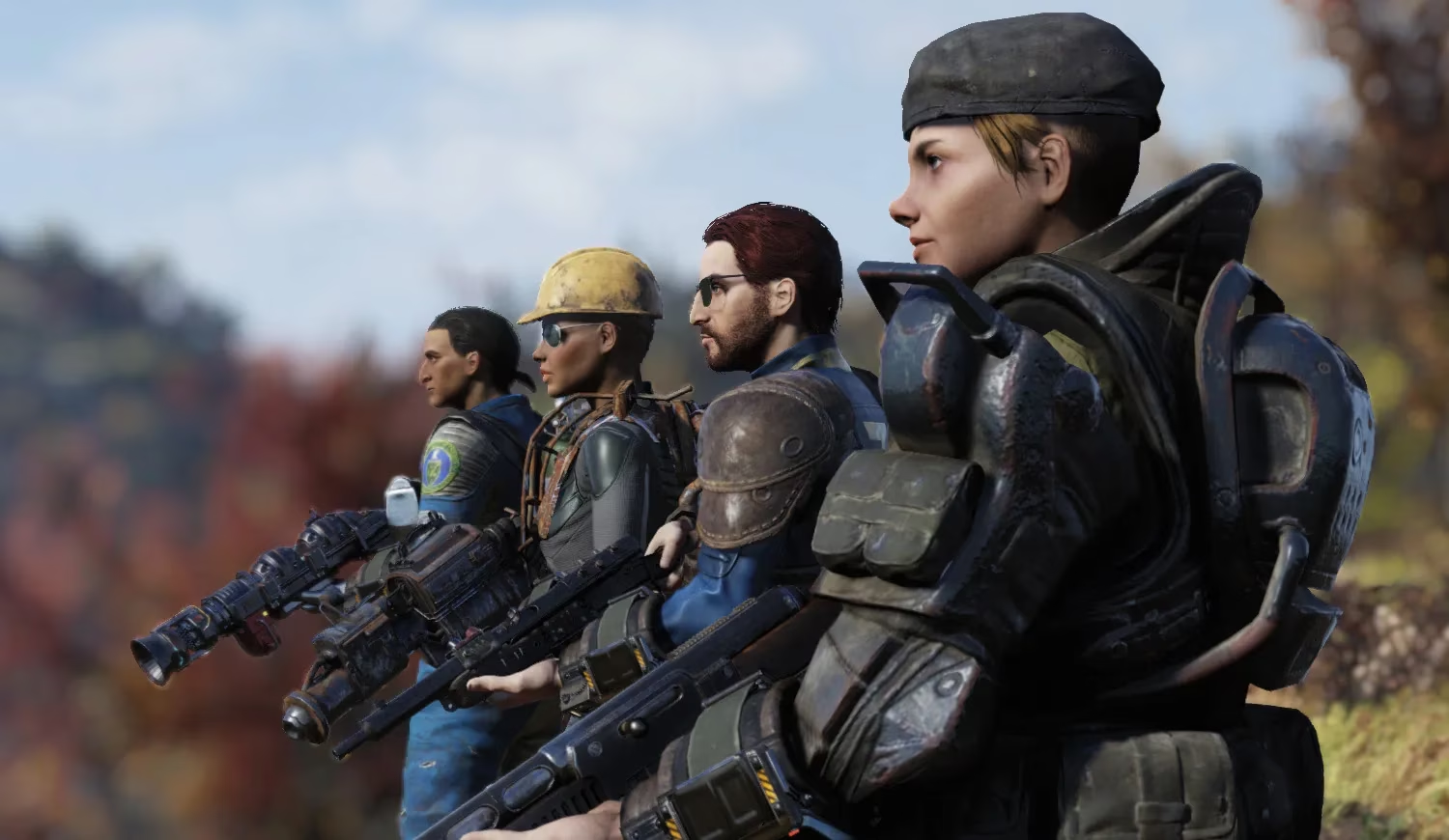
Our match became less about the chicken dinner and more about a cultural exchange. We looted buildings in Pochinki while discussing everything from our favorite foods to the latest tech trends. One teammate, a university student from Shanghai, talked about how much he loved visiting virtual American landmarks in other games. Another asked about life in New York. We shared laughs over the in-game cosmetics, with them teaching me the slang terms for various outfits. At one point, we got ambushed. In the heat of the firefight, our communication was a frantic mix of callouts and encouragement. When we finally emerged victorious from that skirmish, the camaraderie felt genuine. "We protect our international brother!" one of them shouted, and I felt a surge of gratitude. This was the polar opposite of the stereotypical, tense encounters between English and Chinese speakers online that you sometimes hear about.
The conversation inevitably turned to gaming itself. They explained the nuances of playing on Game For Peace—the version approved for China. They mentioned the adjustments, like the lack of blood and the different death animations, a reality of navigating the country's strict regulations. "It's the same game at its heart," one said, "just a different skin." They spoke wistfully about games on global platforms like Steam that are harder to access reliably. It was a poignant reminder of the asymmetry in our gaming experiences. For me, jumping onto a Chinese server was a novel experiment. For many of them, venturing onto English-language servers was often a necessity, fraught with potential for misunderstanding.
Here are a few of the most memorable moments from my sessions:
-
The Language Swap: The classic move. I'd let them assume I didn't understand, listening to their unfiltered strategy talks about "carrying the foreigner," before chiming in with perfect Mandarin. The reactions never got old.
-
Virtual Tourism: We'd often land in remote areas just to explore. They'd point out landmarks on the Erangel map, jokingly giving me a "tour" of their favorite digital spots.
-
Post-Match Connections: Just like in Xiomanyc's old video, several players asked to connect on WeChat. One even sent me a playlist of Chinese music he thought I'd like.
| Emotion Experienced | Cause | Outcome |
|---|---|---|
| Surprise & Joy | Breaking the language barrier unexpectedly. | Instant bonding and laughter. |
| Camaraderie | Surviving a tough fight through coordinated callouts. | A shared sense of achievement and team spirit. |
| Cultural Curiosity | Exchanging questions about daily life and hobbies. | Deeper conversations that extended beyond the game. |
This experience was a powerful testament to the core truth of multiplayer gaming: it's a shared space. In a world where headlines can often emphasize division, sitting in a virtual car with three people from across the Pacific, driving across Erangel while discussing our hopes for the new Crimson Desert expansion, was incredibly normalizing. It stripped away abstractions and politics and left just people cooperating towards a common, silly goal—getting a chicken dinner. Of course, my experience was uniquely enabled by speaking Mandarin. Without that key, the door to these interactions would have remained firmly shut, highlighting the inherent challenge for so many. My adventure was a choice. For countless gamers without region-specific servers, that challenge is a daily reality. But for a few wonderful hours, we weren't American or Chinese gamers. We were just a squad, laughing, looting, and proving that the right attitude—and a shared language—can turn a game server into a bridge, not a barrier. The community made the experience, and that's a lesson that holds true now in 2026 more than ever.