
PUBG Mobile four-finger claw layout boosts gameplay precision and control, outperforming the default two-thumb setup for elite players.
The first time I saw a squadmate’s hands glide across his phone screen like a concert pianist’s fingers over ivory keys, I realized I had been playing PUBG Mobile all wrong. My thumbs, chained to their default duties, were a pair of clumsy dancers tripping over each other in a frantic waltz. The four-finger claw layout isn’t just a control scheme—it is the surgical tool that turns raw reaction into orchestrated chaos. Even in 2026, with every gyroscope tweak and haptic trigger at our disposal, the claw method remains the bedrock of high-tier gameplay. If you have ever wondered why some players seem to move, aim, fire, and scope all at once while you struggle to peek a corner, the answer lies in how you assign your digits.
The default two-thumb layout is like trying to paint a detailed mural with a single broad brush. You can lay down broad strokes—running, looting, and spraying at static targets—but the moment a firefight demands split-second coordination, the masterpiece turns to mud. When a new player spawns into Erangel with those oversized, brightly colored icons, they resemble warning signs more than tools. Every button competes for attention, blocking vision and slowing reaction time. I spent my first weeks convinced that my opponents simply had better devices or faster pings. The truth was simpler: they had unleashed the full potential of their hands.
Think of your fingers as a quartet of musicians. The left thumb is the steady bassist, handling movement and keeping rhythm. The right thumb becomes the agile lead guitarist, strumming direction changes, crouching, and jumping. The left index finger is the percussionist, pounding the fire button in staccato bursts, while the right index finger is the woodwind section, gently blowing open the scope and holding breath for the perfect shot. When all four play in harmony, you create a symphony of destruction.
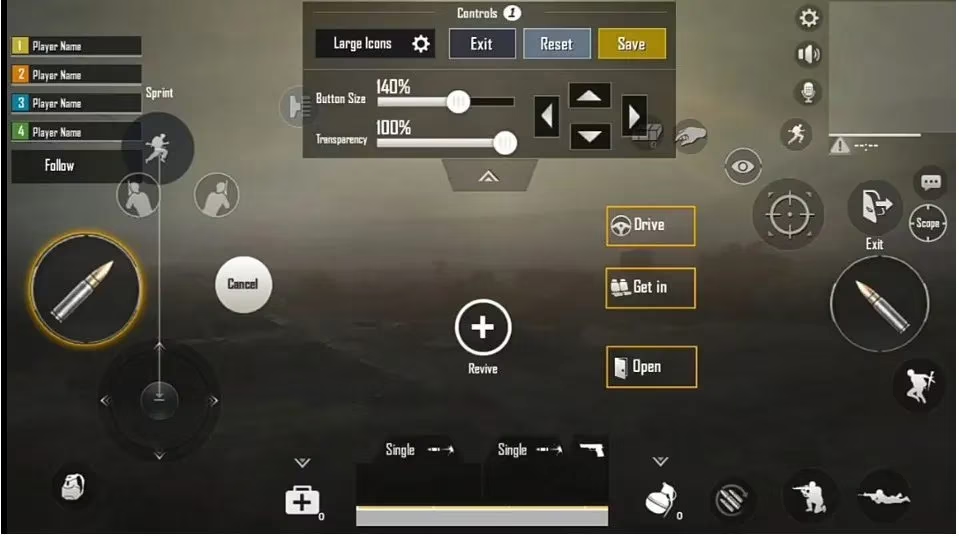
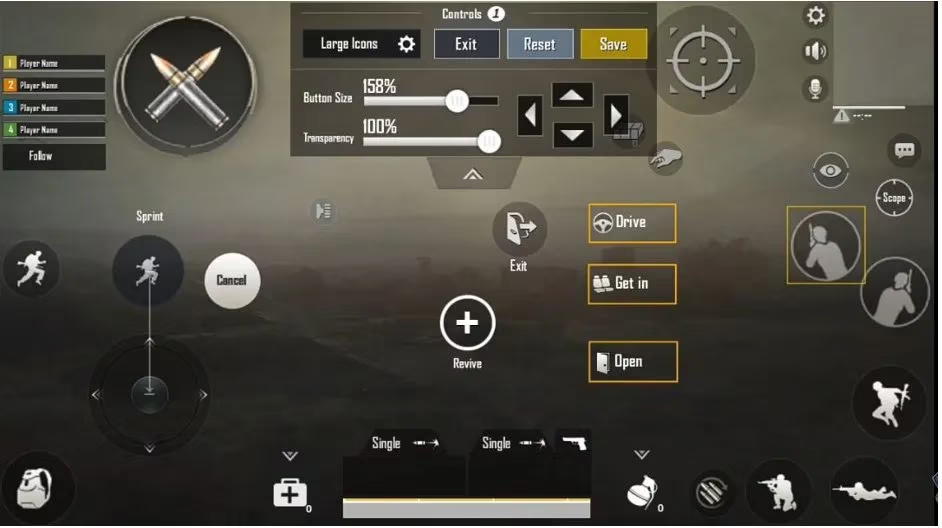
To set up this orchestra, you need to rebuild the interface from scratch. The default layout from Krafton feels like a cargo truck—powerful but unwieldy. First, shrink every icon and dial the transparency down to around 60-70%. Icons should whisper their presence, not shout. If a button must remain large—like the fire or scope controls—keep it ghostly so your view of the battlefield is never compromised. The joystick can be minimized as well, but the fire and scope keys need enough surface area so your index fingers never miss a beat.
Allocation is everything. I map the left thumb solely to character movement. The right thumb swivels the camera, toggles the peek buttons (resized slightly larger and nestled near the thumb’s natural arc), and taps the jump, crouch, and prone keys. My left index finger rests on the fire button, positioned top-left, while my right index finger controls the scope toggle on the top-right. Some players swap these, letting the right index fire and the left index scope—it is entirely a matter of personal comfort, like choosing whether to cross your arms left-over-right or right-over-left.
Once the primary quartet is assigned, prune the rest of the forest. The name palette and mini-map should be exiled to the extreme upper and lower corners, reduced to tiny, low-opacity thumbnails. They matter for macro awareness but are parasites on your screen real estate during a gunfight. The reload button, often underestimated, deserves a modest size increase—I set mine to about 120% of default and place it within a short swipe of the right thumb, because a dry magazine in close quarters is a death sentence.
The first hours with this layout will feel like learning to write with your non-dominant hand. Muscle memory screams in protest. My kill/death ratio plummeted for two days straight. I punched walls I didn’t mean to punch; I opened the scope while sprinting and fired at clouds. But the process is akin to breaking in a stiff pair of leather boots—once your nerves stretch and mold to the new patterns, you stride effortlessly. I advise spending at least two to three hours in the training ground, drilling the sequence: scope-in with right index, fire with left index, strafe with left thumb, and aim-track with right thumb. Repeat until the motion feels as autonomous as breathing.
A common mistake newcomers make is panicking and reverting to thumbs the moment they get steamrolled. Resist that urge. The four-finger claw is a delayed-investment skill; the dividends pay out in faster peeking, simultaneous recoil control, and the ability to jump-shoot without sacrificing movement. By the end of the first week, I noticed my CQB (close-quarter battle) win rate had soared because I could now jiggle-peek, fire, and crouch-spam in one fluid cadence.
Even in 2026, with all the sensor-enhanced attachments and AI-assisted recoil smoothing that have crept into the game, the four-finger claw layout stands as the skeleton beneath the skin. Software can dampen muzzle lift, but it cannot press four buttons at once. I have tested gyro-only setups, trigger accessories, and even six-finger monstrosities on tablets, yet nothing rivals the stability and ubiquity of four digits dancing on glass. The technique is like a well-seasoned cast-iron skillet: old, unglamorous, yet irreplaceable when the heat is on.
Customize the remaining keys—med kits, grenades, vehicle exits—according to your playstyle, but keep them small and out of the way. The goal is visual minimalism and mechanical maximalism. Your screen should be a canvas of serene emptiness until the moment your hands erupt in a flurry of controlled taps. If you are still clinging to the two-thumb life, do yourself a favor. Sit down for an evening, build your claw layout, and accept a few days of awkwardness. The phoenix must burn before it rises, and your future squadmates will thank you—probably by admiring your clutch plays in the kill feed.