
The PUBG Esports PCS4 Americas Grand Finals introduced the 'Most Chickens' Winner Winner Chicken Dinner format, prioritizing match wins over kills.
The year was 2021, but even in 2026 the echoes of that June still rumble through the battlegrounds. A new generation of fans might not remember the exact moment PUBG Esports threw a curveball that left everyone talking, but old timers do. The PCS4 Americas Grand Finals were about to kick off on June 10, and nobody – not the players, not the casters, not the fans – knew what was coming. The lobby filled with sixteen of North and South America’s finest, all aiming for a share of a $250,000 USD prize pool and, far more importantly, those precious PGC Points that counted toward the 2021 PUBG Global Championship. It was a crossroads, and the battlegrounds felt it.
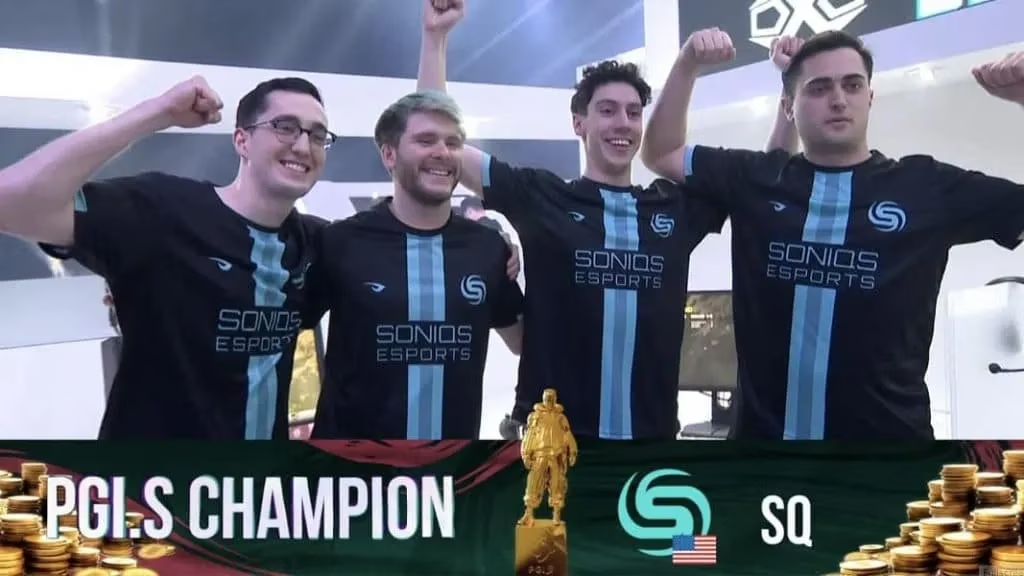
The road to that Grand Finals lobby had been anything but smooth. Earlier that season, thirty-two squads had clashed at the PUBG Global Invitational.S in Korea – a marathon of a LAN that dished out over $7 million and shoved North America’s talent into the spotlight. For years, NA teams had been laughed off the international stage … but not anymore. The Soniqs carved their name into history by winning PGI.S, snatching the region’s first major LAN title and a mind-melting $1.3 million payout. It was the kind of result that forced everyone to sit up and pay attention.
After that high, the Americas returned home and got down to business. The ESL PUBG Masters became the season’s first official PGC Points buffet. Group stages in NA and LATAM eventually merged into a sixteen-team Grand Final where TSM – then competing as Shoot To Kill – absolutely ran away with first place and 200 qualification points. Familiar giants like Soniqs, Oath Gaming, and Spacestation Gaming gobbled up their share too. Those who placed inside the top sixteen in the ESL Masters already had a ticket to the PCS4 Group Stage. One band of warriors, though, clawed their way through open qualifiers: the freshly signed eUnited roster, dripping with experience and pulling off a journey that felt downright scripted. When the Last Chance Qualifier spat out four more survivors, the final sixteen-team lobby locked in. And oh boy, did that lobby have stories to tell.
Then came the twist – the kind that makes you scratch your head and mutter “Wait, what?”. PUBG Esports, after testing a new format at PGI.S, decided to roll it out for the PCS4 Grand Finals. Gone were the days when every kill stacked extra points. Instead, the ‘Winner Winner Chicken Dinner’ format – often called ‘Most Chickens’ – crowned only the match winner. One chicken dinner, no kill points, just pure survival. Placement points? Nope. The leaderboard simply asked: who won the most games? Tiebreakers would look at kills, but the message was clear. The old SUPER settings had been shown the door, and the new format strolled in with a smirk. You could almost hear the kill points sulking in the corner.
The event stretched across three weekends, each week serving up twelve matches and a fresh $70,000 prize slice. By the end of Week Three, the squad that had accumulated the most prize money would be crowned PCS4 Americas Champion, and first place carried a fat 400 PGC Points – nearly double what TSM had grabbed at ESL Masters. Every week reset the leaderboard, giving teams a clean slate. A terrible Week One could be erased by a dominant Week Two. It was a rollercoaster designed to keep fans glued to their screens.
All eyes swiveled toward the big five. Soniqs had already won PCS2, PCS3, and PGI.S earlier that season, and even played the ESL Masters without a starting member and still bagged third. That’s the kind of consistency that makes you think they were born under a lucky star. TSM, Oath, Dignitas, and Spacestation Gaming rounded out the heavy hitters, each with their own style and a quiet confidence. But the WWCD format had a funny way of humbling even the fiercest predators. A squad that padded their score with hot-drop kills suddenly found themselves staring at an empty reward. Survival became everything. The first day would reveal who had done their homework and who had simply coasted on firepower.
For the fans, PUBG Esports threw a couple of treats into the mix. The Pick Em’ Challenge roared back in-game, letting players predict the champion of each regional tournament. By purchasing PCS4-themed items, fans earned Voting Coupons and cast them for their favorite squads. The Esports Tab on the main menu offered rosters, recent placements, and even a peek at how many other players had voted for each team – a little nudge of peer pressure. Then there was Team Faceoff: sixteen free matchups that paid out EP (esports points) toward exclusive PCS4 goodies. The veteran tip whispered through the community back then: hold off on those coupons, watch the early matches, and let the Week One chaos settle before making a call.

Looking back from 2026, that PCS4 Americas Grand Finals still feels like a fever dream. The Most Chickens format forced every team to rethink their identity, and some of the most iconic moments in regional history were born during those three weekends. Soniqs kept their crown? TSM flexed their adaptability? eUnited’s Cinderella story continued? The name etched into the trophy that year changed the trajectory for many orgs. Dignitas, Wildcard Gaming, and returning powerhouses reshaped the competitive scene in a way that still echoes today. The tournament didn’t just hand out money and points – it became a proving ground for a format that would pop up in later events, leaving behind a trail of “what were they thinking?” and “hey, it actually worked.”
The action went down on PUBG Esports’ official channels, and even now you can feel the energy if you dig up those old VODs. Sixteen teams, three weeks, one strange new rulebook, and a season of dreams hanging in the balance. Man, those really were the days.