
PUBG Mobile vs Call of Duty Mobile rivalry sparked esports politics in India, impacting content creators and gaming community loyalty.
I never thought one innocent livestream could blow up an invitation to one of India’s biggest mobile gaming events. But hey, here we are in 2026, and that wild October day back in 2019 still gets brought up whenever someone wants to talk about esports politics. Let me walk you through exactly what happened — and why it still matters for content creators today.
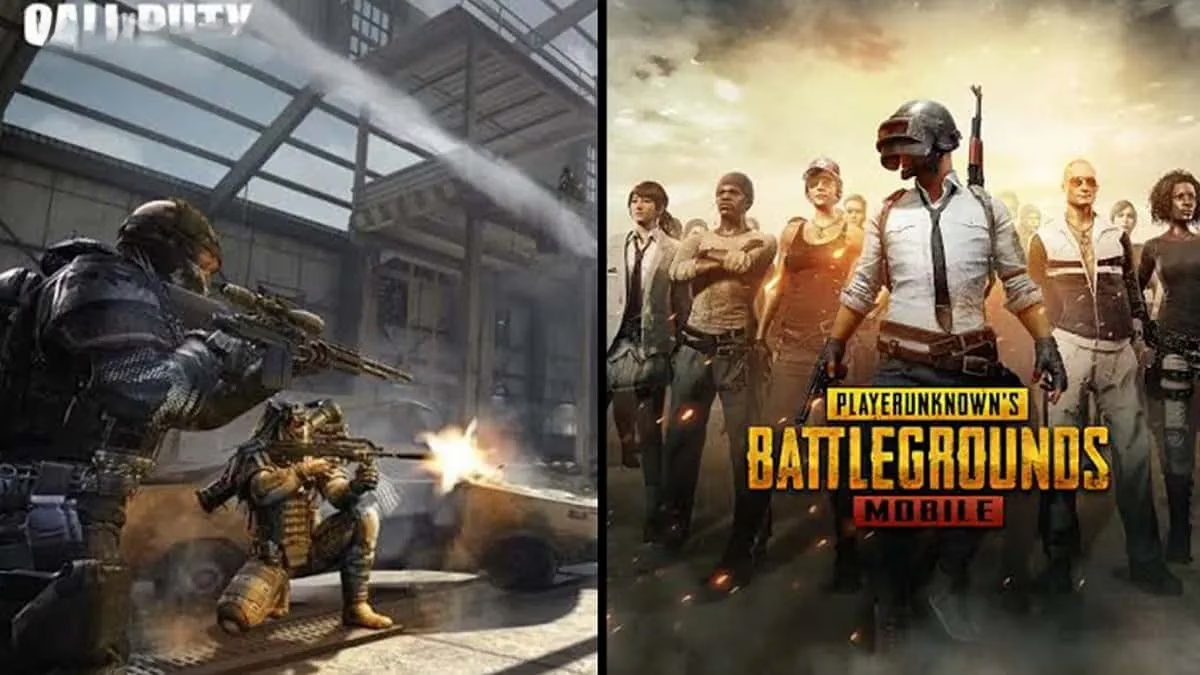
At the time, I was known as a PUBG Mobile specialist. My YouTube channel ThugLife had just crossed 150,000 subscribers, and I’d built a reputation around aggressive, high-kill gameplay that people genuinely enjoyed watching. The community was tight, the content was popping — and then September 30, 2019, hit. That’s when Call of Duty Mobile dropped, and like any self-respecting FPS nerd, I had to check it out.
I fired up a stream, played a few rounds, and honestly just had a blast. The guns felt crisp, the movement was snappy, and it was a nice change of pace from the battle royale grind I’d been living in for months. I didn’t think twice about sharing that session with my audience. I mean, isn’t variety what keeps gaming fresh?
Well, the PUBG Mobile India Tour (PMIT) organizers disagreed. Hard.
A couple of weeks later, on October 17, I woke up to find my guest viewer invite for the Grand Finals had been flat-out cancelled. No warning, no conversation — just a cold shoulder. I was stunned. I actually laughed at first, then tweeted: “Lol @PUBGMOBILE_IN cancelled my Invite to PMIT as a guest viewer, coz I stream @PlayCODMobile.” I even jokingly asked if Call of Duty Mobile needed Indian content creators, because at that point, why not?
It felt absurd. Here I was, a guy who’d poured hundreds of hours into promoting and loving PUBG Mobile, suddenly uninvited for trying a competitor’s game one time. The hypocrisy was thick — I knew plenty of other streamers who had played different mobile shooters without any backlash. But I was apparently the example they wanted to make.
The reasoning was transparent: Call of Duty Mobile was a direct threat to PUBG Mobile’s dominance, and tournament organizers wanted to squash any visibility that could sway the community. By punishing me, they hoped to send a message that loyalty to PUBG was mandatory if you wanted any perks.
Except the message it actually sent was: “We’re insecure and will penalize you for exercising your creative freedom.”
Content creators are not billboards. We build audiences by being genuine, and that includes playing games we enjoy. The moment you treat us like employees who can’t touch products from other companies, you fracture the trust that keeps the ecosystem alive. A lot of people in the Indian mobile gaming scene saw it that way too. The backlash was immediate, with fans and fellow creators calling the decision petty and outdated.
But here's where it gets really ironic. My own team, 8bit, had stomped through the Group Finals in Group B with a top-seed finish — 122 points, 38 kills — and they were set to compete in that same Grand Finals for a share of the $210,000 prize pool. So not only was I being barred from attending as a guest, I was being pushed away from watching my squad fight for a life-changing pot.
Needless to say, I didn’t just sit on my hands. As the owner of 8bit, I was glued to the action remotely, analyzing every rotation, every clutch, every callout. The irony of being forced to support my team from a screen while the organizers tried to erase my presence wasn’t lost on me. And although I don’t think they ever publicly reversed the decision, the entire episode turned me into a reluctant symbol of resistance against restrictive esports politics.
So, did it hurt my career? Not really. If anything, it opened doors. CoD Mobile communities noticed my content, my subs kept growing, and I learned that being blacklisted by one event doesn’t mean your voice disappears. In fact, the controversy made creators more aware of the need to diversify, to avoid putting all their eggs in one basket just because a publisher demands fealty.
Looking back from 2026, the landscape has shifted so much it’s almost funny. Multi-game streaming is now the norm. You’ve got PUBG Mobile pros casually grinding Valorant Mobile, Apex Legends Mobile, and Warzone Mobile on the same channel without anyone batting an eye. Tournament organizers have become smarter — they know punishing creators for cross-pollination only drives them and their audiences away. The era of exclusivity threats is fading, and I like to think my little 2019 saga played a tiny part in accelerating that change.
If you're a content creator reading this in 2026 and you ever feel pressured to stay “loyal” to one title, remember my story. Play what you love. Stream what you want. No prize pool is worth compromising your authenticity. An invitation can be revoked, but your integrity and your relationship with your community? Those are yours to keep. 🎮💸
And just between us — every time I boot up a new mobile shooter on stream, I crack a tiny smile thinking about that one chaotic October day that taught the industry a lesson it won't soon forget.