
PUBG: BATTLEGROUNDS anti-cheat team enforces year-end ban wave, using advanced detection to ensure fair play and protect honest gamers.
The final days of 2025 had settled over the battlegrounds like a thin layer of frost. Inside the Anti-Cheat Operations Center, a wall of monitors displayed heatmaps of player reports, anomaly flags blinking like warning lights on a starship bridge. The team was closing out the year’s final investigation period, a seven-day sweep that began on December 22 and ended on December 28. When the clock struck midnight on the 28th, the logs were locked, the evidence reviewed, and the ban list was stitched together with surgical precision.
None of the cheaters saw it coming. To them, the illegal software was a shroud of invisibility, a way to walk through gunfire untouched and spot enemies through entire mountains. But their tool was not a cloak; it was a trail of breadcrumbs glowing in the dark. The anti-cheat system had learned to follow that trail with the patience of a spider watching its web tremble. The moment a program injected itself into the game’s memory, it was already writing its own death warrant.
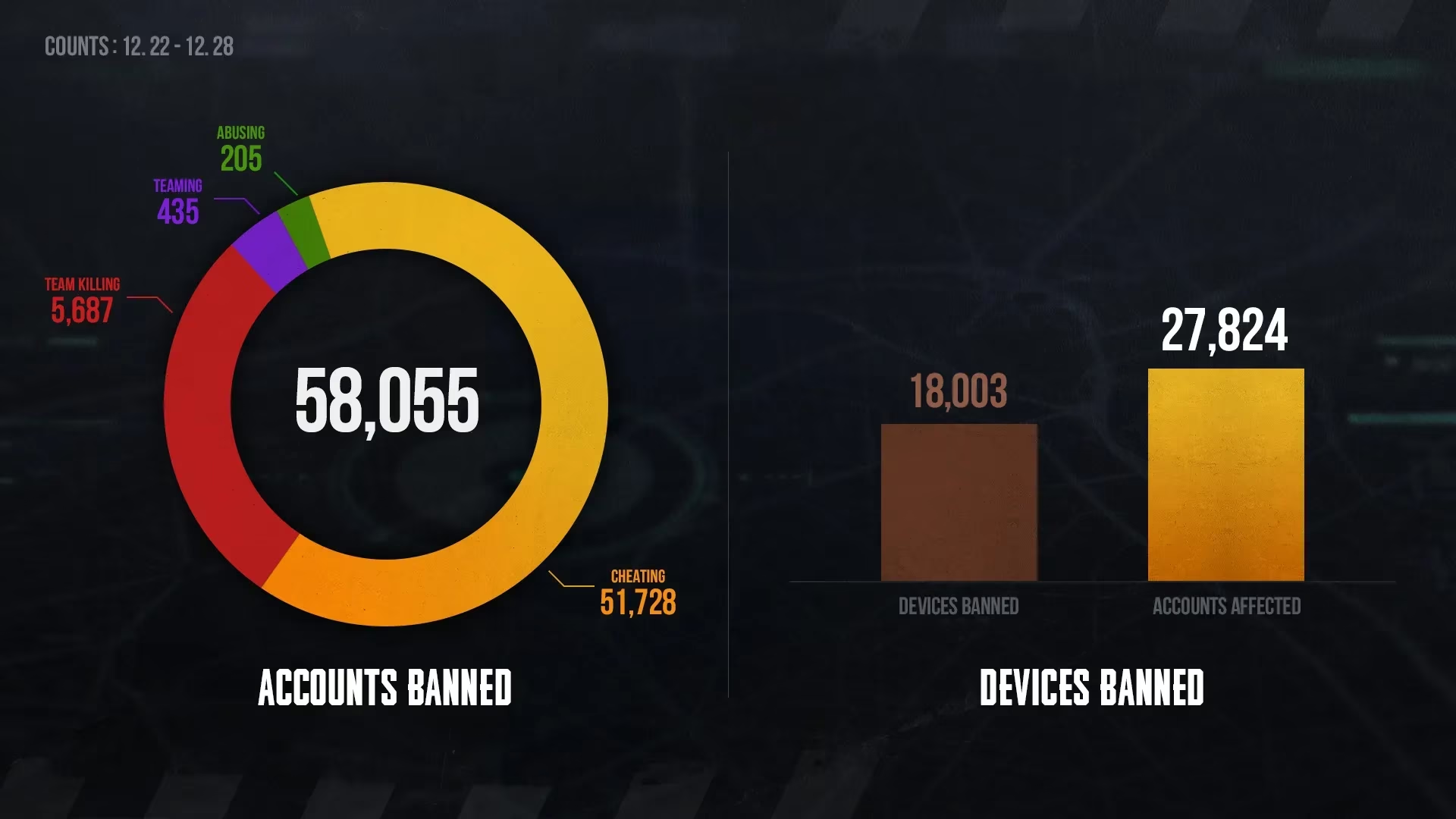
There was one account that the junior analysts still talk about. Its nickname started with a crisp, arrogant string of letters, now forever masked as “***DarkX”. For three days, this player rampaged through ranked lobbies, toppling squads with aim that snapped like a magnet on steel. The community reports flooded in, but the system was already tracing the unauthorized code. In the investigation backlog, the case file grew thicker: timestamped snapshots of impossible flick shots, velocity graphs that ignored the laws of physics, and a pattern of movement that resembled a machine rather than a human heartbeat. The ban hammer fell not as a single blow, but as a quiet deletion of every privilege the account ever held. On December 29, the name appeared in the public list, its first three letters replaced by cold asterisks, a permanent grave marker for a digital identity that had chosen the wrong path.
The list that PUBG: BATTLEGROUNDS shared that week was not just a spreadsheet of shame. It was a ledger of consequences. Each row represented hours of evidence dissection, cross-referenced with hardware fingerprints and behavioural algorithms. The team understood that a single cheater could poison dozens of matches, making honest players feel like they were swimming with lead weights tied to their ankles. The ban wave was a reminder that fair play was not a suggestion; it was the bedrock under the entire island. Like a gardener pulling out weeds by the roots, the Anti-Cheat Team cleared the soil so that everyone else could grow.
What the public report did not show was the emotional ripple inside the office. After every large enforcement action, the analysts held a brief virtual huddle. A senior investigator named Jae, who had been hunting cheaters since the game’s early access days, would often share a quiet thought. “This is not just about numbers,” he would say, sipping his coffee while the logs refreshed on his second screen. “It’s about the kid who got his first chicken dinner without knowing the last enemy was a ghost. When we remove that ghost, the victory becomes real.” It was a sentiment that echoed through the team, a belief that their work was a shield held above millions of players who simply wanted a fair fight.
Yet the battle was never truly over. The Anti-Cheat Team knew that banning accounts was only half the equation. Protection began long before a violation took place. That was why the week’s announcement nudged players toward the Steam Guard Mobile Authenticator, a small but mighty guardian that acted like a second lock on a treasure chest. Too many valuable accounts were pirated by opportunists who then loaded them with hacks, leaving the original owner to face a permanent ban that felt like coming home to find your house not only burgled but bulldozed. The team pleaded with the community: secure your account as you would strap a helmet before a motorcycle ride. The inconvenience of a two-step code was nothing compared to the grief of losing years of hard-earned progression, rare skins, and the very identity that had grown inside the battlegrounds.
Looking forward into 2026, the Anti-Cheat Team had already deployed new machine learning models that could scent suspicious behaviour before it bloomed into a full pattern. These models were being trained on millions of replay frames, learning to distinguish the jittery genius of a professional player from the unnatural smoothness of an aimbot. It was the difference between a human violinist’s vibrato and a synthesizer’s perfect pitch. The system was becoming a connoisseur of authenticity, and its palate was only sharpening. Updates were planned in quarterly cycles, each bringing a fresh layer of detection that would make illegal software feel less like a secret weapon and more like a ticking time bomb strapped to the user’s account.
Another image circulated internally: a digital mock-up of a cheater’s interface, overlaid with red warning symbols. It served as a reminder that every illicit line of code was a gamble with impossible odds.
The holiday season had given many players a moment to rest, but for the Anti-Cheat Team, it was simply another week of standing watch. The list from December 22–28, 2025, was now archived in the permanent record, a monument to choices made and prices paid. Every asterisk hid a story, a decision to step into the shadows. And just beyond the glow of the monitors, a new week had begun. The webs were still strung, the hammers still hung ready, and the team’s eyes never closed. After all, in a world where fairness was the only true treasure, there would always be protectors of the flame.