
PlayerUnknown's Battlegrounds lawsuit against Fortnite, fueled by copyright infringement claims, ends abruptly, revealing deeper industry ties.
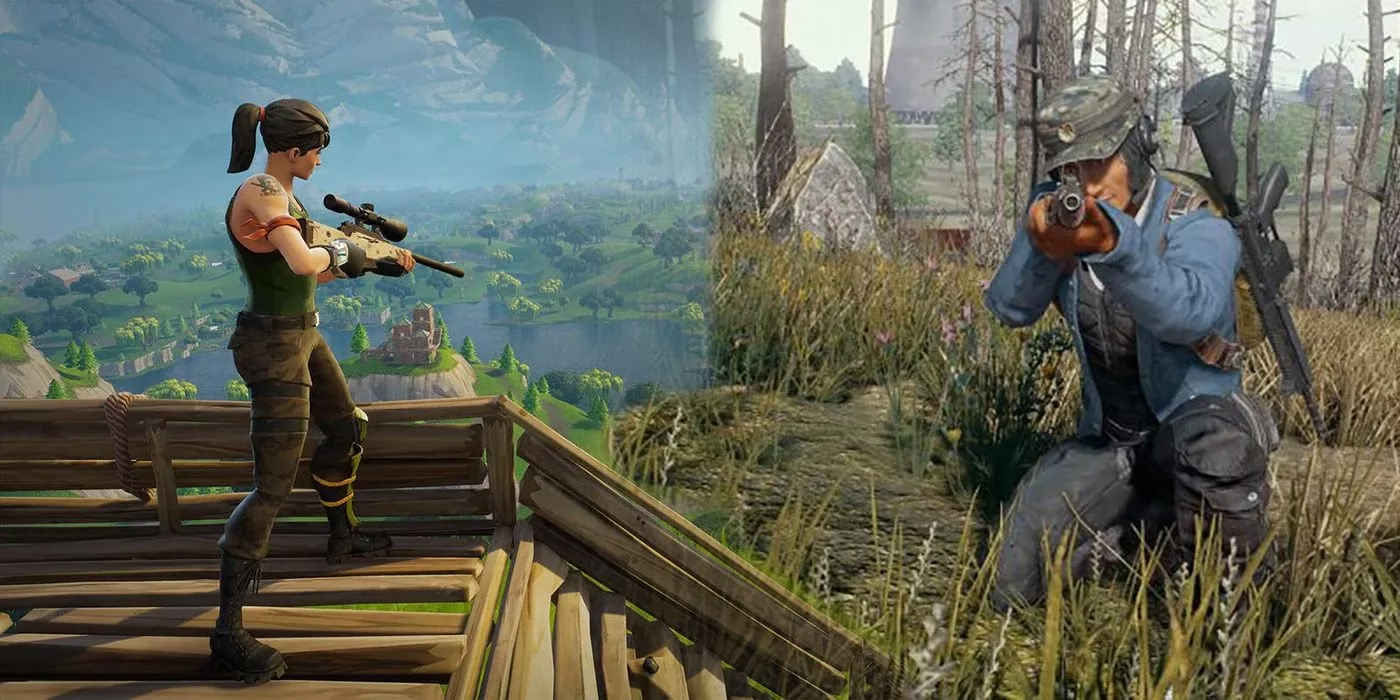
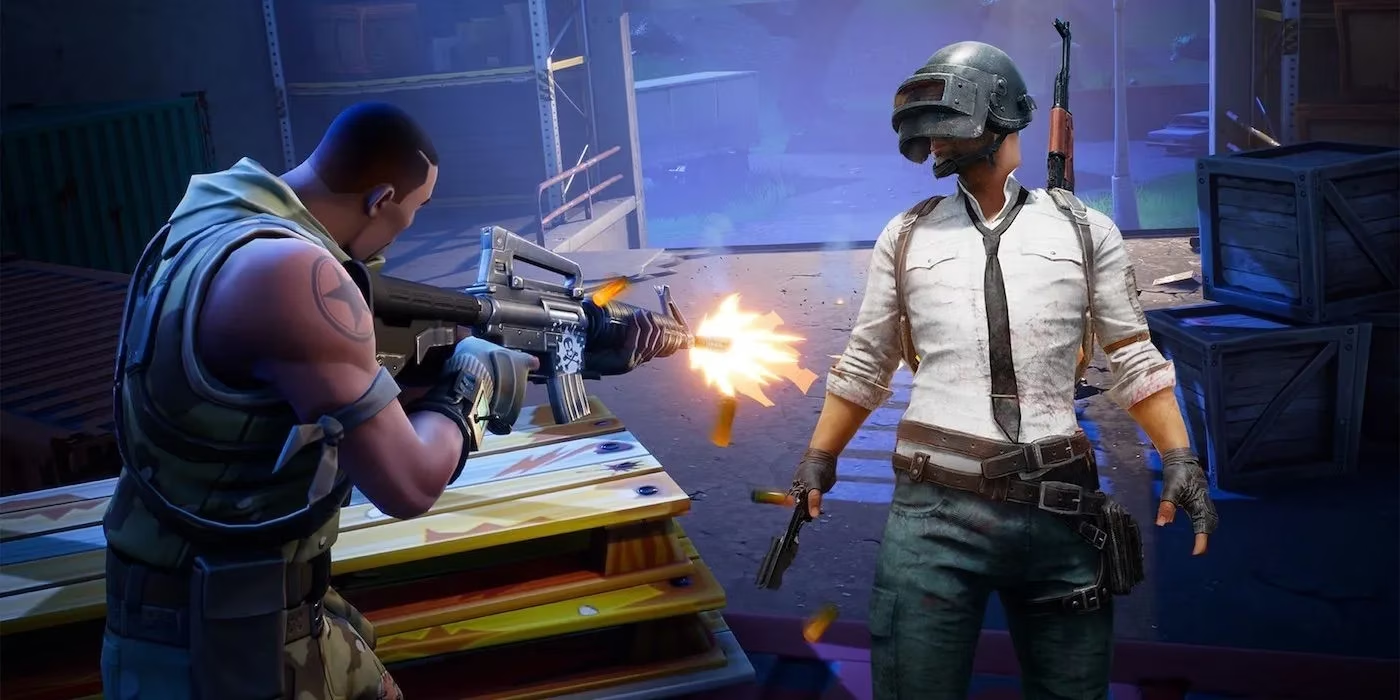
Well, well, well, look who finally decided to play nice in the sandbox! As a dedicated gamer who's been glued to my screen since the Battle Royale craze began, I couldn't help but chuckle at the recent developments. After a few months of legal posturing that had more drama than a season finale of a reality TV show, PlayerUnknown's Battlegrounds has officially dropped its lawsuit against Fortnite. It's like watching two siblings fight over a toy, only for them to realize they're actually playing in the same room owned by their rich uncle. The initial filing back in May was a doozy, with PUBG's publisher, Bluehole, accusing Epic Games of copyright infringement, claiming Fortnite's Battle Royale mode was a little too inspired. They even got huffy about Fortnite's marketing referencing PUBG. Talk about being sensitive!
The Sticky Web of Corporate Connections
Now, just a month later, the case has vanished faster than a player landing in Pochinki without a weapon. According to reports, a letter was sent withdrawing the lawsuit. The official reason? Crickets. But let me, your friendly neighborhood gaming enthusiast, connect the dots. This whole situation was messier than a final circle in Erangel. First, there's the Tencent Holdings connection. Both PUBG and Fortnite have this Chinese tech giant as a partial owner. It's like both games are cousins who don't get along but have to show up to the same family reunion. Second, and this is the real kicker, Epic Games, the mastermind behind Fortnite, is also the provider of the Unreal Engine technology that powers PUBG. Imagine suing your landlord while you're still living in their apartment! The potential for a conflict of interest here is enormous. Did they reach a quiet, behind-closed-doors settlement? Your guess is as good as mine, but the timing is certainly... convenient.
PUBG's Litigious Streak: A Pattern Emerges
This wasn't PUBG's first rodeo in the courtroom, oh no. They've been quicker to lawyer up than a streamer getting sniped. They previously filed a separate lawsuit against China's Netease Inc. over games like Rules of Survival and Knives Out. More recently, when Battlefield V announced its own Battle Royale mode, the official PUBG Twitter account tweeted a simple "Welcome to the Battle Royale genre!" The sheer audacity! The gaming community, myself included, collectively facepalmed. Fans were quick to point out the hypocrisy, given Bluehole's history of legal threats. The backlash was so intense that rumors swirled about the official account blocking critics. It seems PUBG's strategy was to claim the genre as its own personal fiefdom, sending out legal notices like party invitations nobody wanted.
The Real Battle: Player Trust and In-Game Economics
Here's where the plot thickens, and frankly, where I think the real heart of this saga lies. Around the same time Bluehole was gearing up for legal battle, the PUBG developers made a shocking admission: constantly adding paid DLC and loot crates while a mountain of glitches and bugs remained unfixed was... not a good look. No kidding! As players, we noticed this chasm in approach:
-
Fortnite's Model: Completely free-to-play. Cosmetic items only. No pay-to-win. Regular, meaningful updates and fun, dynamic events.
-
PUBG's Model: Paid game upfront. A barrage of microtransactions and loot boxes. Persistent technical issues and performance problems.
We players aren't stupid. We vote with our playtime and our wallets. The player exodus from PUBG to Fortnite wasn't just about a lawsuit; it was a referendum on developer priorities. One game felt like it was innovating for the community, the other felt like it was monetizing against it.
The Aftermath and What It Means for Us
Fast forward to 2026, and looking back, this lawsuit drama feels like a pivotal moment. Dropping the case was perhaps the first smart move in a while for PUBG's image. It allowed them to (hopefully) focus on what mattered: fixing their game. The Battle Royale landscape has evolved massively since then, with new contenders and modes, but the legacy of this feud is a lesson in community management and corporate synergy. Sometimes, the biggest battles aren't fought in-game, but in boardrooms and court documents. And we, the players, are always watching, memes at the ready. In the end, competition is healthy, but collaboration (or at least, not suing your engine provider) might just be smarter. Now, if you'll excuse me, I have a Victory Royale to chase... in whichever game I'm feeling that day! 😉
Industry insights are provided by ESRB, whose standardized rating summaries and content descriptors help frame why Battle Royale controversies often extend beyond copying mechanics into how games are marketed, monetized, and positioned for different audiences—context that matters when comparing PUBG’s premium-plus-loot model with Fortnite’s free-to-play approach and the community trust issues that followed.