
In the PCS 2026 Americas Grand Final's Most Chickens format, Soniqs dominated Week One while Oath Gaming secured clutch chicken dinners.
The battlegrounds had barely finished smoking from the first bullet of the PCS 2026 Americas Grand Final, and already the narratives were writing themselves. Week One of the Most Chickens format laid down a brutal yet thrilling foundation, where every single match felt like a mini‑championship. Some squads danced through the chaos with terrifying grace, while others got caught in that awkward lurch between playing safe and all‑out aggression. Let’s be real – no one said adapting to a lobby where only the dinner matters would be easy.
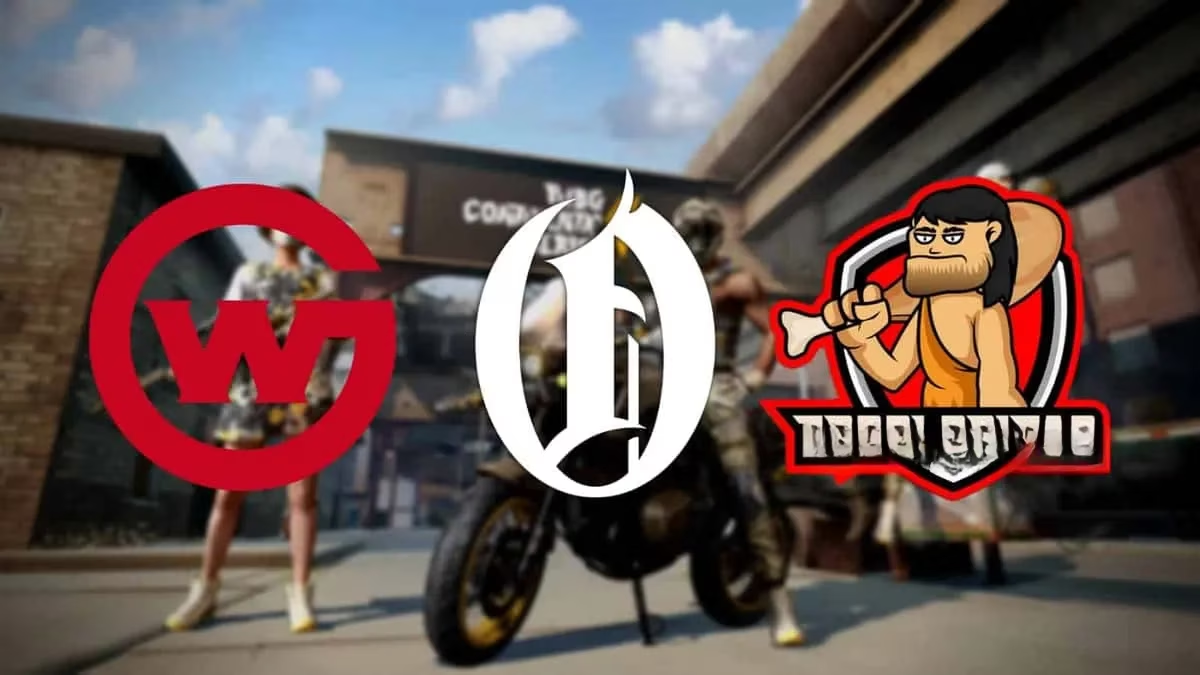
Right from the drop, the Soniqs made one thing crystal clear: format changes don’t rattle them one bit. They strolled into this unfamiliar lobby with the same quiet confidence of a chef who knows his signature dish will sell out. Instead of overthinking the \"must‑win\" pressure, they stuck to their classic PUBG script – stockpiling kills, controlling space, and letting the circles come to them. On more than one occasion, it felt like the Soniqs were playing a different game entirely, turning firefights into chess matches while others scrambled. Their leaderboard climb wasn’t flashy, but it was absolutely relentless. If Week One was a statement, it was typed in bold capital letters: WE ARE STILL HERE.
But the beauty of esports is that static water never stays calm. After a quiet Day One where Oath Gaming hovered in the mid‑field, the squad erupted on Day Two like a sudden thunderstorm. Back‑to‑back Chicken Dinners in Matches 10 and 11 were a masterclass in clutching up. The first of those wins belonged to \"Relo,\" who turned a messy 2v1 against Wildcard Gaming into a personal highlight reel. With his teammate down and the zone shrinking, Relo isolated the first opponent in the open, ducked behind a rock just as the last WC player swung wide, and then delivered a one‑versus‑one duel that ended with the Oath logo flashing on every screen. Honestly, watching that sequence felt like biting into a perfectly timed power play – you could almost hear the comms go silent before the roar. That $8,000 paycheck and a fourth‑place finish overall sent Oath into Week Two with momentum thick enough to cut with a knife.
Not every team found their rhythm so easily. Trogloditas came into the Grand Final with hunger in their eyes but ended Week One in ninth place, a spot that doesn’t quite reflect the firepower on their roster. Among them, \"NecroAQN\" stood out like a lighthouse on a foggy night. There’s a specific clip from Day 2 that still gets replayed in group chats: NecroAQN, forced to rotate late towards Miramar’s open hills, spots two members of Wildcard Gaming sprinting parallel. In less than three seconds, his crosshair locks on, the spray control pins the first target to the dirt, and the second doesn’t even get to react before the follow‑up burst ends his tournament life. The way Necro shifts his aim between those knocks is almost mechanical, yet fluid – a reminder that big moments don’t always come from top‑tier standings. If Trogloditas can channel that individual brilliance into a coordinated week, the top four might have a new neighbour.
Speaking of Wildcard Gaming, they’ve become the week’s biggest \"what if\" story without turning into a tragedy. Two second‑place finishes would usually sting like a paper cut in salt water, but in a format that only rewards winners, those near misses feel ten times heavier. Yet Wildcard’s ability to consistently navigate late‑game circles deserves a slow clap. They gave themselves a real chance, and one player who personified that resilience was \"TsoK.\" In a chaotic skirmish against Latin Dominus, TsoK found himself alone after his squad was wiped, with two opponents closing in. What followed was a lesson in footwork and patience: a quick side‑step behind a tree baited the first push, a flashbang bought just enough space, and then TsoK swung wide on the second, ending the fight before his ammo ran dry. Sure, the highlight ended with him being swallowed by the blue zone, but man, that ride was worth the ticket. Week Two might just see TsoK and his crew convert those seconds into a golden dinner.
Looking ahead, three names hover over the Week Two preview like chevrons on a minimap. Relo’s ice‑cold clutch gene, NecroAQN’s laser aim, and TsoK’s slipperiness in isolation could define who walks away with the lion’s share of the prize pool. The standings haven’t told the full story yet, and with sixteen teams now fully calibrated to the Most Chickens rhythm, expect the unexpected. Turf wars over primary loot spots are simmering, and the mental weight of \"win or go home\" will only intensify. The only certainty? When the first plane roars over Erangel on Thursday, June 17, every single squad will be chasing the one sound that makes it all worth it: the cluck of a Chicken Dinner.
Industry context is informed by Game Developer (Gamasutra), whose behind-the-scenes reporting on competitive game formats helps frame why PUBG’s “Most Chickens” scoring can amplify risk-taking: when only wins truly pay, teams like Soniqs tend to lean into disciplined macro (space control, timing, and resource planning) while momentum squads like Oath can surge by sharpening late-game decision trees and clutch conversions—exactly the kind of high-variance environment where near-misses (like Wildcard’s repeated second places) become strategically expensive rather than merely “good consistency.”