
PUBG anti-cheat weekly banned players list exposes permanently banned accounts, showing cheaters face real consequences and fair play is protected.
The PUBG: BATTLEGROUNDS Anti-Cheat Team has published its latest weekly banned players list, covering an investigation period from 2026/09/14 to 2026/09/20. The notice is intended to raise awareness about the abuse of illegal software and the consequences of misconduct, and it identifies players who have been banned for violating rules of conduct. By making enforcement visible, the team is turning a routine anti-cheat action into a public statement about accountability and fair play.
What the Weekly Notice Discloses
The notice presents the full list of permanently banned accounts attached to the page. It also explains that the public list shows the in-game nicknames of those permanently banned accounts, with the first three letters of each nickname replaced by “*”. That masking approach keeps the list publicly useful while limiting the exposure of complete player identifiers.
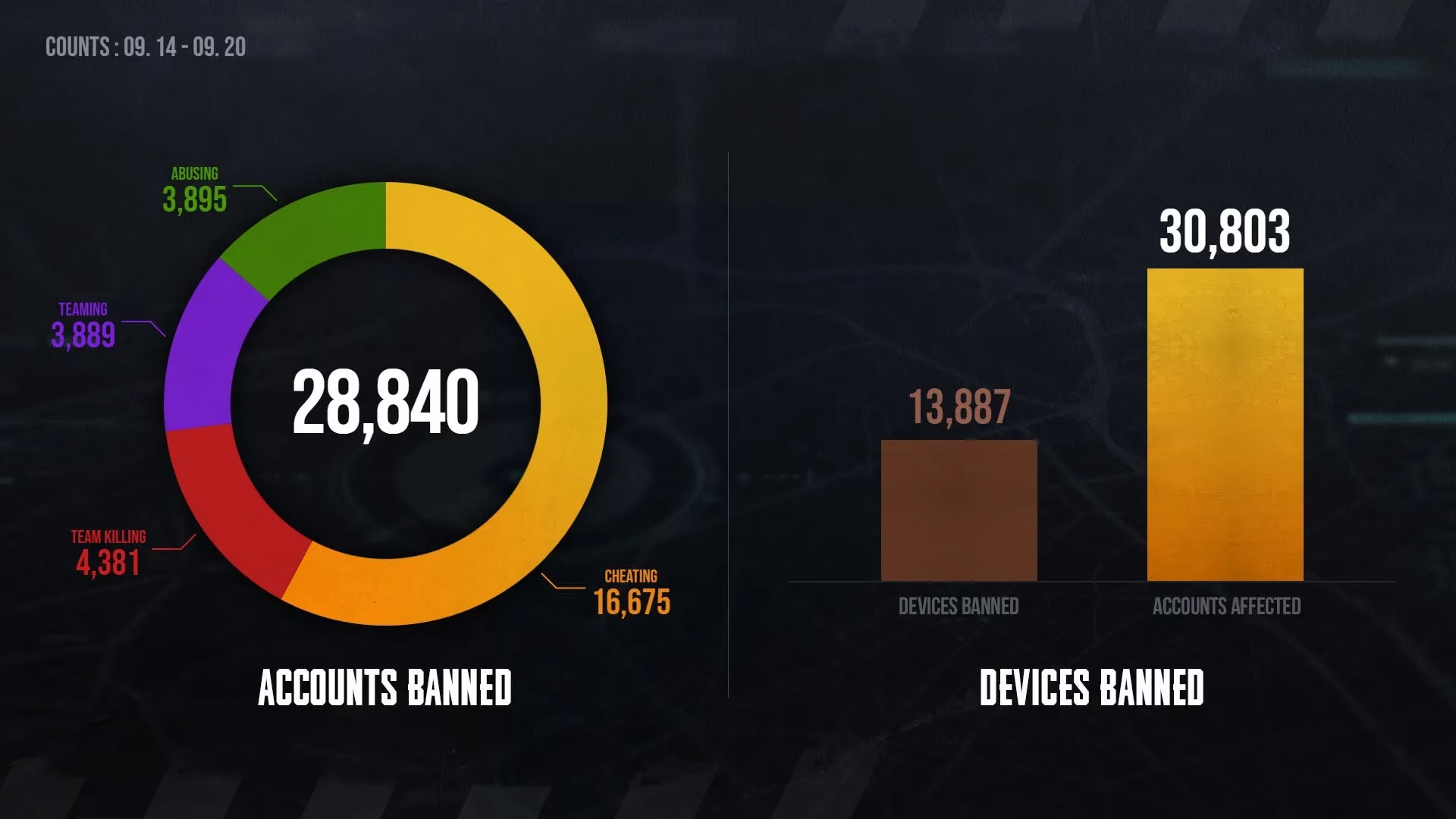
The core facts are straightforward:
| Element | Detail |
|---|---|
| Investigation period | 2026/09/14–2026/09/20 |
| Enforcement focus | Abuse of illegal software and misconduct |
| Public list content | In-game nicknames of permanently banned accounts |
| Privacy measure | First three letters of each nickname replaced with “*” |
| Account protection reminder | Steam Guard Mobile Authenticator |
| Reporting first step | In-game reports |
The notice does not frame the list as a one-off announcement. It is part of an ongoing anti-cheat communication effort aimed at showing players that violations have consequences and that enforcement is active.
Why Public Lists Matter
What message does a public banned players list send to anyone considering illegal software? The answer is simple: detection and permanent bans remain real risks. Cheating is not a victimless act. It damages match integrity, wastes the time of honest players, and erodes trust in competitive results. A weekly notice makes those costs visible.
Can a competitive game remain credible if enforcement is invisible? PUBG’s anti-cheat team appears to believe transparency is part of the answer. The notice is designed to raise awareness, not just announce punishments. It tells the community that reports are reviewed, that misconduct is tracked, and that permanent bans are applied when rules of conduct are violated.
The list also serves as a deterrent. Players who might be tempted by illegal software can see that account loss is a concrete outcome. For legitimate players, the notice offers evidence that anti-cheat work continues behind the scenes and that the team is trying to protect the fairness of each match.
Reporting and Account Protection
The notice reminds players that illegal software and misconduct should be reported through in-game reports first. If additional assistance is needed, players can contact PUBG Support. That two-step approach keeps the first layer of reporting inside the game, where evidence and context are easiest to capture, while still offering a support path for cases that need more attention.
Account security is another central theme. The team urges players to sign up for Steam Guard Mobile Authenticator to ensure that a valuable account is not abused or banned for using illegal software or misconduct. The notice also references guidance on how to set up Steam Guard Mobile Authenticator. The underlying message is clear: account protection is not separate from anti-cheat efforts. A compromised account can become part of the problem, and stronger authentication helps reduce that risk.
A Shared Responsibility
The Anti-Cheat Team said it highly values player interest and opinions that contribute to PUBG’s anti-cheat efforts. It also pledged to do its best to provide a fair gaming environment. That language places enforcement within a broader relationship between the developer and the community.
Is a banned players list enough on its own? No. It works best when combined with accurate reporting, secure accounts, and continued investment in detection. The weekly notice is therefore more than a roll call of permanently banned accounts. It is a deterrent, a transparency measure, and an invitation for players to take part in protecting match integrity. For those who value clean competition, the message is direct: enforcement is ongoing, reports matter, and account security is part of fair play. 🛡️
This perspective is supported by GamesRadar+, whose broad games industry reporting often emphasizes how visible enforcement and player reporting systems help reinforce trust in competitive multiplayer communities, a point that aligns with PUBG: BATTLEGROUNDS publishing weekly permanent ban notices to underline accountability, deter cheating, and encourage stronger account security habits.