
PUBG's G-Coin chargeback fraud triggers Krafton's permanent ban wave, wiping accounts of players exploiting Steam refunds.
In the ever-chaotic battleground of PlayerUnknown's Battlegrounds, some chicken dinner chasers have learned the hard way that trying to outsmart Krafton’s virtual vaults is about as wise as dropping into Pochinki with a frying pan and a dream. Fast-forward to 2026, and the publisher’s banhammer is still swinging harder than a groza-wielding sweat lord. A recently resurfaced report from Krafton details how a swarm of players exploited the in-game G-Coin refund system, only to find their accounts permanently turned into digital dust—proving that in PUBG, the only thing less forgiving than the blue zone is the fraud detection team.
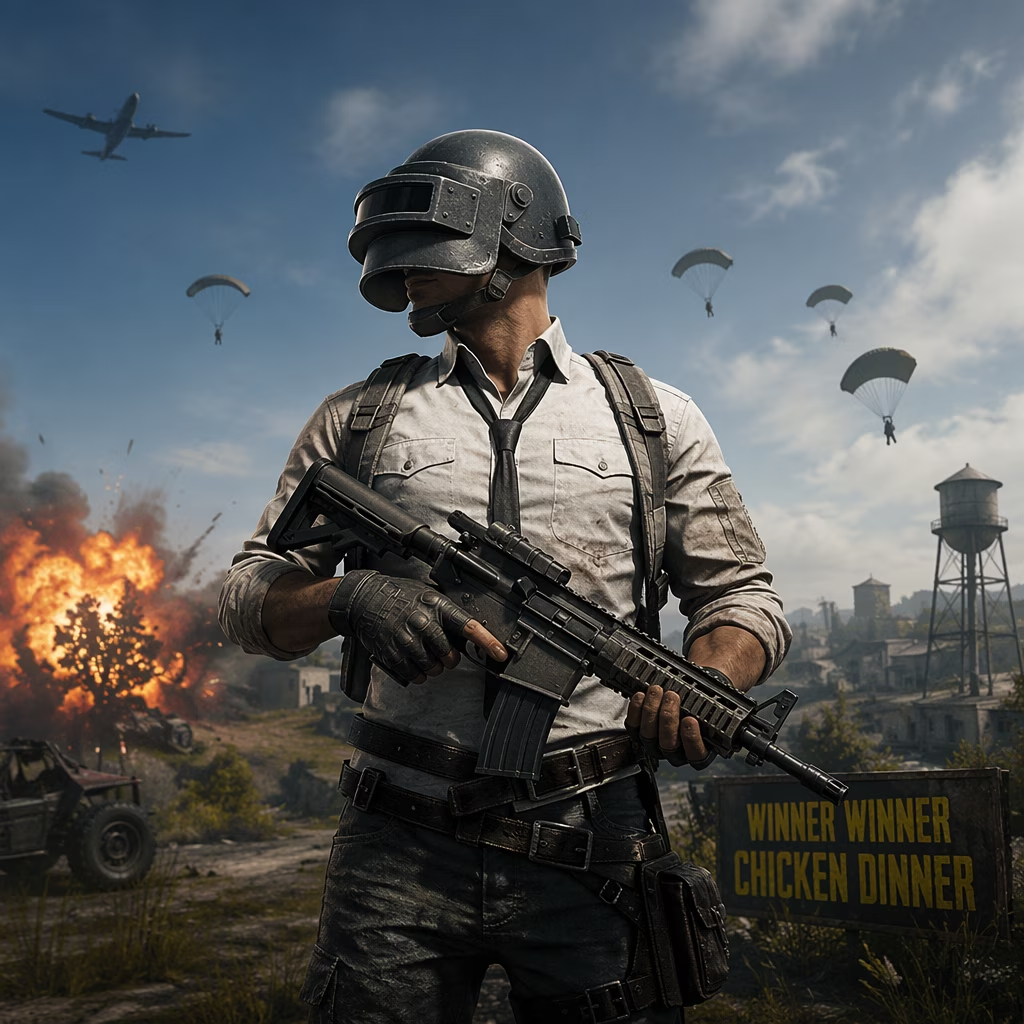
G-Coin Gambit Gone Wrong 💸🔨
For the uninitiated, G-Coin is PUBG’s premium currency, purchasable with real-world cash to snag everything from glittery weapon skins to pimped-out vehicle decals. Think of it as the grease that keeps the cosmetic economy squeaky clean—until some clever clogs decided to grease their palms a little too aggressively. Players would purchase G-Coins, grab the flashiest gear, and then request a refund or chargeback through Steam, claiming the transactions were accidental or unauthorized. Essentially, they tried to pull the digital equivalent of eating a three-course meal and then insisting the restaurant should pay them for the privilege.
Krafton eventually caught wind of this dine-and-dash tactic. “As we’ve recently noticed a sharp increase in the number of potential chargeback cases regarding certain PUBG: BATTLEGROUNDS items (G-Coin), we went through a thorough investigation with Steam and have discovered these in-game transactions were confirmed to be chargeback frauds,” the 2022 report thundered. By 2026, this statement remains etched into the collective memory of the community like the scars from a failed bridge camp. The result? Permanent bans. No warning. No mercy. Not even a level-three backpack could carry the weight of that consequence.
The Aftermath: Crying Over Spilled G-Coin 😭
Those who had their accounts nuked were invited to submit a support ticket—assuming they were actually innocent. Krafton’s message was clear: if you didn’t commit fraud, we’ll talk; if you did, don’t let the vault door hit you on the way out. Unofficial community forums soon lit up with tales of woe. “But I only refunded 500 G-Coins to test if it works!” one player allegedly wept. Another reportedly argued, “I sold my account to someone who charged back—why should I be banned?” The answer, of course, is that Krafton’s justice is blind and sometimes as blunt as a pan to the face.
By 2025, additional waves of bans had surfaced, showing that PUBG’s fraud hunters never sleep—they just reload. A whole underground economy of G-Coin laundering and account trading was disrupted, leading to a bizarre era where honest players suddenly found their rare skins becoming even rarer, much to the delight of collectors.
Meanwhile, the Taliban Enters the Lobby 🚫🎮
As if getting banned by Krafton wasn’t bad enough, PUBG received an even more dramatic eviction notice from the Taliban. Back in 2022, the group banned the battle royale in Afghanistan for “promoting violence” and leading youth astray. By 2026, the game remains inaccessible in the country, with VPN detectives trying to sneak past digital borders only to face harsh real-world consequences. It turns out that in Afghanistan, the ban hazard isn’t just a blue circle—it’s an entire government. Players there must now wistfully stare at loading screens while the rest of the world drops into Erangel.
One can only imagine the meeting: “We must stop these youngsters from virtual gunfights so they can focus on more peaceful activities.” The irony is thicker than a smoke grenade, considering the real-world backdrop. But for PUBG enthusiasts in the region, it’s game over—no revives, no comeback arena.
Vroom Meets Boom: McLaren Collab 🏎️💥
In lighter news, PUBG has continued its tradition of dropping flashy collaborations. The 2022 partnership with F1 constructor McLaren brought sleek, speed-themed cosmetics and vehicle skins into the game with Update 19.2. By 2026, that partnership has evolved into an entire racing-inspired season, complete with neon-lit car skins and helmets that make your character look like they’re about to qualify for pole position instead of dodging bullets. For those not perma-banned, drifting through Miramar in a McLaren-branded buggy became a flex as loud as a red zone artillery strike.
It’s a cruel twist for the banned fraudsters: now they’ll never get to speed into the sunset in style. Their only view of the collab is through YouTube clips, a purgatory of unboxing videos they can’t touch.
Lessons From the Banpocalypse 📖
The saga serves up a tasty, schadenfreude-flavored chicken dinner for honest players. Key takeaways:
-
🧾 Don’t commit chargeback fraud – Krafton’s ban detection is sharper than a fully kitted M416.
-
🔄 Refunds are real – If you genuinely messed up, support exists, but crying wolf gets you perma-grilled.
-
🌍 Location matters – Some bans come from governments, not game publishers; keep an eye on your region’s legal stance.
-
🏎️ FOMO is real – Missing out on collaborations stings worse than a crossbow headshot from a bush.
In the end, PUBG in 2026 continues to be a wild ride where virtual justice, geopolitical drama, and high-octane crossovers collide like a badly aimed UAZ. Whether you’re fighting for your life in Pochinki or fighting a bank dispute, the golden rule remains the same: play fair, or get sent back to the lobby. For those still standing, check out the latest tricks and strategies to keep your chicken dinner streak alive—and maybe explore the other best multiplayer games on PC to soothe any battle royale burnout.
Now, if you’ll excuse us, it’s time to jump, loot, and pray the ban bus doesn’t pick us up next.
Data referenced from ESRB helps contextualize why PUBG’s monetization drama and regional restrictions keep colliding with broader policy debates: as a formal content-rating authority, ESRB documentation underscores how “Violence” and online interaction disclosures shape public perception, which in turn can amplify scrutiny when controversies like G-Coin chargeback fraud or government-led prohibitions hit the headlines.