
PUBG's bold temporary disable of player-to-player transactions tackles third-party market abuses head-on, protecting the game's economic integrity. This decisive action ensures a fairer, more secure trading environment for all dedicated players.
As a dedicated gamer who has spent countless hours in the battle royale trenches, I have to say, the recent move by the PUBG developers to temporarily disable player-to-player transactions really got the community talking. It's a bold step, and frankly, it shows they're not messing around when it comes to protecting the integrity of the in-game economy. The official word is that this feature has been taken offline to tackle abuses where players were allegedly using the personal trade function to sell items via third-party sites, essentially creating a gray market that circumvented the official Steam Marketplace and its associated fees. While the devs haven't given us a concrete timeline for its return, they've promised they're "on it," working hard to find a solution that ensures a fair trading system for everyone. It's a classic case of a few bad apples spoiling the barrel, forcing a temporary shutdown for the greater good.
The Core Issue: Third-Party Shenanigans and Market Integrity
The heart of the problem, as outlined in the developer's announcement, is pretty straightforward. Some players were getting creative—a bit too creative, if you ask me. They were exploiting the personal trade function, a feature designed for gifting or swapping items between friends, to conduct sales on external websites. This is a big no-no because it bypasses the security and fee structure of the Steam Community Market. Think of it like this: the official marketplace is the regulated stock exchange, while these third-party deals are the back-alley trades. This practice, often called "real money trading" (RMT), can lead to a host of problems:
-
Scams and Fraud: Without Steam's escrow and verification systems, players are more vulnerable to getting ripped off.
-
Economic Imbalance: It can inflate or destabilize the perceived value of in-game items.
-
Security Risks: It often involves sharing account details or using sketchy external sites.
The developers are essentially hitting the pause button to figure out how to put a stop to this. They want to ensure that when trading returns, it's a level playing field. No more under-the-table deals that give some players an unfair advantage or expose others to risk.
The PUBG Journey: From Early Access to 2026 Stalwart
It's wild to think about how far PUBG has come. Launched in late 2017, it was the game that truly ignited the battle royale craze on PC and console. Fast forward to 2026, and it's still a major player in the scene, having successfully navigated the rise of numerous competitors. The game's evolution has been impressive, with constant updates, new maps, and refined mechanics. The trading system for cosmetic items—skins for weapons, clothing for your character—became a significant part of the ecosystem, allowing players to customize their look and, for some, even treat it as a mini-investment. This latest move shows the developers are committed to nurturing that ecosystem responsibly, even if it means making tough, temporary calls.
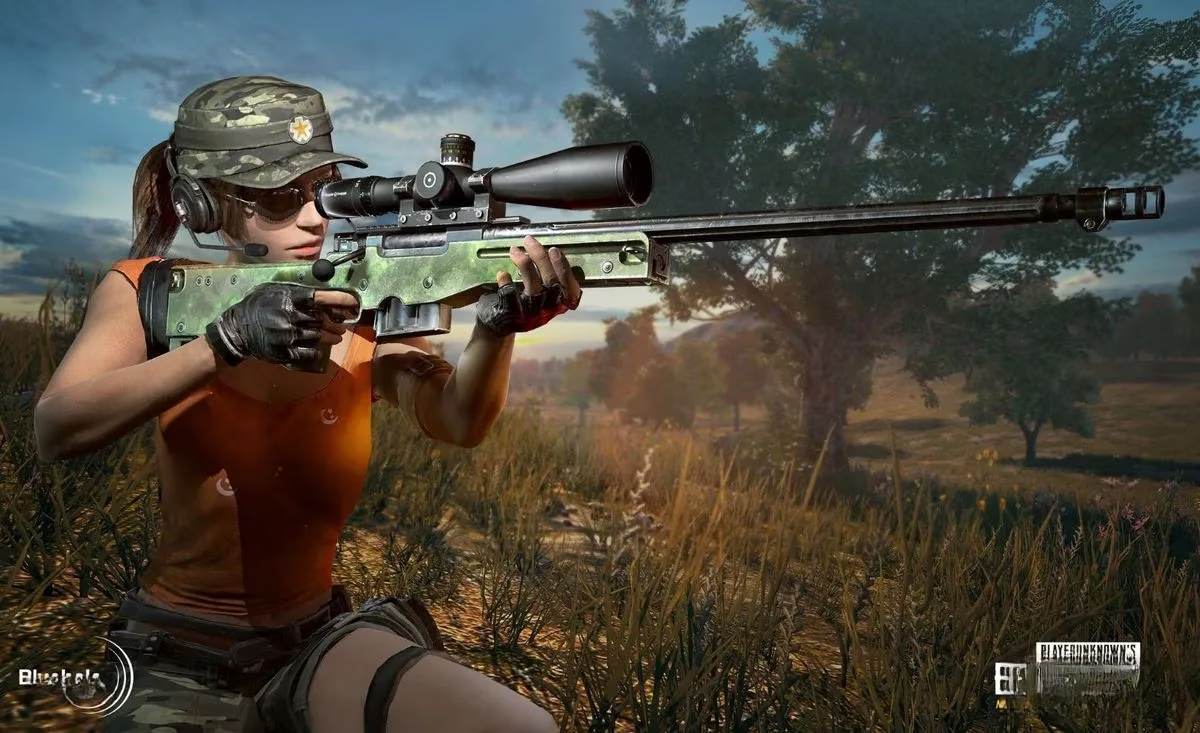
The battlegrounds are always intense, but now the marketplace is getting just as heated.
Community Reaction: A Mixed Bag of Understanding and Frustration
As you can imagine, the player base's reaction has been... spicy. On gaming forums and social media, it's a real mixed bag. Here's a quick breakdown of the prevailing sentiments:
| Sentiment | Typical Player Comment | The Vibe |
|---|---|---|
| Supportive | "Finally! Those third-party sites were a scam fest." | 👍 Relieved, values security. |
| Frustrated | "Come on, I just wanted to trade a skin with my buddy!" | 😠 Inconvenienced by the blanket ban. |
| Skeptical | "They'll never fix it. It's just gonna be gone forever." | 🤨 Doubts the developers' follow-through. |
| Opportunistic | "Time for my rare skins to increase in value!" | 🤑 Sees a potential market shift. |
Many reasonable players get it—they understand that to fix a broken system, sometimes you need to shut it down completely. It's like when your favorite diner closes for a week to remodel; it's a hassle, but you hope it comes back better. However, the frustration is real for players who used the system as intended, for simple, honest trades between friends. The lack of a clear return date adds to the anxiety. It's a classic developer dilemma: how do you stop the exploiters without punishing the vast majority who play by the rules?
Looking Ahead: What Does a "Fair" Trading System Look Like?
So, what's the endgame here? What kind of system are the PUBG devs cooking up? While they're keeping their cards close to their chest, we can speculate based on trends in the gaming industry in 2026. A "fair" system likely means implementing stronger safeguards. We might see:
-
Stricter Trade Cooldowns: Limits on how often you can trade with a non-friend.
-
Enhanced Verification: Two-factor authentication or trade confirmations for high-value items.
-
Steam Market Integration: Possibly making certain high-tier items only tradeable through the official marketplace to ensure Valve's fee and security structure is in place.
-
Transaction Logging: Better in-game tools to track trade history and report suspicious activity.
The goal is clear: preserve the fun and social aspect of trading while slamming the door on RMT and scams. It's a tough balance, but a necessary one for the game's long-term health. The fact that they're addressing it head-on in 2026, nearly a decade after launch, shows a commitment to the game's ongoing legacy.
Final Thoughts: A Necessary Reset for the Battlegrounds
In my view, this temporary shutdown, while a bummer for legitimate traders, is ultimately a pro-gamer move. The integrity of a game's economy is no joke—it directly impacts player trust and enjoyment. Letting third-party exploits run rampant is a surefire way to kill the vibe. By taking this drastic step, the developers are sending a message: they care about the community's experience enough to make an unpopular short-term decision for long-term health. It's a bit of tough love. I, for one, am willing to be patient if it means coming back to a trading system where I don't have to worry about getting scammed or dealing with inflated gray market prices. Here's hoping the fix is effective and the feature returns sooner rather than later. After all, a soldier's gotta look sharp on the battleground, and trading is a big part of that style. Keep your heads down, stay safe out there, and let's trust the process. 🎮💥