
PUBG's enduring legacy in the battle royale genre showcases its remarkable resilience and global dominance, particularly on mobile platforms. This evolution highlights its unique tactical realism and loyal community, defying trends for a steadfast presence.
As a dedicated gamer who has been on the frontlines since the early days of the genre, I find myself reflecting on the journey of PlayerUnknown's Battlegrounds. Back in 2017, it detonated the battle royale scene with a force that reshaped multiplayer gaming forever. Yet, in the years that followed, the spotlight often seemed to shift—first to Fortnite's cultural empire, then to Apex Legends' slick innovations. But here we are in 2026, and I can confidently say that PUBG never left the arena. It simply dug in, evolving on its own terms. Have we underestimated the staying power of the original blueprint?
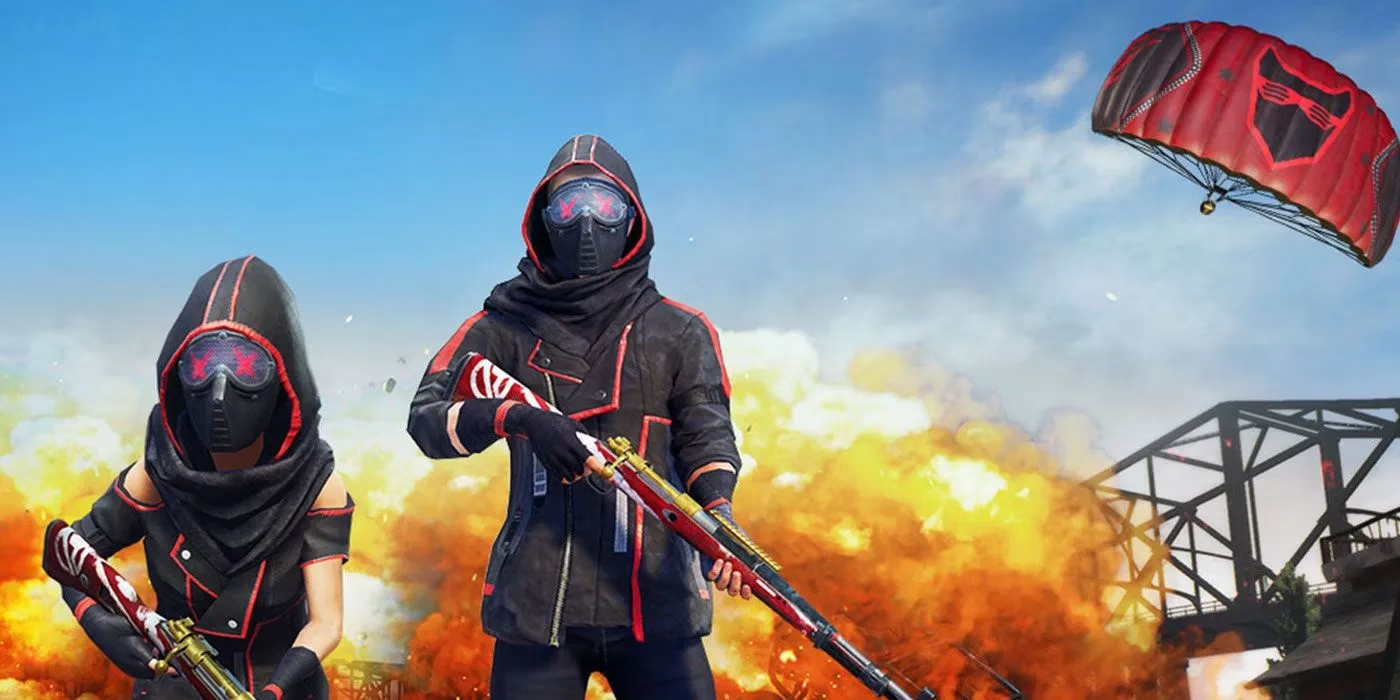
Let's talk numbers, because they tell a fascinating story of resilience. While it's true that PUBG's peak concurrent player counts on PC aren't what they were in the 2018 frenzy, its position has solidified into something remarkably stable. For nearly a decade now, it has consistently been a top performer on Steam, often sitting comfortably in that third-most-played spot, a testament to a fiercely loyal core community. But the real narrative, the one that often gets overlooked in Western gaming circles, unfolds on mobile. PUBG Mobile wasn't just a hit; it became a global phenomenon. By leveraging markets like China, where mobile gaming is a dominant force, it amassed a player base in the hundreds of millions. This created a dual reality: a steady-state PC version and a mobile juggernaut. Doesn't this dual identity explain why its mainstream media coverage sometimes feels muted compared to its flashier rivals?
Now, I have to address the elephant in the room: accessibility. PUBG's origins as a mod for the hardcore military simulator Arma 3 left an indelible mark. The early access days were, frankly, a mess of clunky menus and a punishing learning curve. While Fortnite and Apex Legends were built from the ground up to be intuitive and welcoming, PUBG carried the baggage of its sim-like DNA. But here's the thing—I've watched this game transform. Over years of updates, the UI has been streamlined, the gunplay polished, and the performance issues that once plagued it have been largely addressed. It's become more user-friendly, but it has never sacrificed its core identity: that tense, tactical, and gritty realism that first captivated us. Is there not a unique value in a game that refuses to fully casualize its experience?
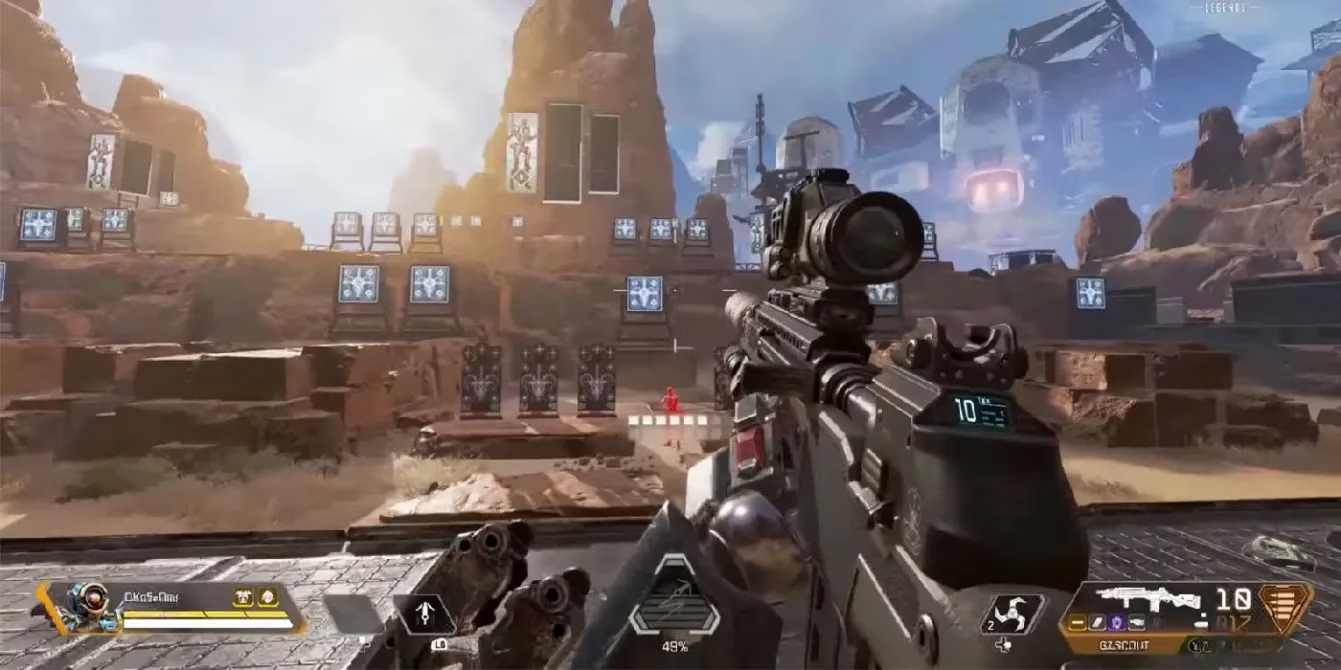
The evolution has been continuous and substantial. Looking back from 2026, the seasonal update model established years ago proved to be PUBG Corp's masterstroke. Remember Season 6 and the introduction of Karakin? That small, intense map with the destructive Black Zones was a sign of things to come. Since then, we've seen:
🚀 New Maps & Mechanics: From the verticality of Rondo to the dynamic weather systems of Deston, each map introduced unique gameplay twists.
🔫 Weapon & Vehicle Sandbox: The arsenal has expanded dramatically, offering deeper customization, while new vehicles have changed rotation and combat strategies.
🎮 Core Gameplay Refinements: The ping system, once an Apex exclusive, was adeptly integrated. Loot distribution, circle logic, and anti-cheat measures have seen relentless iteration.
This commitment to content is what has kept the community engaged. While other games in the genre shifted towards becoming "platforms" for cross-media events, PUBG largely stayed focused on being the best tactical shooter battle royale it could be.
Speaking of community, the silent majority is on mobile. PUBG Mobile (and its various regional versions) didn't just catch up to Fortnite; in many markets, it defined the mobile battle royale experience. Its lead in the mobile space has only grown, proving that the game's core loop is incredibly compelling across platforms. The cross-play and cross-progression features introduced a few years back finally bridged these worlds, allowing players like me to maintain progress whether I'm on my gaming rig or my phone.
So, what is PUBG's place in the 2026 gaming landscape? It's no longer the trendy, breakout hit. It's an institution. It's the game for players who crave a specific, unvarnished tension that its successors softened. Fortnite became a virtual concert hall and movie trailer platform. Apex Legends became a hero-shooter spectacle. PUBG? PUBG remained a survival simulator at heart. Its cultural impact is less about flashy headlines and more about embedding itself into the daily routines of millions of players worldwide. It may not dominate Twitch streams every single day, but its servers are always full, its tournaments are prestigious, and its community is deeply invested.
In the end, the story of PUBG is one of quiet perseverance. It faced existential threats from competitors who learned from its successes and shortcomings. Yet, by refining its vision and nurturing its colossal mobile player base, it secured a permanent seat at the table. As I drop into Erangel for the thousandth time in 2026, that familiar heartbeat of the pre-match lobby isn't just nostalgia; it's the sound of a classic that learned to adapt without losing its soul. The battle royale genre it pioneered has fragmented into many forms, but the original, in all its demanding, gritty glory, is still here—and still setting the world on fire, one chicken dinner at a time.