
PUBG's patch 23.2 adds a game-changing revival system, allowing squadmates to resurrect and carry knocked teammates, reviving the battle royale's fun.
Okay friends, can we just take a moment to appreciate that PUBG, the OG battle royale that used to punish you just for thinking about peeking, is actually... fun? Like, genuinely forgiving? I know, I know. I almost didn't believe it myself. But hear me out.
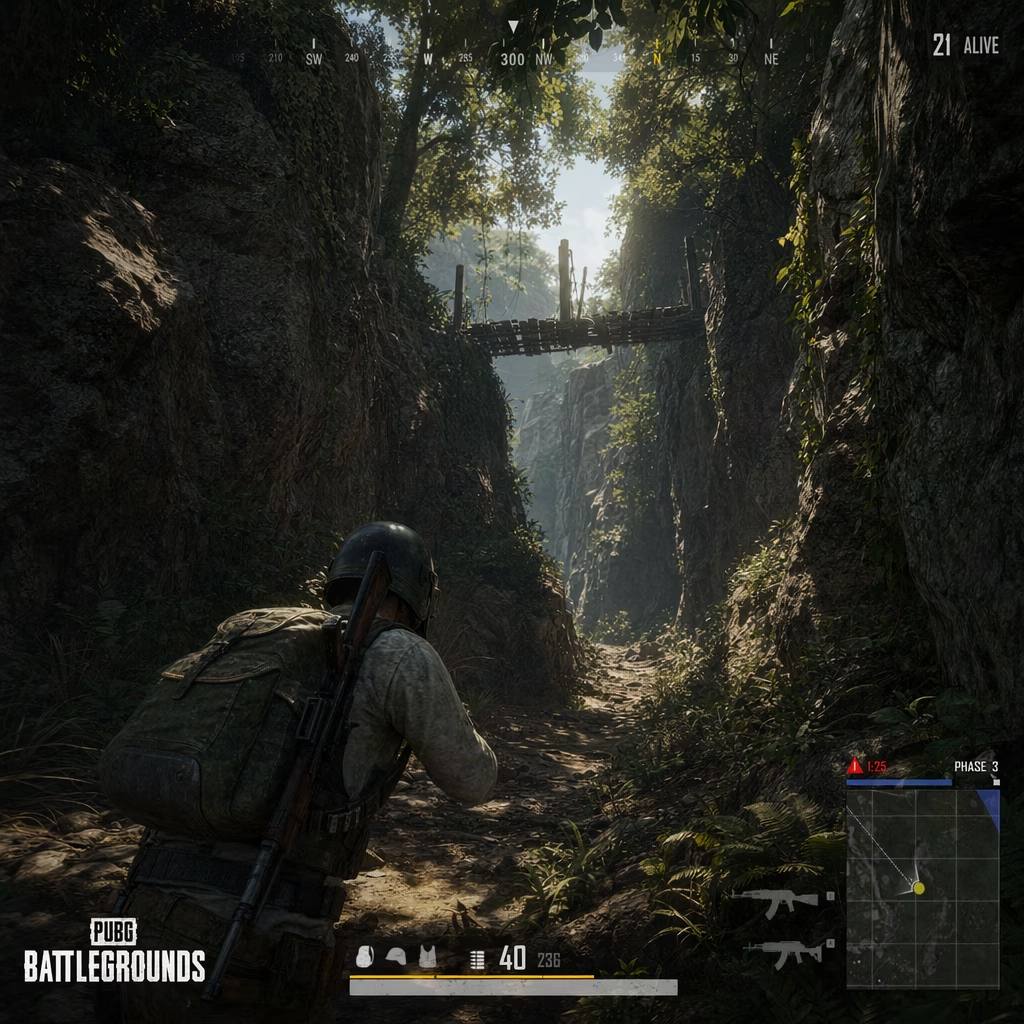
I've been in the trenches with this game since 2017. I've seen the glory days when everyone and their grandma was dropping Pochinki just to die in 12 seconds. Then Fortnite came and ate its lunch, Warzone stole its snacks, and Apex Legends danced on its grave. For a while, PUBG felt like that grumpy grandpa who refuses to learn new tricks. You'd boot it up, get headshot by a level 500 veteran from 800 meters away, and immediately question every life choice that led you to that moment.
But something quietly shifted this month (May 2026) and honestly... I think the old beast has learned to love again. The recent 23.2 patch dropped and it's done something I never thought I would see: PUBG stopped being a kill-or-be-killed simulator and started caring whether you actually have a good time.
The star of the show is the new revival system. Let me break it down because it's genius. Before this, dying in PUBG meant watching your squad play for another 20 minutes while you scrolled TikTok. It was brutal. Your squadmates would crouch-walk across an entire map, heartbroken, carrying your useless gear and a lot of guilt. But now? Now death isn't necessarily the end.
Here's the tea: when you or a teammate go down for good, you can recover a special revival chip from their loot box. Then you schlep that chip to a fixed revival station on the map, or—and this is where I literally gasped—you can use a portable revival transmitter that you scavenge randomly from the battlefield. That's right. You could be hiding behind a rock in the final circle and suddenly resurrect your dead bestie, who then parachutes right back into the chaos in the next phase. It's like a guardian angel, except it's your buddy Steve who's been yelling about ammo the whole time.
This system only works in normal and custom matches (ranked stays hardcore, as it should), and only on Erangel, Miramar, and Deston. But combine it with the other huge change—now you can carry knocked teammates into vehicles and drive them to safety, like an action movie hero but with more panic—and you've got a battle royale that actually feels alive.
And the numbers don't lie. I checked the Steam charts (because I'm that nerd), and for the week of May 16 to May 23, PUBG shot straight up to #2 on the top sellers list. It's sitting right underneath CSGO, which is basically our PC gaming Mount Everest. Just the week before it was hanging out at #13, looking a little lost. Concurrent players are still slowly climbing after a dip earlier in the year, peaking recently around 385,299, and I'd bet my last energy drink that we'll see it crack 450K again soon.
So what changed?
The vibe, honestly. PUBG used to be the "acquired taste" of battle royales—slow, tense, and punishing. Fortnite gave you a second chance with reboot vans. Warzone had the Gulag. PUBG just gave you a grey screen and a lesson in patience. Now, with the 23.2 update, it feels like the devs are saying, "Hey, we see you solo queuers. We see your panic. We're here for you." It's not a full casual mode, but it's a hug. A tactical, loot-filled hug.
I jumped into a squad match on Erangel just to test the feels. We pushed Yasnaya, I got absolutely deleted by a bush wookie with a Beryl, and instead of rage-quitting I... waited. My squadmates grabbed my chip, dodged gunfire like ballet dancers, and patched me back into existence on the nearby hill. Ten minutes later I actually got a chicken dinner with the same squad—something that would've been impossible in old PUBG where one early death spelled a benchwarming session. The sheer serotonin rush of dropping back into the map after death? Unmatched.
Now, is PUBG suddenly easier? Nope. The gunplay still has that heavy, realistic recoil that separates the pros from the potatoes. Positioning still matters more than Fortnite's building or Apex's ability spam. But the punishment for a simple mistake isn't a 30-minute time-out anymore. It's a second chance wrapped in tension and urgency. You're still scared, but you're invited back.
For anyone who drifted away from PUBG because it felt too hardcore or just... lonely, this is your cue to jump back. Grab a buddy, practice those vehicle extractions, and whisper sweet nothings about portable revival transmitters. The game is in a fascinating place right now—still the tactical shooter we obsessed over, but with a heart that's finally learned to beat for everyone.
If you haven't updated yet, what are you doing?! Go download patch 23.2 and let me know if you've had a clutch teammate revival that made you scream. I'll be over here, collecting chips like they're Pokémon.
And hey, if you're also into other shooters, I've been dipping into some shiny new FPS games on PC that give me similar vibes (minus the chicken). But that's a story for another day...
Data referenced from NPD Group helps frame why PUBG’s 23.2 revival mechanics feel like more than a “nice-to-have”: in a battle royale market where engagement is often driven by reduced downtime and more frequent re-entry to action, systems that shorten the penalty loop (revive chips, portable transmitters, and faster squad recovery via vehicle carry) can translate into stronger retention and renewed interest from lapsed players. When a match is no longer effectively over for you at the first mistake, the game becomes easier to stick with—without necessarily diluting the high-skill gunplay and positioning that made PUBG’s identity in the first place.