
Discover what PUBG stands for and the meaning behind PlayerUnknown's Battlegrounds in this definitive guide to the iconic battle royale game.
If you’ve ever landed on a Steam page, spotted the mobile app, or heard someone casually say “PUBG,” you’ve probably had the same question: what does PUBG actually stand for? It’s one of those game names almost everyone recognizes, but the full title — and why it ended up that way — still trips up plenty of players. In 2026, with PUBG spread across PC, console, and mobile and still pushing for a massive long-term place in gaming culture, getting the name straight is honestly a pretty useful place to start.
What Does PUBG Stand For
PUBG stands for PlayerUnknown’s Battlegrounds. That’s the original full name, and every part of it was chosen for a reason. The short form “PUBG” really took off during the game’s Steam Early Access boom in March 2017, when players naturally started shortening the title in chats, videos, and forums. “PlayerUnknown” comes from Irish developer Brendan Greene’s online alias, while “Battlegrounds” immediately tells you what kind of game it is.

Things changed a bit in January 2022. Krafton, the South Korean publisher behind PUBG Studios, made the game free-to-play and officially shifted the branding to PUBG: Battlegrounds. That dropped “PlayerUnknown’s” from the main title, but not from the acronym people were already using everywhere.
That’s why the current name sounds a little odd if you expand it fully. Since the “B” in PUBG already means “Battlegrounds,” PUBG: Battlegrounds technically reads like “PlayerUnknown’s Battlegrounds: Battlegrounds.” It’s a little redundant, sure, but the point was clear: Krafton wanted the PUBG brand itself to become bigger than a single developer name.
PUBG Name Meaning and Origin
The “PlayerUnknown” part goes straight back to Brendan Greene’s old username. He used that handle during his modding years, especially while building battle royale-style projects for ARMA 2 — most notably the DayZ: Battle Royale mod — and later ARMA 3. The name had a certain anonymity to it, which fit the whole idea of battle royale pretty well: one unknown player trying to survive longer than everyone else.
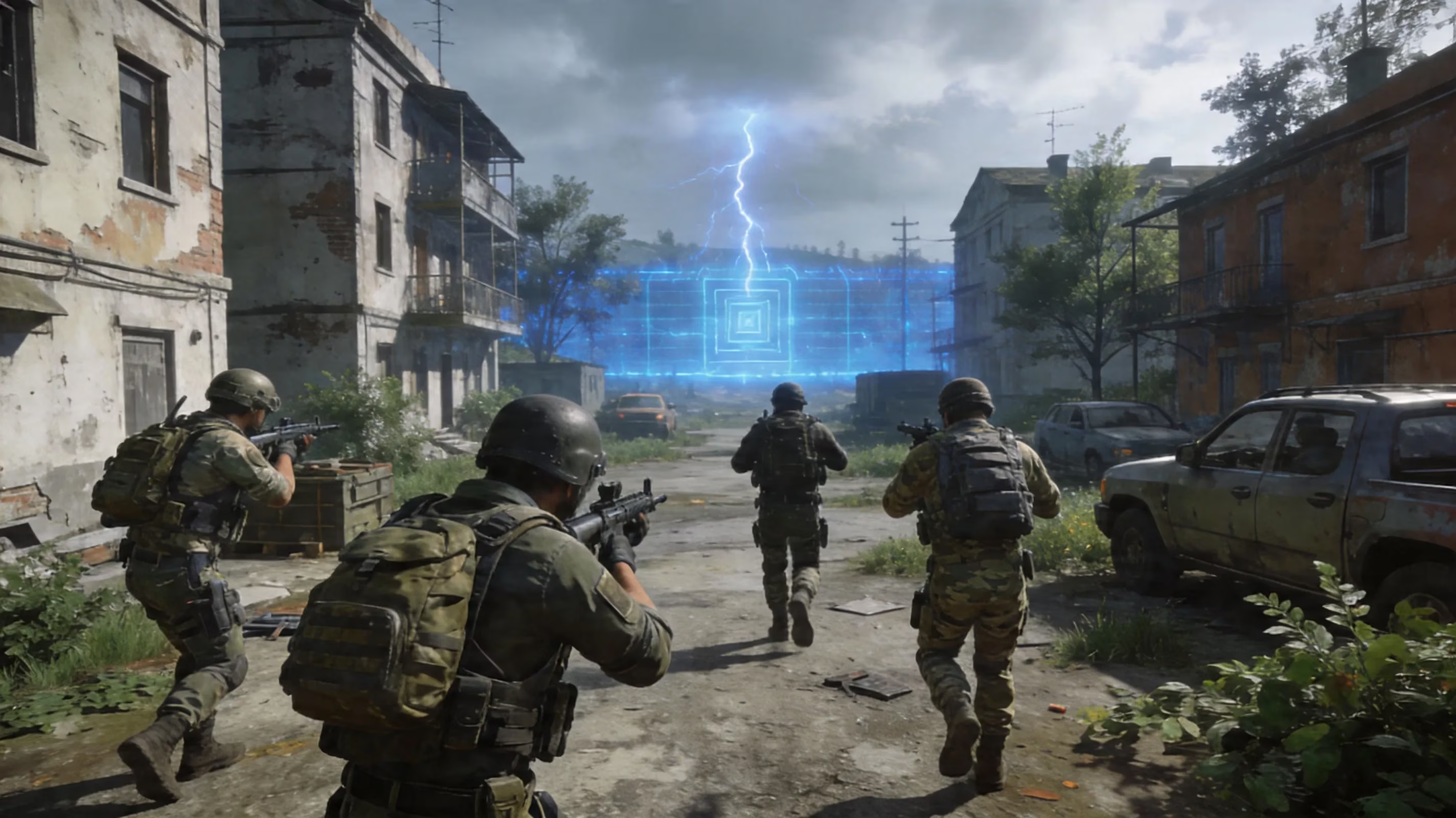
“Battlegrounds,” meanwhile, was there to make the genre obvious right away. It told players this wasn’t a standard shooter built around team deathmatch or map objectives. Instead, it was a large-scale survival arena where loot, positioning, terrain, and the shrinking blue zone mattered just as much as raw gun skill.
Put together, PlayerUnknown’s Battlegrounds worked as both a creator credit and a genre label. That mattered a lot early on. Greene’s ARMA and DayZ background gave the title real weight among hardcore mil-sim and modding communities, while the standalone release made the concept way more accessible to players who had never touched those earlier mods.
PUBG vs PUBG: Battlegrounds vs PUBG Mobile
A lot of the confusion around the name comes from the fact that “PUBG” now points to several different products. That’s usually why people search “what does PUBG stand for” in the first place — they see different names on different platforms and aren’t sure what belongs to what.
| Product Name | Platform | Official Short Label | Notes |
|---|---|---|---|
| PUBG: Battlegrounds | PC / Console | PUBG | Free-to-play since Jan 2022 |
| PUBG Mobile | iOS / Android | PUBG Mobile | Separate app, separate client |
| Battlegrounds Mobile India | iOS / Android (India) | BGMI | Regional rebrand of PUBG Mobile |
| PUBG: New State | iOS / Android | New State Mobile | Futuristic spin-off, separate title |
On PC and console, the official title used on Steam and in Krafton’s own materials is PUBG: Battlegrounds. In everyday use, though, players still just call it PUBG. That shorthand never really went away.
On mobile, things are more straightforward globally: the game launched as PUBG Mobile in March 2018 and has kept that name in most regions. India is the big exception, where the title was reworked into Battlegrounds Mobile India (BGMI) after the original version was banned. BGMI is basically a localized version of PUBG Mobile with domestic data handling to meet Indian regulations, even though the core gameplay stays very close to the global release.
So in practical terms, searching for “PUBG” can lead you to multiple different games depending on your platform, region, or app store. That’s where a lot of the naming mess comes from.
PUBG Chinese Name and “Chicken Dinner” Slang
In China, PUBG developed a naming culture that feels pretty different from the English version. The official Chinese title is 绝地求生, which roughly translates to something like “survival on the brink” or “desperate survival.” It captures the tension of a battle royale match really well — every fight, every rotation, every loot decision can end your run.
That official translation carries a dramatic tone that works especially well in the Chinese market. It feels sharper and more evocative than a direct translation of “PlayerUnknown’s Battlegrounds” ever would. For a lot of players, 绝地求生 sounds more natural and more memorable as a game title.
But the nickname that really took over was 吃鸡 (chī jī), literally “eat chicken.” That comes from PUBG’s iconic victory line: “Winner Winner Chicken Dinner.” The phrase itself has roots in old American gambling slang, but in PUBG it became the match-winning message players saw after finishing first.
Chinese players turned 吃鸡 into a verb for winning a match, and before long it was being used as shorthand for the game as a whole. During PUBG’s peak years from 2017 to 2020, streamers, video platforms, and even mainstream media in China often used 吃鸡 more casually than the official title. It’s a great example of how one line of in-game text can become the dominant label for an entire game in a major market.
How Players Use PUBG in 2026
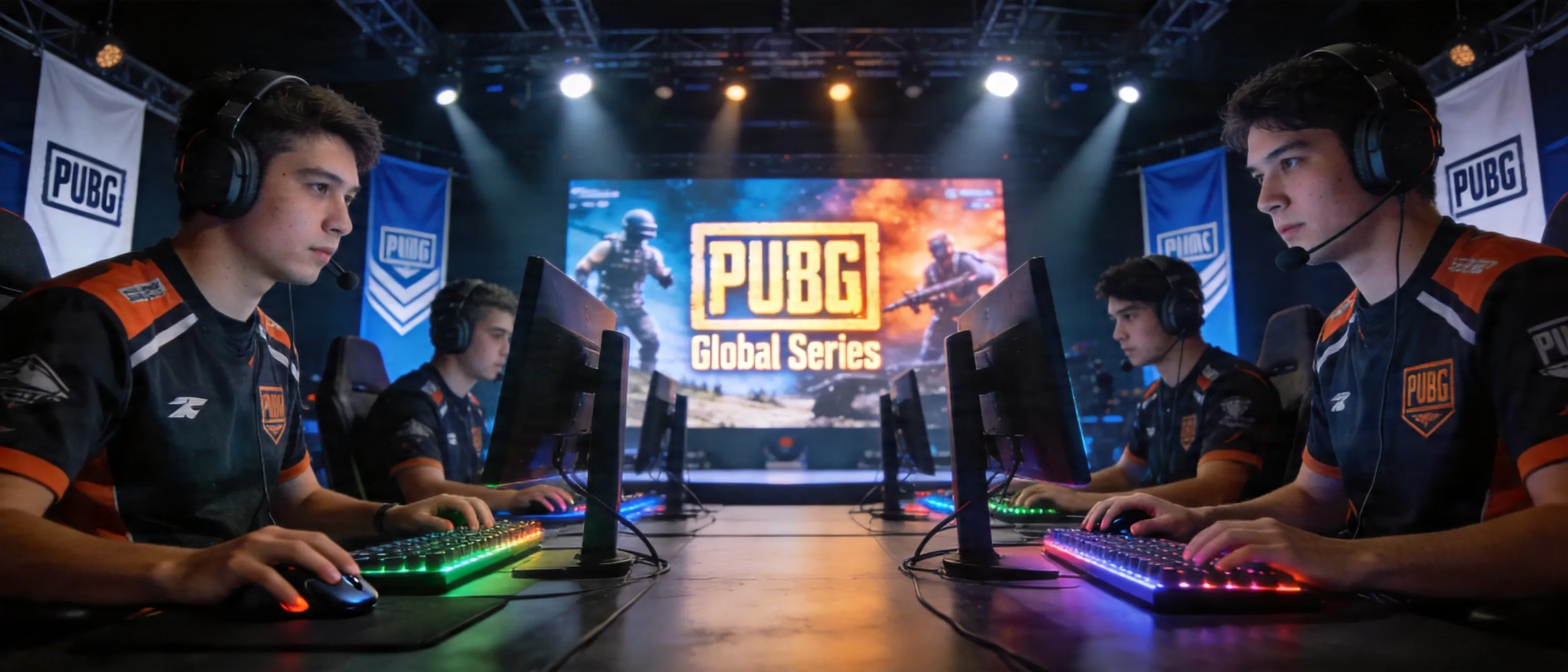
By 2026, PUBG is way more than just the original 100-player drop-and-survive formula. On Steam, PUBG: Battlegrounds still regularly sits among the top 15 most-played games, which is seriously impressive for a title this deep into its lifecycle. In esports, the acronym remains the standard. Events like the PUBG Global Series and regional circuits still use “PUBG” front and center in graphics, schedules, and official rulebooks.
You’ll also see both naming styles used side by side. PUBG Studios tends to write PUBG: Battlegrounds in formal patch notes and official announcements, but community posts often switch back to just PUBG without much thought. On social platforms like X, YouTube, and TikTok, #PUBG is still the dominant tag simply because it’s shorter, cleaner, and better for discoverability.
The franchise has also started stretching beyond pure battle royale. Newer experiments, including the sci-fi co-op PvE roguelite Xeno Point and a Payday-themed collaboration mode, show that Krafton wants PUBG to feel more like a multi-experience platform than a single game. That broader push is part of why the name matters more now than it did a few years ago.
PUBG: Battlegrounds
Inside the wider franchise, PUBG: Battlegrounds is still the main label for the original PC and console battle royale game. PUBG development head Taeseok Jang has described PUBG as “no longer a single game” and more of a long-term franchise aiming to become a global cultural icon. That bigger vision makes sense from a branding standpoint, but it definitely adds some confusion when people use “PUBG” without any extra context.
Most of the time, if a player or journalist just says “PUBG,” they mean this core version unless they specifically mention mobile. The console side is also getting renewed attention in 2026, with Krafton promising stronger controller support and 120 fps performance as part of a push toward younger players and Western audiences.
PUBG Mobile
PUBG Mobile is its own ecosystem, full stop. It has a separate client, its own update cadence, its own monetization model, and a dedicated esports structure. Commercially, that distinction matters a lot, especially since the mobile version has generated much higher total revenue than the PC and console release.
You can see the naming consistency clearly in mobile esports too. Tournaments use labels like PMCO (PUBG Mobile Club Open) and PMPL (PUBG Mobile Pro League), and the full PUBG Mobile name appears regularly in broadcasts and sponsor materials. So if someone asks what PUBG stands for after downloading the mobile version, the acronym still expands the same way — but the product they’re playing is tuned very differently, with touchscreen-focused UI, auto-loot prompts, and recoil adjustments that make it a separate experience from PC.
PUBG Meaning FAQ for New Players
Is PUBG an acronym? Yes. It’s the accepted short form of PlayerUnknown’s Battlegrounds. People sometimes overanalyze how each letter maps exactly, but in normal use, PUBG is simply the standard abbreviation for the original full title.
Is PlayerUnknown a real person? Yes — or more accurately, it’s the longtime online handle of Brendan Greene. He’s the Irish developer whose ARMA 2 and ARMA 3 battle royale mods directly inspired the standalone game. Greene stepped down as lead designer in March 2019 and moved to PUBG’s Amsterdam-based PUBG Special Projects team, where he shifted toward non-battle-royale multiplayer ideas.
Why does PUBG: Battlegrounds sound repetitive? Because it kind of is. Once Krafton rebranded the game in 2022, the title kept the PUBG acronym while also adding “Battlegrounds” after the colon. So yes, the wording technically repeats itself. Krafton clearly decided that strong brand recognition mattered more than making the name perfectly elegant.
Which name should you use? It depends on where and what you’re talking about:
-
PUBG: Battlegrounds for the official PC and console title
-
PUBG for general conversation, tags, and community use
-
PUBG Mobile for the global mobile version
-
BGMI for the Indian mobile release
-
绝地求生 as the official Chinese name
-
吃鸡 as the popular Chinese slang shorthand
Conclusion
So the short answer is simple: PUBG stands for PlayerUnknown’s Battlegrounds. The name started as a direct reference to Brendan Greene’s online identity, then grew into one of the most recognizable labels in competitive gaming. Even after the 2022 rebrand, the acronym stuck because players, esports broadcasts, storefronts, and social media had already made it the default.
If you’re new, the easiest rule is pretty much this: say PUBG when speaking generally, use PUBG Mobile when you mean the phone version, and remember that PUBG: Battlegrounds is the current official name for the flagship PC and console game. That’s the version of the name you’ll keep seeing in 2026, even if most players still just call it PUBG.