
PUBG desert map and data mining unveil thrilling gameplay changes, promising dynamic urban warfare and innovative mechanics for players.
Back in the day, circa 2026, the mere mention of a new PUBG map would send the player base into a frenzy of speculation and data mining. Cast your mind back to a pivotal moment in late 2017, when a test patch for PlayerUnknown's Battlegrounds accidentally served up the blueprint for the game's first major new battlefield: a sprawling desert landscape. Data miners, those digital archaeologists, wasted no time in sifting through the fresh code, unearthing a treasure trove of unfinished assets. The crown jewel? A complete, if slightly cheekily labeled, top-down view of the arid arena waiting to challenge Erangel's reign.
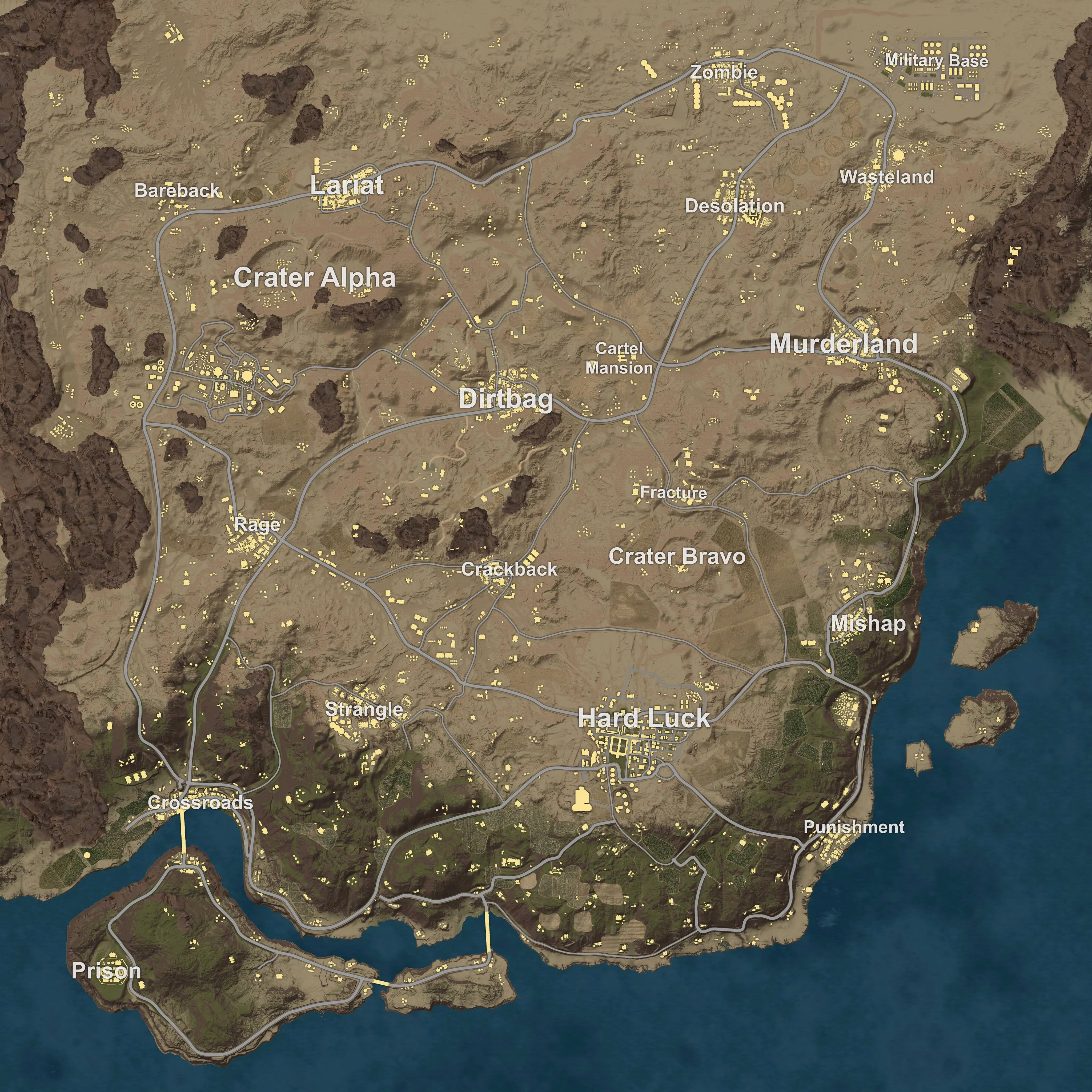
This wasn't just a palette swap. Oh no. The developers at Bluehole were clearly tired of players doing their best Michael Phelps impressions in the rivers of Erangel. The new map looked to be swapping soggy swims for dusty dashes. Early analysis suggested a dramatic reduction in water, replaced by a veritable metropolis of structures, military fortifications, and—most intriguingly—freshly blasted craters. The playstyle was being forcibly evolved from aquatic ambushes to urban warfare and long-range engagements across open, sun-baked plains. It promised a pace that was less about treading water and more about scrambling for high ground in a town called, uh, 'Murderland'? Yes, the placeholder names like 'Murderland' and 'Bareback' hinted this wasn't the final product, but the skeleton was there, and it was beautifully barren.
But the desert map wasn't the only secret hiding in that patch. The update was a veritable Christmas stocking stuffed with goodies for the curious:
-
A Wobbly Jetski: Files for an aquatic vehicle were found, presumably to make the most of the little water that remained. One can only imagine the early test versions handled like a shopping cart on an ice rink.
-
Erangel's Facelift: Even the old Russian favourite wasn't safe from change. A previously dull and empty area was being transformed into a lush new forest with a tranquil pond, proving the devs hadn't forgotten their first creation.
-
Core Gameplay Shake-Up: This patch wasn't just about new toys. It laid the groundwork for fundamental changes that would define PUBG for years: a complete overhaul of ballistics (goodbye, laser-beam guns), a revamp of vehicle physics (hello, unpredictable dune buggy flips), and the long-awaited introduction of vaulting and climbing mechanics. Suddenly, that waist-high wall was no longer an impassable barrier but a tactical opportunity.
It's funny to look back from 2026 and remember the context. At the time, PUBG was a phenomenon, with a staggering 18 million players. Surveys revealed a fascinating split: 40% of those players exclusively battled in first-person mode, a hardcore contingent that craved that extra layer of immersion and tension. The game was also on the cusp of breaking out of the PC early access bubble, with an Xbox Game Preview release imminent for December 2017. The desert map reveal was a signal that Bluehole wasn't resting on its laurels; they were building an empire, one dusty, detail-rich kilometer at a time. The community's reaction? A mix of awe at the scale, laughter at the placeholder names, and intense debate over whether the map would favor snipers or shotgunners. It was a glorious, chaotic time to be dropping in.