
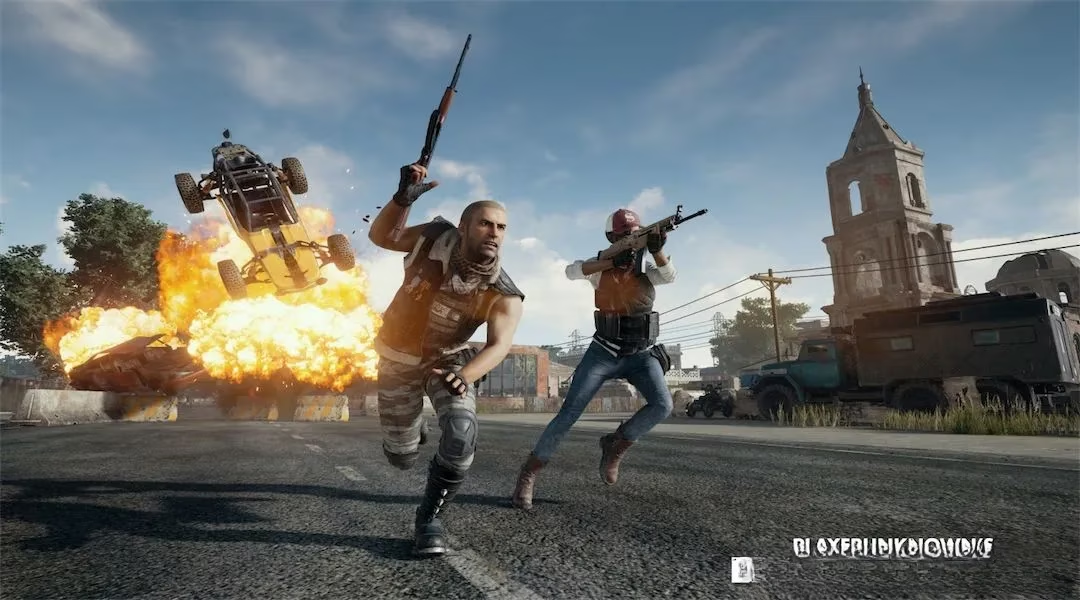
The strategic partnership with Microsoft propelled PlayerUnknown's Battlegrounds (PUBG) to become a console powerhouse, overcoming technical challenges to achieve staggering launch success on Xbox. This masterful alliance, coupled with perfect timing and aggressive marketing, tapped into a hungry player base eager for a new competitive experience.
In the ever-evolving landscape of competitive gaming, few titles have managed to capture the collective imagination and competitive spirit of players quite like PlayerUnknown's Battlegrounds. As we look back from the vantage point of 2026, the game's journey from a PC phenomenon to a console powerhouse stands as a testament to strategic partnerships and the enduring appeal of the battle royale genre. But how did a game with well-documented technical challenges on its initial console release manage to not only survive but thrive, amassing over a million players on the Xbox platform in its first two days alone? The answer lies in a combination of perfect timing, aggressive marketing, and a hungry player base eager for a new kind of competitive experience.
The Foundation of Success: Microsoft's Strategic Bet
Microsoft's early and substantial investment in PUBG was far from a casual gamble. Recognizing the seismic shift the game had caused on PC, the tech giant positioned PUBG as a cornerstone title for the Xbox One, particularly the then-new Xbox One X. This foresight was immediately rewarded. The launch numbers were staggering, signaling that console players were just as eager for the tense, last-player-standing gameplay as their PC counterparts. Microsoft didn't just stop at publishing; they created an ecosystem to foster growth. The limited-time promotion, bundling a free copy of PUBG with every Xbox One X purchase during the 2016 holiday season, was a masterstroke. It wasn't merely a sales tactic—it was a declaration that PUBG was an essential part of the Xbox experience. This move effectively turned every new console owner into a potential PUBG recruit, ensuring the game's community would expand in lockstep with the hardware's adoption rate.
Navigating Exclusivity and Cross-Platform Horizons
A critical chapter in PUBG's console story was its period of timed exclusivity on Xbox. This head start was invaluable, allowing the game to establish a dominant community and a strong brand identity on one platform before facing direct competition elsewhere. However, the gaming landscape in 2026 is defined by connectivity, and the early rumors of a PlayStation version, which eventually materialized, were a sign of things to come. The initial fear that a PS4 release would "cut into the Xbox One iteration's profits" gave way to a broader industry realization: a game's success is no longer confined to a single platform. Today, the focus has shifted towards cross-platform play and unified progression. Reflecting on PUBG's journey, one might ask: Did exclusivity help build a dedicated foundation, or did it temporarily limit the game's potential audience? In hindsight, it likely served as a crucial incubation period, allowing the developers to refine the console experience before a wider rollout.
The Lasting Impact and Evolution of a Genre Giant
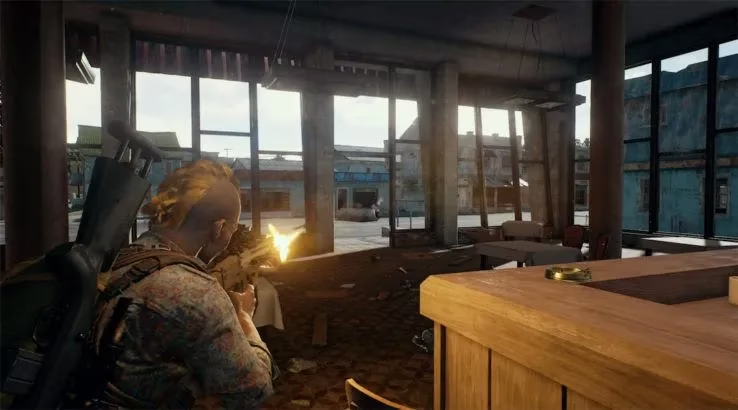
The success of PUBG on console did more than just sell copies; it altered the console multiplayer blueprint. It proved that complex, large-scale, and uncompromisingly hardcore PC genres could find a massive, dedicated home on living room consoles. The game's performance, despite its famous early technical issues, showed that players were willing to overlook flaws for groundbreaking gameplay. This paved the way for numerous other titles and solidified the battle royale framework as a staple of console gaming libraries. Fast forward to 2026, and the principles PUBG established—large maps, loot-driven progression, and a shrinking play zone—remain deeply embedded in the design of countless popular games.
Key Milestones in PUBG's Console Journey:
| Year | Milestone | Significance |
|---|---|---|
| 2017 | Xbox Game Preview Release | Introduced the core BR experience to consoles in an early-access format. |
| 2017 | 1M+ Players in 48 Hours | Demonstrated unprecedented player demand and adoption speed. |
| 2017 | Xbox One X Holiday Bundle | Strategic hardware-software pairing that drove massive install base growth. |
| 2018 | End of Timed Exclusivity | Opened the door for the game's expansion to other console platforms. |
| 2018-Present | Multi-Year Live Service | Continuous updates, maps, and modes that have kept the community engaged for nearly a decade. |
The Verdict: A Blueprint for Lasting Relevance
From its record-shattering launch on Xbox to its status as a multi-platform titan in 2026, PlayerUnknown's Battlegrounds exemplifies how to transition a hit game across ecosystems. Its initial console success was fueled by a perfect storm of player demand, strategic platform support, and bold marketing. The lessons from its rollout are still relevant: secure strong platform partnerships, engage the community early and often, and, most importantly, deliver a compelling core gameplay loop that transcends technical imperfections. As we look at the current gaming arena, filled with evolved descendants of the battle royale genre, PUBG's legacy is clear. It wasn't just a game that sold well; it was a game that changed what console players expected from their online multiplayer experiences, proving that the thrill of the hunt and the desire to be the last one standing are universal gaming truths. 🎯🏆