
PUBG: BATTLEGROUNDS anti-cheat keeps its weekly banned players list public, masking names while urging reports and Steam Guard.
In the first week of March 2024, the PUBG: BATTLEGROUNDS Anti-Cheat Team did something that many game companies avoid: it named names. The team released its weekly banned players list for the investigation period 2024/02/26~2024/03/03. The list was not a quiet internal memo. It was a public statement. Every permanently banned account appeared with its in-game nickname partially hidden, the first three letters replaced by asterisks. The message was simple: cheat, and you will be removed.
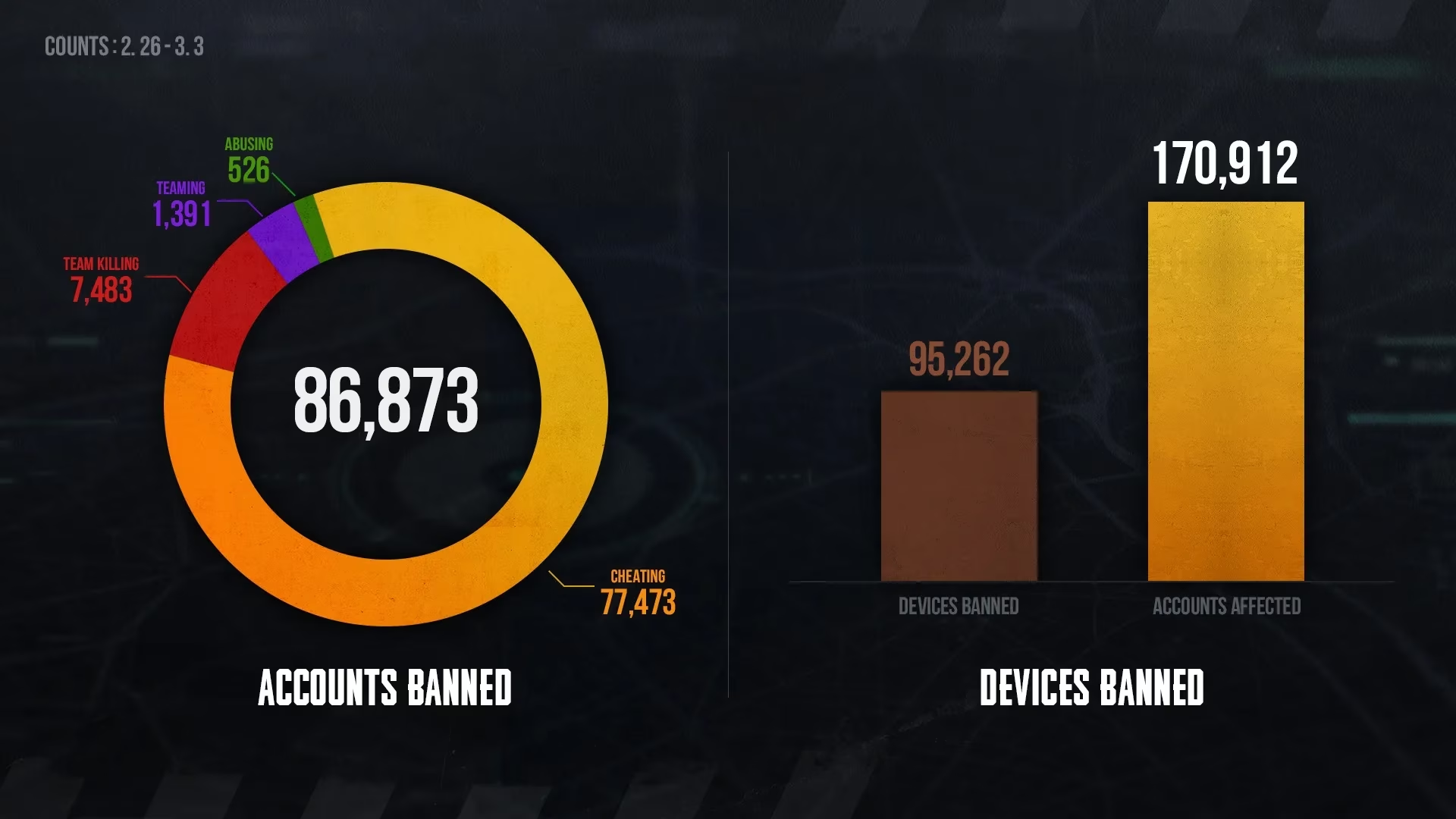
Two years later, in 2026, that message still echoes. The tools have changed. Cheat software has become more complex, more hidden, and more expensive. But the principle has not. The anti-cheat team still values player reports. It still asks the community to report illegal software and misconduct through in-game reports first. If a report needs extra attention, players can contact PUBG Support. And it still reminds everyone to protect their accounts with Steam Guard Mobile Authenticator.
| Focus | 2024 Guidance | 2026 Status |
|---|---|---|
| Illegal software | Permanent bans | Still permanent |
| Misconduct | Reports and bans | Still enforced |
| Player reports | In-game first | Still first step |
| Account security | Steam Guard Mobile Authenticator | Still recommended |
| Nickname privacy | First 3 letters masked | Same practice |
Jae, a player who had logged thousands of hours since the early access days, remembered reading the 2024 list. He did not celebrate the bans. He felt tired. He had seen too many matches ruined by a single player with impossible aim. But he also felt a small relief. Someone was watching. Someone was counting. The list proved that the fight was not abandoned.
By 2026, Jae had become more careful. He enabled two-factor authentication. He reported suspicious players. He told his squadmates to do the same. The anti-cheat team's advice from 2024 had become a routine part of his gaming life. The team had also emphasized that account abuse can happen to anyone. A stolen account can be used to cheat, and the original owner may face a ban. That is why Steam Guard Mobile Authenticator matters. It is not a magic shield, but it is a lock on the door.
The banned players list was attached to the announcement. It showed only in-game nicknames. No real names. No personal data. The first three letters were replaced with asterisks. This balance was deliberate. The team wanted to raise awareness without turning the list into a doxing tool. It wanted consequences, not harassment. In 2026, that balance is still debated. Some players want full names. Others want no list at all. The anti-cheat team has kept its middle path.
PUBG: BATTLEGROUNDS is not the only game with cheaters. But its anti-cheat team has been unusually transparent. Weekly ban reports, investigation periods, and public lists are part of that transparency. The 2024 report covered only one week. Yet it represented a year-round effort. The team investigated, verified, and banned. Then it told the community what happened. That loop, report to ban to publish, is still running in 2026.
Of course, cheaters adapt. They use hardware spoofers. They buy stolen accounts. They test new exploits. The anti-cheat team responds with new detection methods. It also relies on player reports. The team wrote that it highly values interest and opinions that contribute to PUBG's anti-cheat efforts. That sentence is not just corporate politeness. In a battle royale with millions of players, human reports can catch what automation misses.
One player, a streamer named Lena, told her audience in 2026 that she keeps a personal rule. If she sees something impossible, she records it. Then she reports it in-game. She does not witch-hunt. She does not post clips for drama. She follows the process. The anti-cheat team asked for that process in 2024. It still asks for it today. The in-game report is the first step. Additional assistance can come later. But the first step matters.
Account security is the other half of the equation. The team's 2024 notice included a reminder to sign up for Steam Guard Mobile Authenticator. It even provided a guide. In 2026, that advice is more important than ever. Account theft is a gateway to cheating. A stolen account can be sold, shared, or used to test cheats. When the account is banned, the original owner loses everything. The anti-cheat team does not want that. It wants players to lock their accounts before someone else unlocks a ban.
Finally, the team ended its 2024 message with a promise. It would do its best to provide a fair gaming environment. That promise is not a guarantee. No anti-cheat system is perfect. But the weekly banned players list is a sign of effort. It is a public ledger of enforcement. In 2026, as PUBG: BATTLEGROUNDS continues to evolve, that ledger remains. It is not glamorous. It is not fun. But it is necessary. And for every player who has ever died to a cheater, it is a small piece of justice. The team closed with a simple thank you, and the community kept reporting.