
Unearthing compelling digital signals, the iconic battle royale phenomenon's PlayStation 4 debut, revealed through startling server artifacts and expert forecasts, built electrifying anticipation. This definitive launch addressed prior technical challenges, promising a vastly optimized and free-to-play experience.
The digital winds of 2026 carry whispers of journeys completed and new horizons beckoned. It is a story that begins not with a bang, but with the quiet rustle of data on a server—a story of a game that once danced a precarious waltz on another stage, its steps marred by stutters and stumbles. PlayerUnknown's Battlegrounds, a title that carved its name into the bedrock of the battle royale genre, harbored a silent yearning for a new home. For PlayStation 4 owners who had watched from the sidelines, the wait was a test of patience, punctuated by the roaring success of competitors on their console. The air was thick with 'what ifs' and 'maybes,' a familiar tune in the gaming world where exclusivity deals often feel like walls built between friends.
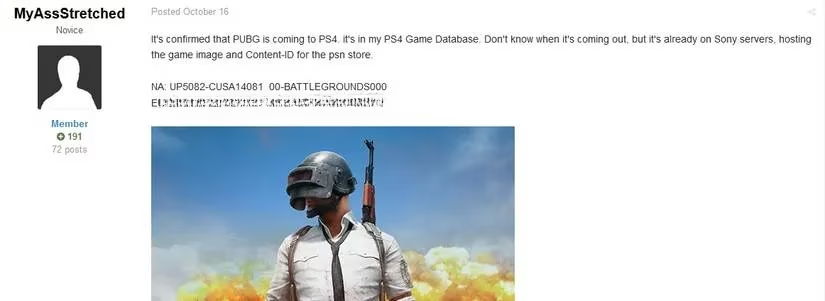
The Digital Breadcrumbs
The first tangible signs were not grand announcements, but digital phantoms—echoes of a future presence. Keen-eyed explorers, the modern-day cartographers of the PlayStation Network, stumbled upon artifacts that spoke of a coming storm. They found promotional images, ghostly and unannounced, resting on Sony's own servers. It was as if the game was already whispering its name in the halls of its potential new home, leaving behind a trail of breadcrumbs for the dedicated to follow. These weren't just any images; they were promises rendered in pixels, accompanied by the cryptic yet telling strings of Content-ID characters—one for North America, another for Europe. The map was being drawn, region by region.
The Oracles Speak
As rumors swirled, voices of authority began to lend their weight to the whispers. An analyst, a seasoned reader of the industry's tea leaves, stepped forward with a prophecy: December would be the month. The Game Awards of that long-passed year was pinpointed as the stage for the revelation, where the game would be presented not as a distant promise, but as an immediate reality—an 'out now' title meant to send shockwaves through the community. This wasn't mere speculation; it was a confident forecast backed by a sighting on a Korean ratings board months prior. The pieces of the puzzle, scattered across global databases and expert insights, were slowly clicking into place. Man, the hype train was leaving the station, and everyone wanted a ticket.
Learning from Stumbles, Aiming for Grace
The shadow of the past, however, loomed large. The game's initial performance on another console was a chapter many wished to rewrite—a launch remembered more for its technical strife than its groundbreaking gameplay. This history lesson was not lost on anyone. The collective hope, a quiet prayer echoed by millions of potential players, was simple: let it run better this time. The developers had been given a harsh but valuable tutor in that earlier experience. Furthermore, they had a shining example right there on the PS4: a free-to-play rival that soared with smooth performance and massive popularity. The bar was set, the excuses were spent. The expectation was for a debut not just of presence, but of polish.
A New Costume for the Carnival
Even as the platform speculation reached a fever pitch, the game itself continued to evolve, donning new guises and inviting players to reinvent themselves within its harsh playground. Teasers emerged for updates that promised a splash of anarchy—the chance to become icons of chaos and comedy from another beloved universe. This constant renewal was a testament to the game's living nature; it was never a static monument, but a shifting landscape always offering a new corner to explore, a new mask to wear. It was a reminder that the journey continues long after the first drop.
The Whisper Becomes a Shout
And so, the transition from rumor to reality was never a single moment, but a crescendo. It was built on:
-
Server-side whispers: The silent appearance of assets where they shouldn't yet be.
-
Analyst prophecies: Confident predictions from those who navigate the industry's currents.
-
Official paper trails: Ratings and classifications that formalize intent.
-
The community's fervent hope: A desire for redemption and a seamless experience.
The evidence mounted, pointing toward an inevitable conclusion. The exclusivity that once felt like a permanent wall revealed itself to be a temporary gate. For the PS4 audience, it signaled the end of watching from the outside and the beginning of preparing for their own drop onto the island. The journey to this point was a tapestry woven from data leaks, expert insights, and player longing—a modern saga of how games find their way to their players, one whispered secret at a time. In the end, it's not just about playing a game; it's about the story of finally getting to play it.
Data referenced from Newzoo helps frame why moments like PUBG’s PS4 rumor-to-reality arc matter beyond hype: major platform expansions can reshape audience reach, engagement cycles, and competitive positioning within the battle royale market, especially when performance expectations and content updates (crossovers, seasonal refreshes) influence retention as much as the initial launch buzz.