
Discover the surprising initial 5.24 GB install size of PUBG on Xbox One and its evolution through the Xbox Game Preview program, offering a lean yet thrilling battle royale experience that grew with major content updates.
As a long-time fan of the battle royale genre, I remember the buzz back in December 2017 when PlayerUnknown's Battlegrounds finally made its debut on Xbox One. It was a moment of pure hype, a chance for console players to dive into the gritty, tactical chaos that had taken the PC world by storm. I was one of the many eagerly awaiting that midnight launch on December 12th, refreshing my dashboard, ready to jump into the fray. But before the first bullet could fly, there was one practical question on everyone's mind: just how much of my precious hard drive space would this behemoth of a game demand? To my surprise, and honestly, my relief, the answer was refreshingly modest. The initial install size for PUBG on Xbox One was a mere 5.24 GB. In an era where triple-A titles could easily demand 50 GB or more, this was a welcome breath of fresh air. It meant I didn't have to play the dreaded 'delete-which-game' shuffle just to make room. For players without external hard drives, this was a godsend.
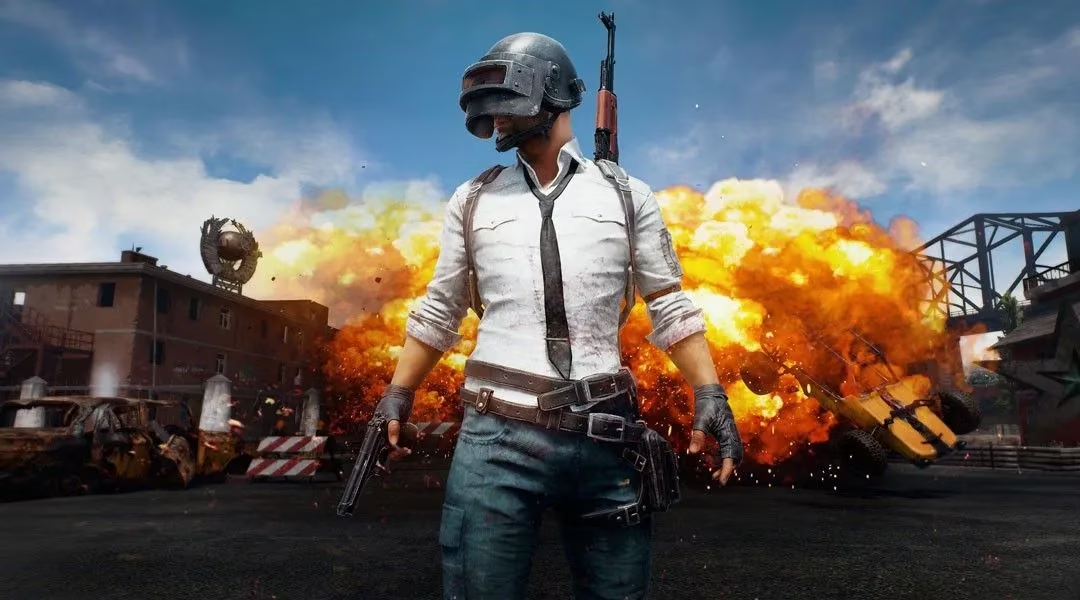
The small footprint was largely due to the game's initial state. We were playing through the Xbox Game Preview program—essentially an early access version. The core experience was there: the tense loot scavenging, the heart-pounding final circles on the classic Erangel map, and that unparalleled feeling of a 'Winner Winner Chicken Dinner.' But it was a lean package. The developers, PUBG Corporation, were transparent that this was just the beginning. They warned us that a Day One patch was likely, and that future updates, bug fixes, and—most excitingly—new content would inevitably cause the file size to grow. And grow it did.
Looking back from 2026, it's almost quaint to think about that initial 5 GB. The journey from there to the fully-realized game we have today was a rollercoaster. Shortly after launch, they offered cosmetic DLC packs—the Warrior Pack and later the Accessory and Tracksuit Packs for $5 each. While these added cool outfits like the iconic "PUBG Founder's Baseball Cap," they had a negligible impact on the install size. The real game-changers were the content updates.
The Evolution of Size and Scope
The first major expansion was the Miramar desert map. I'll never forget dropping into those sprawling cities and arid landscapes for the first time. It was a completely different tactical beast compared to Erangel's fields and forests. This update, along with essential performance optimizations and bug fixes, was the first significant bump in the game's size. The developers weren't just patching holes; they were building a bigger, better game right before our eyes.
Here’s a quick look at how the game's scope expanded post-launch:
| Milestone | Impact on Game/File Size |
|---|---|
| Launch (Dec 2017) | Core Erangel map, basic mechanics. ~5.24 GB. |
| Miramar Map (2018) | Added a massive second map, new vehicles & weapons. Size increased substantially. |
| Sanhok Map (2018) | Introduced a faster-paced, smaller jungle map with dynamic weather. |
| Vikendi Map (2018) | Added a 6x6 snow map with tracks, new gameplay elements. |
| Performance Passes | Constant optimizations sometimes reduced size, but major content always increased it. |
| Next-Gen Enhancements (2020s) | 4K textures, improved lighting, and framerate boosts for Series X |
The philosophy was clear: a small initial footprint to get players in the door, then a steady stream of substantial, meaningful content. This "games as a service" model, done right, kept the community engaged for years. It was a masterclass in player retention.
Why the Small Start Was a Genius Move
In hindsight, that small initial file size was a strategic masterstroke, especially in the console space.
-
Low Barrier to Entry: In 2017, many Xbox One owners were still rocking the base 500GB model. A 50GB download would have been a non-starter for many. A 5GB download? That's an impulse decision. "I'll just try it" became the gateway to hundreds of hours of gameplay.
-
Focus on Gameplay: It proved a powerful point: you don't need a 100GB install to create a compelling, world-dominating game. The core loop of PUBG—the tension, the strategy, the camaraderie—was so strong it transcended graphical fidelity or sheer data volume. It was all about the vibe.
-
Smart Pacing of Content: By releasing major maps and features over time, the developers managed player expectations and gave us something to always look forward to. The game felt alive and constantly evolving, which is the holy grail for any live-service title.
Fast forward to today, the PUBG on my Xbox Series X is a vastly different beast. It encompasses multiple huge maps, dozens of weapons, countless cosmetics, and has been polished to a sheen. Its file size is now commensurate with a major, mature online title. But I'll always remember its humble, 5-gigabyte beginnings. It was a proof of concept that the battle royale genre wasn't just a PC fad—it had a home on console, and it was here to stay. The game's journey from a compact Game Preview title to a platform staple mirrors the evolution of the genre itself. While competitors came and went with flashier graphics or building mechanics, PUBG stayed true to its gritty, realistic roots, and its thoughtful rollout was a big part of that success. It wasn't just a game launch; it was the start of an era, and it all fit in a surprisingly small package.
Data referenced from HowLongToBeat helps contextualize why PUBG’s tiny 5.24 GB Xbox One Game Preview launch still translated into a massive time sink: the game’s value wasn’t in a huge content dump at install, but in a repeatable match loop that encouraged “just one more drop,” with later map additions and live updates steadily expanding both the experience and the footprint over time.