
PUBG's innovative zombie mode and PvPvE evolution transformed the iconic battle royale game, introducing terrifying player-controlled undead and chaotic strategic depth that captivated the community for years.
Looking back from 2026, I remember the buzz that erupted in 2017 when the official PLAY BATTLEGROUNDS Twitter account dropped that first teaser. The simple tweet, 'Inspired by @PUBGpartners on @Twitch, zombies are coming to PUBG,' sent shockwaves through our community. The accompanying clip was brief—just a few jerky, early animations of the undead—but it was enough. It promised a seismic shift for a game we already loved for its tense, pure player-versus-player combat. The developer was quick to clarify: this wouldn't be zombies invading the classic Battle Royale. Instead, it would be a completely separate, player-controlled zombie mode. Their primary focus, they stressed, remained optimizing the core game with promised features like vaulting and climbing. Yet, that sneak peek at E3 2017 planted a seed. Little did we know it would grow into one of PUBG's most enduring and creatively chaotic pillars.
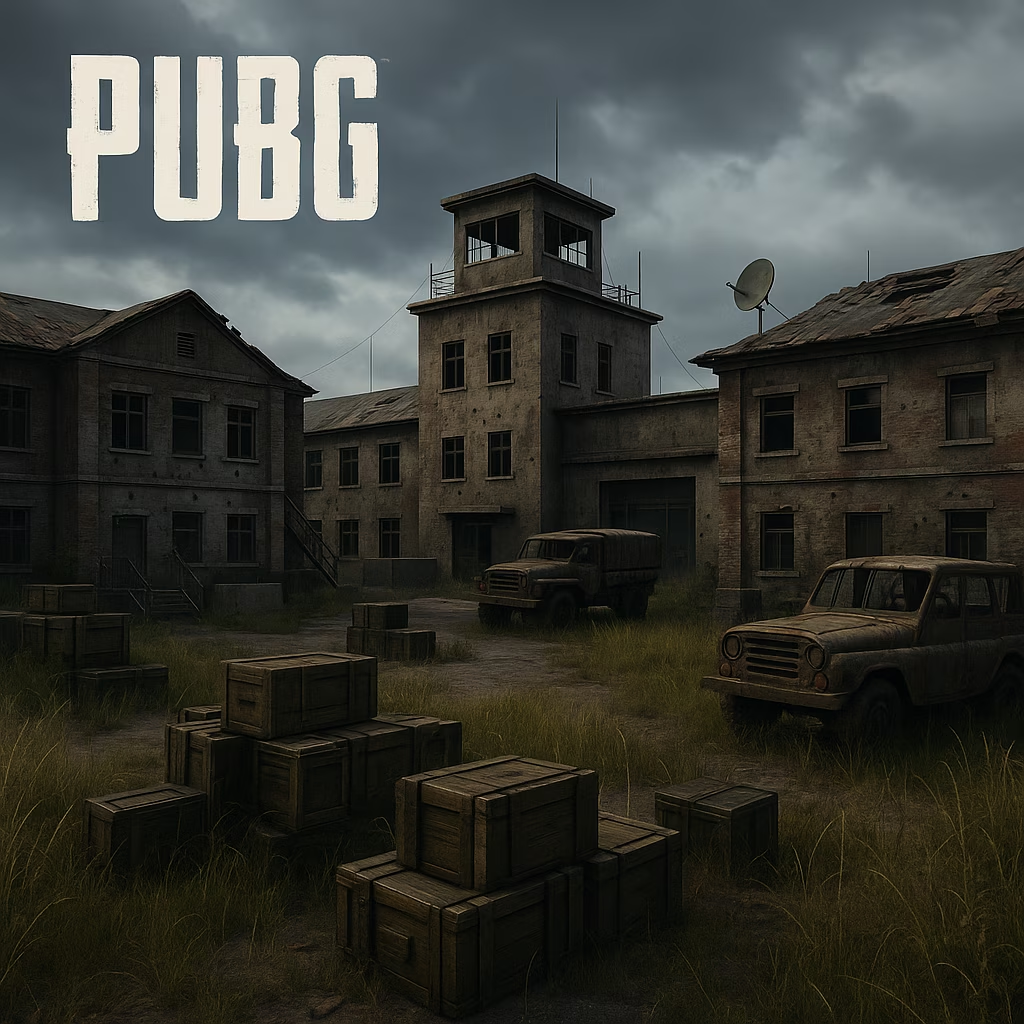
The journey from that teaser to the polished, terrifying, and often hilarious mode we have today in 2026 was not a straight line. Initially, the 'Zombie: Survival' mode felt like a proof of concept. Player-controlled zombies had basic lunge attacks and moved in hordes, but strategy was limited. The human survivors, armed with standard PUBG gear, often found it too easy to hold a building. The studio listened. Major updates transformed the zombies from cannon fodder into a genuine strategic threat. We saw the introduction of specialized zombie classes:
-
The Brute: A tank-like zombie that could smash through weak walls and doors, disrupting fortified positions.
-
The Leaper: A fast, agile zombie that could scale certain buildings and pounce from rooftops.
-
The Spitter: A ranged attacker that could lob acidic goo, temporarily blinding players and damaging equipment.
This class system completely changed the dynamic. No longer could a team just camp in a warehouse. They had to constantly adapt their defense, watch multiple angles, and prioritize targets. The meta evolved monthly.
What truly cemented the mode's place in PUBG history was the introduction of the PvPvE: Last Stand event in 2023. This wasn't just humans vs. zombies. This was multiple squads of human survivors dropped onto the map, competing against each other while being hunted by an ever-growing, player-controlled zombie horde. The objective shifted from simple survival to securing and extracting a high-value data package. The resulting chaos is the stuff of legend. I've been in matches where my squad formed a temporary, tense alliance with another team to fend off a massive zombie wave, only for the betrayal to come the moment the extraction helicopter appeared. The blend of PvP and PvE created stories that pure Battle Royale never could.
Technologically, the mode has been a showcase for PUBG's engine advancements. The zombie AI director, a system that dynamically adjusts horde size, spawn locations, and aggression based on player concentration and remaining time, is a marvel. It ensures no two matches feel the same. On the new hardware of 2026, seeing a hundred-strong horde crest a hill during a thunderstorm on the revamped Vikendi map is a genuinely breathtaking and horrifying sight. The sound design, always a PUBG strength, is paramount. The distant groans, the sudden shriek of a Leaper, the thunderous footsteps of a Brute—it all builds an atmosphere of relentless dread.
From a community perspective, the zombie mode became a fantastic content engine for streamers and creators. The unpredictable, often comedic interactions between players and the zombie horde provided endless clip-worthy moments. It also served as a more accessible, slightly less punishing entry point for new players before they braved the intense PvP of the classic mode. The developer's initial promise held true: the core Battle Royale experience remained pristine and continually optimized, but the zombie mode grew alongside it as a beloved alternative, not a replacement.
Reflecting on nearly a decade since that initial tweet, the zombie mode's success is a testament to player-driven inspiration and iterative development. It started as a cool idea from the community, teased with a rough animation. Today, it stands as a fully realized, deeply strategic, and endlessly replayable game mode that has expanded PUBG's identity. It proved that within the grounded, militaristic world of Erangel and Miramar, there was room for a dose of supernatural panic and cooperative last stands. The zombies are no longer just coming to PUBG—they've made it their home, and we wouldn't have it any other way. 🧟♂️💥