
PUBG's banned players list from July 14–20, 2025 reveals permanent bans for cheaters, reinforcing anti-cheat enforcement and fair play.
The PUBG: BATTLEGROUNDS Anti-Cheat Team has released another weekly banned players list, covering an investigation period from July 14 to July 20, 2025. The notice, which remains a reference point for the community well into 2026, highlights the studio's ongoing commitment to removing players who use illegal software or engage in serious misconduct. The report lists the in-game nicknames of permanently banned accounts, with the first three letters of each nickname replaced by asterisks. This approach balances public accountability with a small degree of anonymity.
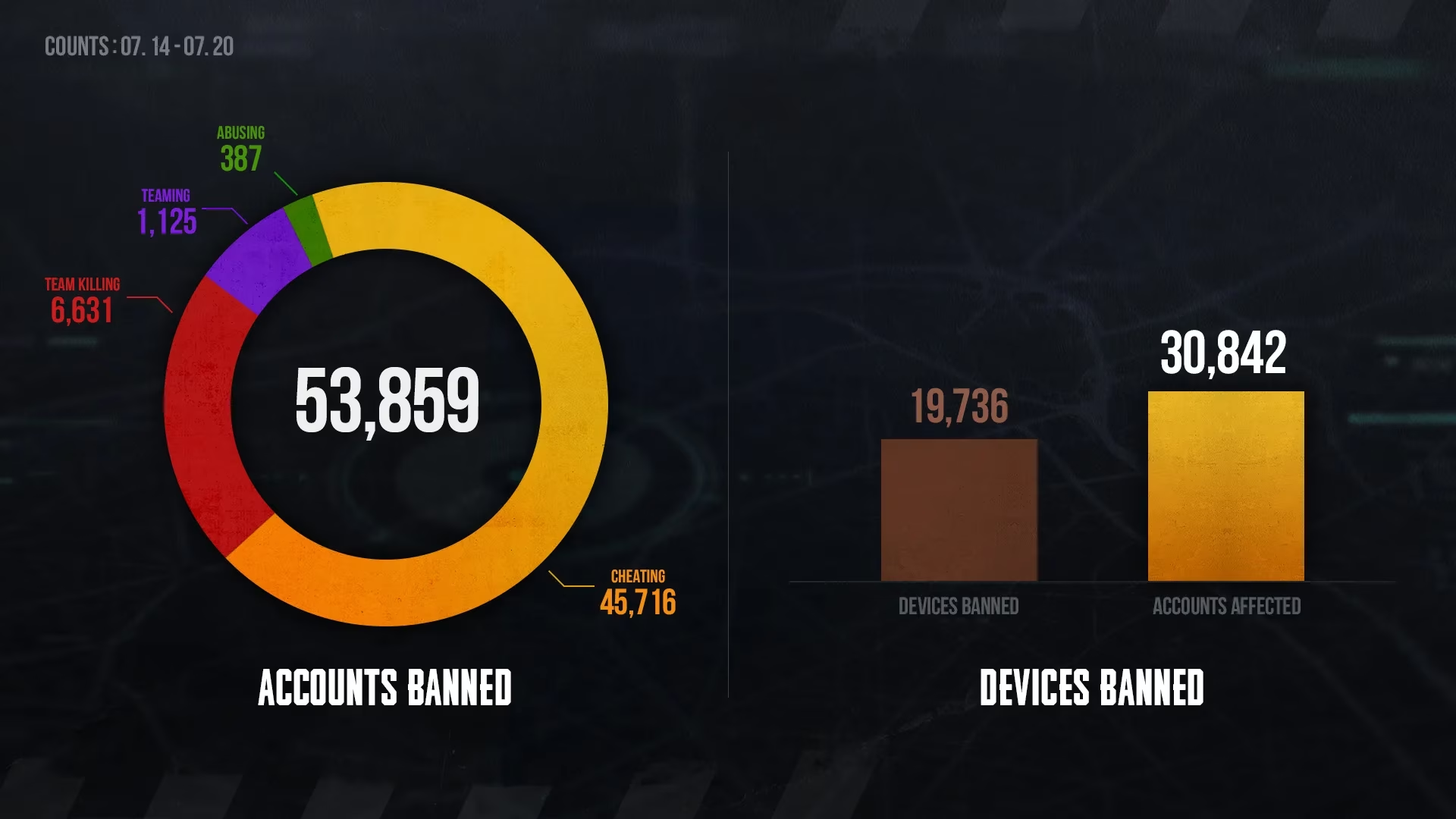
Why does PUBG choose to publish these weekly reports? The answer is straightforward: transparency helps deter cheating. When players see that permanent bans are real and frequently issued, the risk of losing a valuable account becomes more tangible. In a battle royale where every match depends on fair competition, a single cheat can ruin the experience for dozens of other players. How many legitimate victories are lost because of an aimbot or a wallhack? The anti-cheat team does not provide exact numbers, but the weekly list makes the consequences impossible to ignore.
A Closer Look at the Report
The list attached to the official announcement shows only permanently banned accounts. Temporary suspensions are not included, which helps the community distinguish between the most severe punishments and lesser penalties. Permanent bans are usually reserved for clear violations such as using unauthorized programs, tampering with game files, or repeated misconduct. Once such a ban is applied, the account loses access to all purchased items, seasonal rewards, and progress. Could a first-time offender deserve a second chance? In some cases, yes, but the anti-cheat policy remains strict when illegal software is involved.
The decision to replace the first three characters of each nickname with asterisks raises an interesting question. Does this masking reduce public shaming while still warning the wider community? It seems to strike a compromise. The nickname remains partially recognizable to those who know the player, but it avoids exposing a full identity across the internet. This is particularly relevant in an era where online harassment can follow a player beyond the game.
How Players Can Support Fair Play
PUBG encourages all players to use the in-game reporting system as the first step when they encounter suspicious behavior. This tool sends match data directly to the anti-cheat team for review. If additional assistance is needed, players can contact PUBG Support through official channels. The process may take time, but every report contributes to a larger body of evidence. After all, what is the point of a ban wave if players do not report the suspicious activity that triggers it?
Key actions for the community include:
-
🛡️ Submitting in-game reports for suspected cheaters
-
✅ Contacting PUBG Support for unresolved issues or appeals
-
🔒 Enabling Steam Guard Mobile Authenticator to secure accounts
-
🎮 Avoiding third-party software that might interact with game files
Account Security and Steam Guard Mobile Authenticator
One of the most overlooked aspects of the weekly anti-cheat notice is account security. Players are strongly urged to enable Steam Guard Mobile Authenticator. Why is this recommendation included in a ban list announcement? Because compromised accounts are often used by cheaters to avoid detection. If a hijacker uses someone else's account to run illegal software, the original owner may end up permanently banned through no fault of their own. The mobile authenticator adds a crucial second layer of protection, requiring approval for new device logins. Setting it up takes only a few minutes through the Steam Mobile App, yet it can save years of progress.
Anti-Cheat Efforts in 2026
As PUBG continues to operate in 2026, the fight against illegal software has become more sophisticated. Automated detection systems now analyze player behavior, movement patterns, and statistical anomalies. Human reviewers still play a role in verifying complex cases. The weekly banned players list remains one of the few public windows into this hidden machinery. It reassures honest players that their reports are being examined and that cheaters are not operating without consequences. At the same time, the developers remind everyone that no anti-cheat system is perfect. New versions of illegal software emerge regularly, which is why community vigilance is essential.
The list from July 14 to July 20, 2025, is therefore more than a simple registry of punished accounts. It is a snapshot of an ongoing battle for fairness. Every nickname on that list represents a choice to break the rules, and every ban represents a response from the systems designed to protect the game. The next time a player encounters an impossible shot or an enemy who always seems to know where everyone is, the advice remains the same: report, secure your account, and keep playing with integrity. Fair competition is not a passive state; it is built one match at a time through the collective effort of developers and players alike.