
PUBG: BATTLEGROUNDS Anti-Cheat Team published weekly permanent bans for 2026/08/17–08/23, masking nicknames and urging reports plus Steam Guard.
In the late summer of 2026, the PUBG: BATTLEGROUNDS Anti-Cheat Team opened its weekly ledger and let the names fall. The investigation period ran from 2026/08/17 to 2026/08/23, and the outcome was a published roster of permanently banned accounts. The notice was not a spectacle. It worked like a lighthouse made of paper: quiet, repetitive, and useful because it kept sweeping fog away from the harbor. Players saw the masked nicknames, the first three letters of each replaced with asterisks, and understood that the list was both a warning and a receipt.
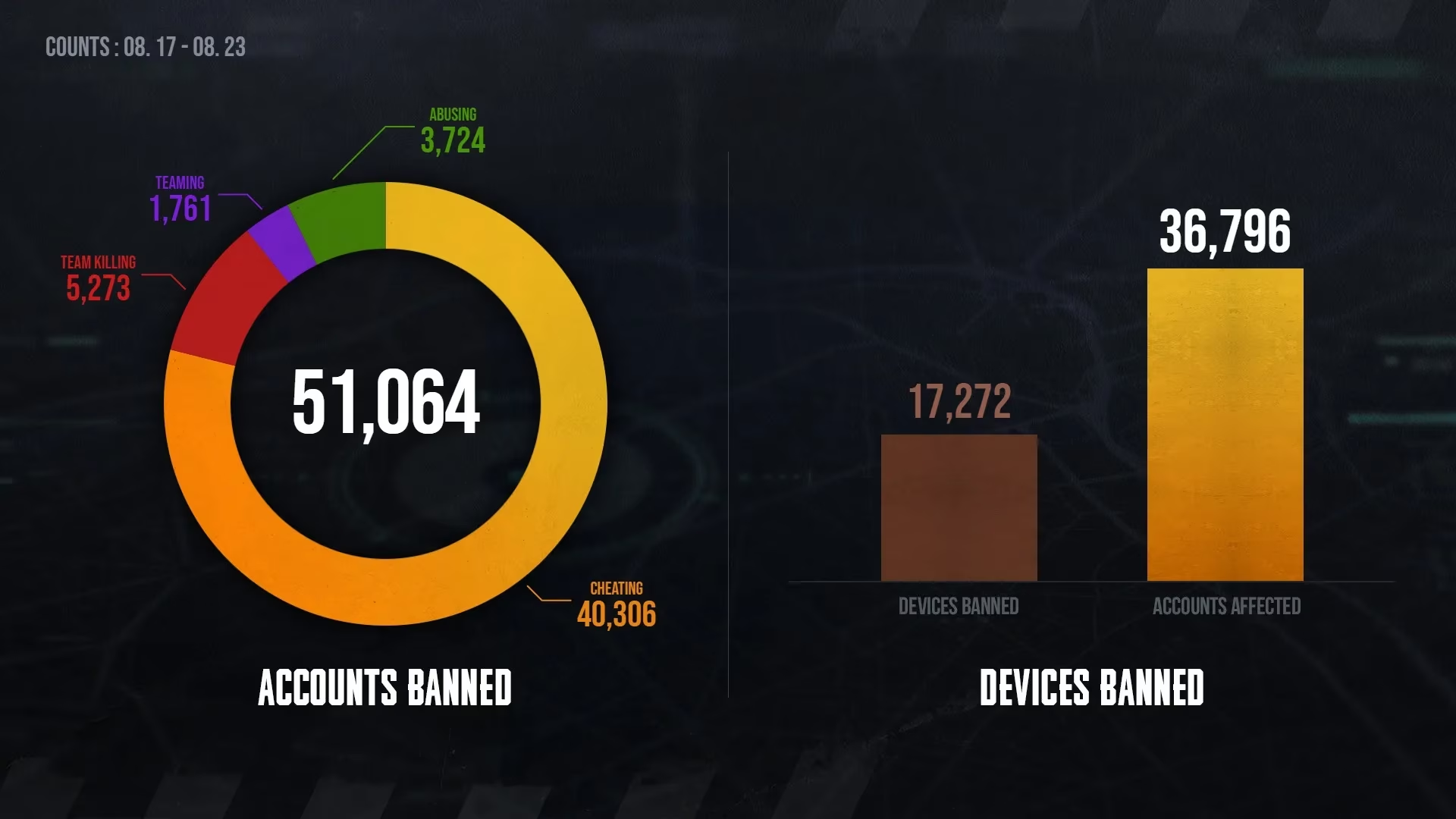
To outsiders, a ban list can look like a graveyard. To the anti-cheat team, it was closer to a gardener's root-pulling chart: each permanent removal was meant to keep the soil from souring for everyone else. The weekly report did not celebrate the removals. It documented them, the way a careful groundskeeper documents blight so the rest of the field can breathe.
The roster carried a simple structure. The published names were in-game nicknames, not private account details, and the first three letters of each nickname had been replaced with asterisks. That masking mattered. It allowed the community to see that action had been taken without turning the list into a carnival of harassment. The anti-cheat team framed the release as awareness: illegal software and misconduct have consequences, and the consequences are permanent when the rules are broken.
| 🧾 Item | 📌 Detail |
|---|---|
| Investigation period | 2026/08/17~2026/08/23 |
| Enforcement | Permanent bans for accounts that violated rules of conduct |
| Public display | In-game nicknames with the first three letters masked by asterisks |
| Reporting path | In-game reports first; additional assistance through PUBG Support if needed |
| Account safety | Steam Guard Mobile Authenticator recommended |
The team also repeated a practical instruction that had become a ritual of its own: players should report illegal software and misconduct through in-game reports first. If additional assistance was needed, PUBG Support remained the next stop. The order was deliberate. In-game reports feed the machinery that watches patterns, and support channels handle the cases that need a human hand. Neither path was presented as a shortcut to vengeance. Both were presented as maintenance.
There was a second warning folded into the notice, softer but no less important. Valuable accounts can be abused or banned through illegal software or misconduct, and the team urged players to sign up for Steam Guard Mobile Authenticator. In a world where account theft can arrive like a stranger trying the wrong key in a dark hallway, two-factor protection is not glamour. It is a lock. The notice treated it that way: plain, sensible, and worth repeating.
The weekly list functioned as a seismograph for trust. Small tremors of cheating registered before they became fractures, and the community could see that the anti-cheat team was reading the needle. The team said it highly valued player interest and opinions that contribute to PUBG's anti-cheat efforts. That sentence was easy to skim, but it carried the shape of the whole project: enforcement without community reports is a net with holes, and community reports without enforcement is noise.
For the players who logged in after the notice went live, the message was not abstract. A match could still begin with a plane, a parachute, and the usual rush for cover. But somewhere behind the scenes, a ledger had been updated. Names had been masked, accounts had been closed, and a promise had been restated. The anti-cheat team said it would do its best to provide a fair gaming environment. The weekly roster was the proof of work: not a perfect wall, but a wall that was being repaired in public.
By the end of the week, the notice had done what it was designed to do. It had turned a private enforcement action into a public record, warned the curious, reassured the careful, and reminded the community that fair play is not a slogan but a chore. The list was not a trophy. It was a broom, a lock, and a ledger, all folded into one plain page.