
Reflecting on PUBG's explosive growth reveals a cultural avalanche, where managing unprecedented player numbers and server strain became monumental challenges. The journey from explosive success to foundational legacy was a masterclass in navigating uncharted waters.
Looking back from 2026, it feels like a lifetime ago when we were all just trying to wrap our heads around PUBG's explosive growth. I remember the sheer disbelief in Brendan "PlayerUnknown" Greene's voice when he talked about the numbers. Selling eight million copies in just eight weeks? Hitting two million concurrent players on Steam, a first for the platform? We were all flying blind, passengers on a rocket ship we didn't fully know how to pilot. Greene himself admitted they were "still trying to figure that out." The game's success wasn't a meticulously plotted campaign; it was a cultural avalanche, and we were all caught in the exhilarating, chaotic slide.
The First-Person Surprise and Growing Pains
One of the biggest early surprises was the community's love for the hardcore first-person (FPP) servers. Greene confessed he expected maybe 10% adoption, but a whopping 40% of players dove into that immersive, unforgiving perspective. It was especially popular in North America and Europe. This wasn't just a game mode preference; it was a signal. The player base was more diverse and dedicated than anyone had anticipated, craving different flavors of tension. Managing this explosive, multifaceted community became our first real challenge. Our growth was so rapid it felt less like building a house and more like trying to assemble a skyscraper while free-falling from it. We were, as Greene put it, "essentially playing catch-up."
Our server infrastructure, originally designed for a "generous" ceiling of one million concurrent players, was immediately overwhelmed. Hitting two million was a glorious problem to have, but a problem nonetheless. Instability crept in, and we had to scramble to write entirely new systems on the fly. 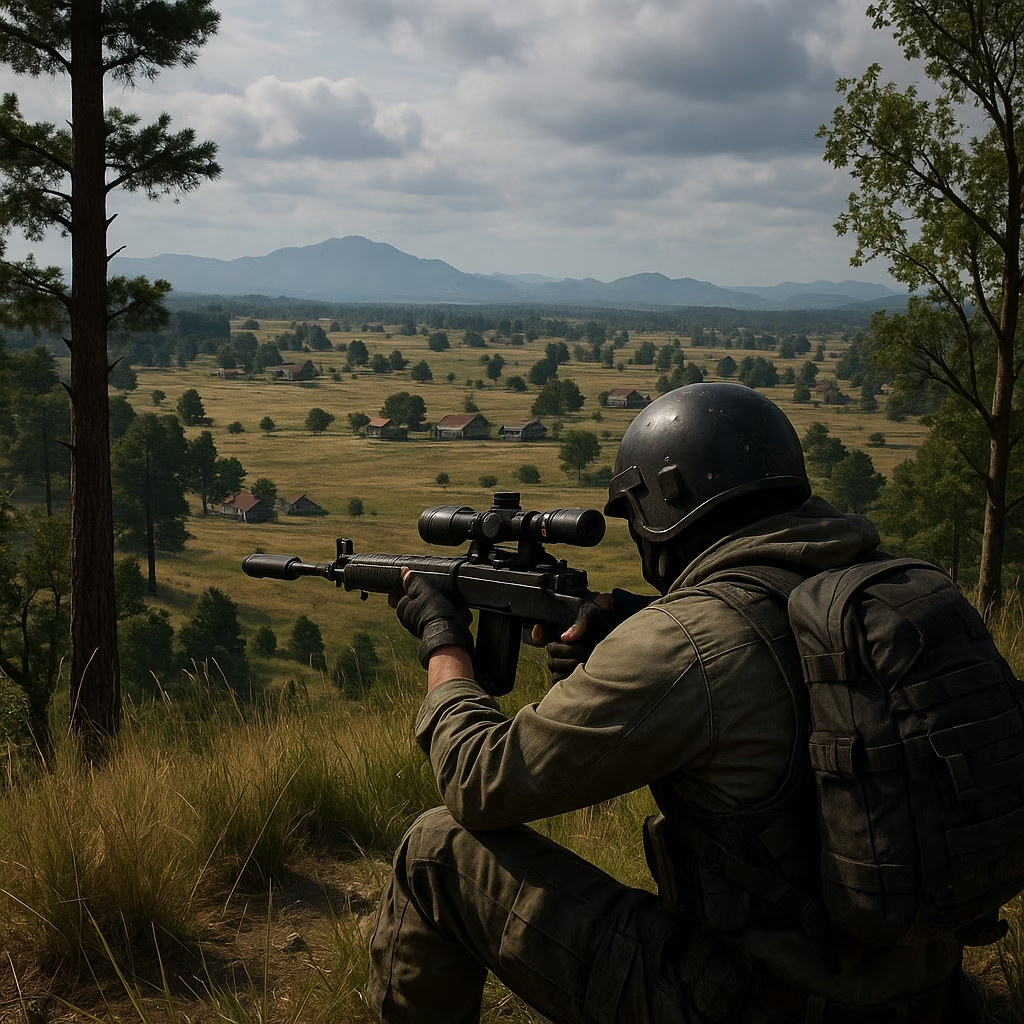 The communication lines stretched thin, too. With 18 million players, messages got lost in translation, feedback loops slowed, and that intimate developer-player connection we cherished began to strain. It was a classic case of growing pains, a struggle we were determined to overcome.
Navigating Uncharted Waters
The landscape felt entirely new. There was no blueprint for a game blowing up at this scale and speed. Every decision felt monumental. I recall the discussions around the Xbox Game Preview launch slated for that December—a move that promised to pour jet fuel on an already roaring fire. We were excited but nervous. Internally, there was a conscious effort to stay grounded. Greene famously said he personally didn't want PUBG to win a Game of the Year award. It wasn't about false modesty; it was a focus on the game and the players, not the trophies. We also had to constantly bat down bizarre rumors, like the idea we were banning people for harmless actions like "honking at a streamer." Maintaining fairness and transparency in that storm of attention was a daily task.
Legacy and Lessons in 2026
From the vantage point of 2026, PUBG's early days feel like a foundational myth for the live-service era. Its journey taught us invaluable lessons:
-
Scalability is Non-Negotiable: Never design for what you think your ceiling is. Design for the dream, then double it.
-
Community is a Living Ecosystem: It can't be managed with static tools. It requires dynamic, scalable communication strategies that grow with the player base.
-
Authenticity is Your Anchor: In a storm of hype and scrutiny, sticking to your core vision—whether it's supporting a niche mode like FPP or dismissing award politics—is what keeps a community trusting you.
That initial surge was chaotic, beautiful, and utterly transformative. It was like trying to drink from a firehose while also being asked to design a better faucet. We weren't just building a game; we were learning to navigate a phenomenon in real-time, a experience as unpredictable and tense as the Battlegrounds themselves.