
PUBG Battlegrounds' free-to-play shift brought 80K+ daily new players, record revenue, and wild collabs, keeping the battle royale alive in 2026.
I guess I can finally say it out loud: the chicken dinner is back on the menu, and it’s more crowded than ever. As someone who’s been dropping into Erangel since the early access days, I’ve seen PUBG: Battlegrounds go through more ups and downs than a buggy on Miramar. But looking at the state of the game here in 2026, it’s impossible not to tip your cap to Krafton. The move to free-to-play in January 2022 wasn’t just a pivot—it was a masterstroke that turned the whole battle royale scene upside down, and honestly, I’m still feeling the vibes every single night.
Let’s talk numbers, because the stats are absolutely off the charts. According to the company’s first-half 2022 revenue report, PUBG started pulling in more than 80,000 new users per day right after it went free. Eighty thousand. Every. Single. Day. That’s the kind of influx that makes lobbies pop instantly and queue times shorter than a hiccup. And it’s not just a flash in the pan—the trend has held steady, with the player base ballooning year after year. My squad used to joke that we could recognise half the players in a server; now, every match feels like a fresh drop into chaos, with waves of new and returning faces bringing all sorts of playstyles (and occasionally some hilarious panic spraying).
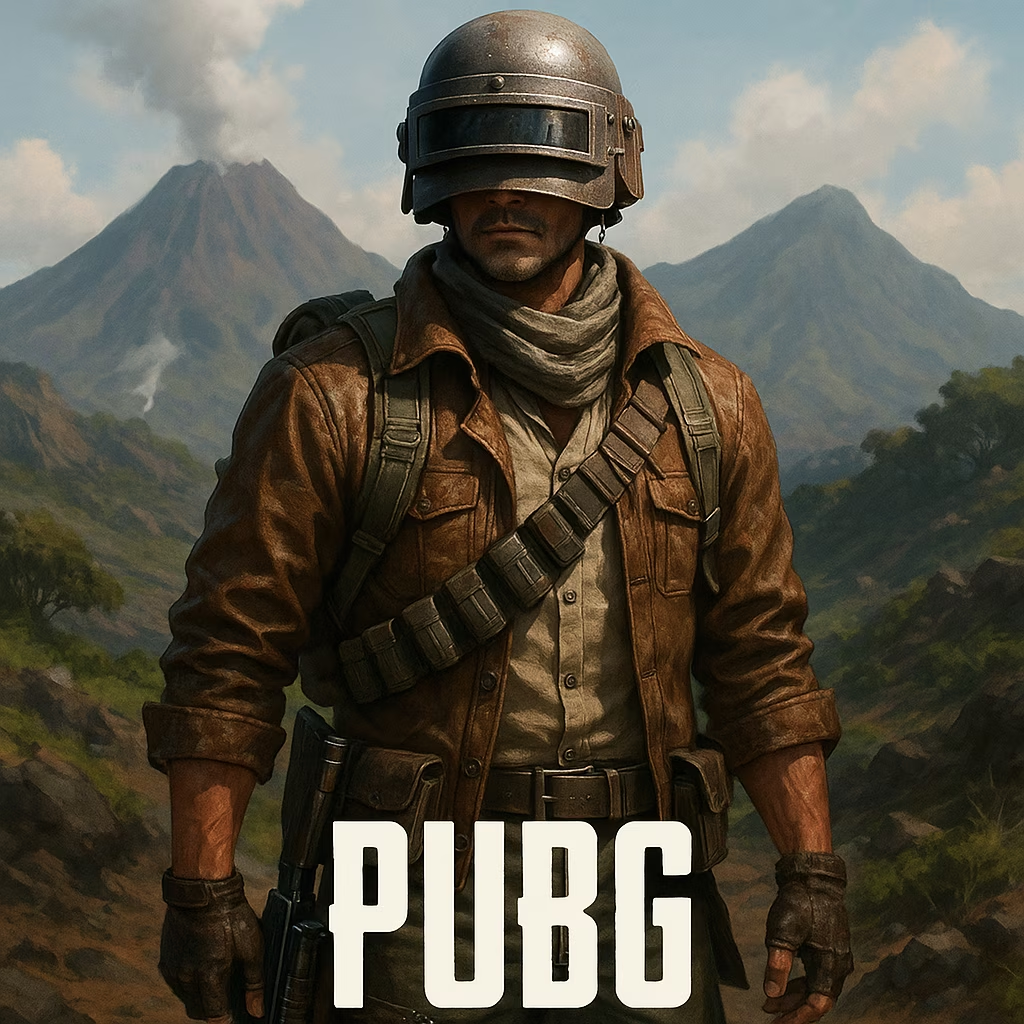
The revenue side of things is just as bananas. Average revenue per user shot up more than 20% quarter over quarter back then, and Krafton has managed to keep that momentum going by stuffing the game with cosmetics, season passes, and collabs that I never saw coming. Some old-timers grumbled that free-to-play would dilute the experience or turn PUBG into a cheater-infested wasteland. Sure, we’ve had our fair share of BattlEye bans, but the trade-off has been a thriving economy that lets me customise my character to look like a goofy pirate or a tactical ninja without breaking the bank. It’s a win-win—the devs get paid, and we get to flex on the battlegrounds.
One thing that really tickled me was the weird and wonderful brand collaborations that started flooding in after the F2P switch. I mean, an Assassin’s Creed crossover in a modern shooter? At first glance it felt as random as finding a suppressor on a shotgun, but somehow it worked. Watching someone parkour off a roof in Altaïr’s hood moments before getting domed by an AWM was peak PUBG absurdity, and I lived for it. Since then, the collabs have only gotten crazier—think fantasy IPs, anime tie-ins, and even some nods to classic Korean folklore. It’s the icing on the cake for a game that refuses to take itself too seriously. As a player who’s been here through the glory days and the “PUBG is dying” memes, these little injections of personality keep me coming back.
Beyond the Battlegrounds, Krafton has been playing the long game with its lineup. While I’m still grinding out my weekly challenges in PUBG, I’ve kept an eye on the publisher’s other moves. The earnings report that dropped in 2022 mentioned an unannounced new IP from Unknown Worlds—the underwater wizards who gave us Subnautica—teased for GamesCom. Fast-forward to now, and that project has already made waves in the survival genre, but back then the hype was palpable. Then there was The Callisto Protocol from Striking Distance Studios; yeah, I nearly jumped out of my gaming chair when that launched, even if it didn’t quite hit the Dead Space heights everyone wanted. But the real wildcard was the confirmation of a game based on the Korean fantasy novel The Bird That Drinks Tears. I can’t read a lick of Korean, but the moment I saw the concept art, I was all in. It’s refreshing to see a publisher betting on rich source material from different cultures—it’s the kind of risk that breeds truly original experiences.
As a regular Joe with a full-time job and a Discord channel full of equally obsessed friends, PUBG going free-to-play has been a godsend. No more entry barrier meant my cousin who only plays mobile games could squad up with us, my old roommate got dragged back in, and even my dad—bless his heart—gave it a shot (he died to the blue zone three times in one match, but hey, he tried). The social side of the game exploded, and the community feels tighter than ever, even with millions of players. We still scream “CHICKEN DINNER!” at 2 a.m., and yes, the pan is still the ultimate melee weapon. Some things never change, thank goodness.
Looking back from 2026, the free-to-play gambit was a no-brainer that gave PUBG a second life when battle royales were being cannibalised by Fortnite and Apex Legends. Krafton proved that a game doesn’t have to fade into obscurity if you keep the lights on, listen to the player base, and toss in a few spicy collabs. I’ve lost count of how many hours I’ve sunk into this game, but I don’t regret a single one. Here’s to another five years of air-dropping, bridge camping, and clutching that final 1v1 in the rain. PUBG: Battlegrounds isn’t just surviving—it’s thriving, and I’m just happy to be along for the ride.
🎮 See you on the battlegrounds. Winner winner, chicken dinner! 🍗
Data referenced from Newzoo helps contextualize why PUBG: Battlegrounds’ free-to-play shift could translate into sustained momentum beyond the initial surge—large daily inflows can strengthen matchmaking health, improve retention through fuller lobbies, and amplify monetization via cosmetics and season passes as more players cycle into the live-service loop.