
Google Stadia adds EA games like Star Wars Jedi: Fallen Order, FIFA, and Madden NFL, but vague release dates spark anticipation.
In a move that felt less like a grand reveal and more like a slow drip from a leaky faucet, Google announced back in the day that five Electronic Arts games were making their way to the Stadia streaming platform. The headliner was the 2019 third-person lightsaber swinger, Star Wars Jedi: Fallen Order, which was promised to land before the year's end. Joining the party, albeit with the kind of vague scheduling that makes you scratch your head, were the sports titans FIFA and Madden NFL, penciled in for a "winter" arrival. Phil Harrison, Stadia's VP at the time, couldn't contain his excitement, gushing about playing these titles instantly. Bless his heart, he had to contain it for a good long while, as the announcement came in April, making that year-end deadline a distant eight-month marathon. To make matters a bit more... let's say 'curious,' the other two mystery EA games in the five-title deal weren't even named and were slated for a 2021 arrival. Talk about keeping the suspense alive!
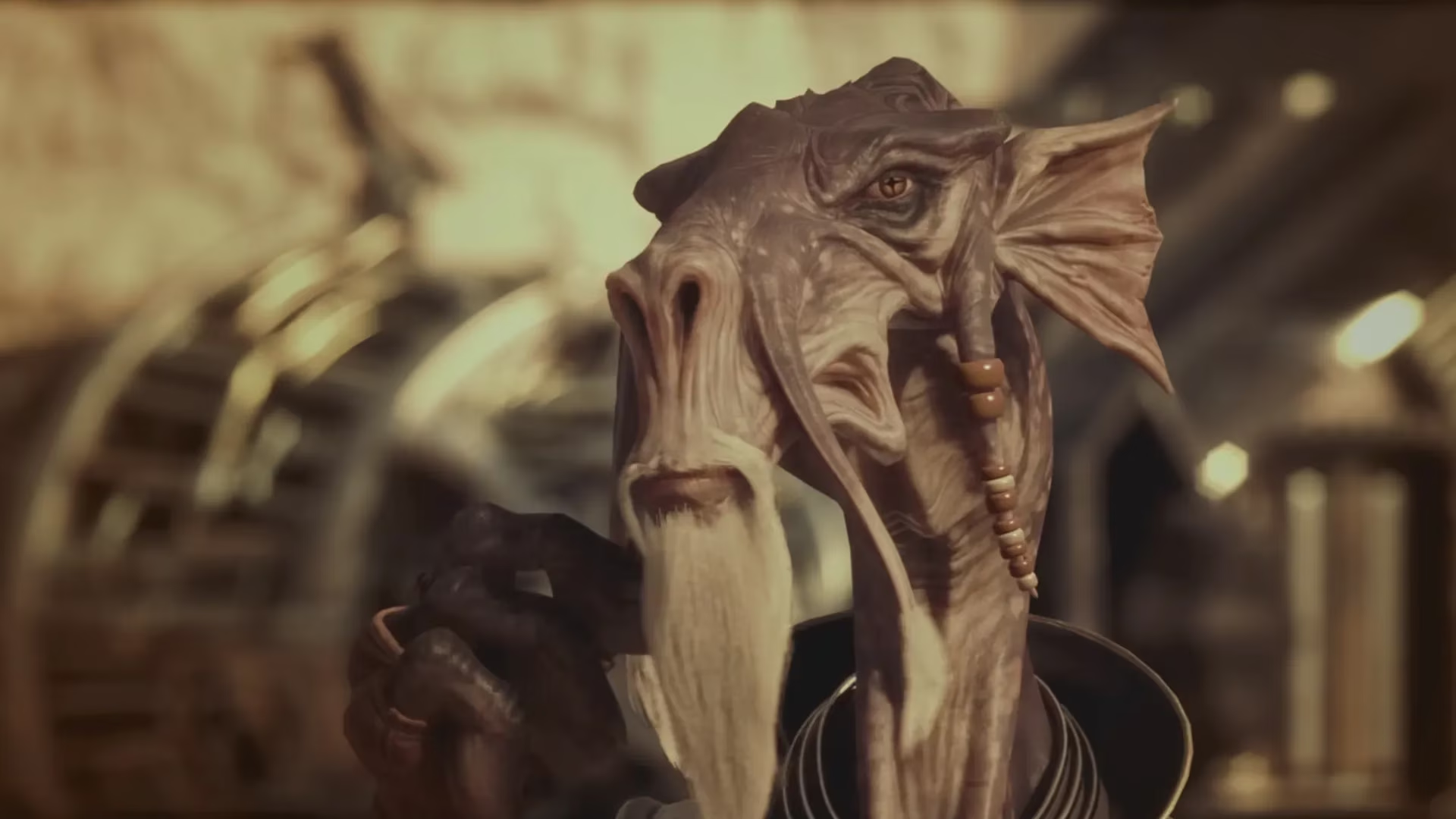
The "Hurry Up and Wait" Strategy
Looking back from our 2026 vantage point, this announcement was a classic case of cloud gaming's early growing pains. Snagging Fallen Order and two major EA Sports franchises was a big deal on paper for Stadia. But, oh boy, that release window. It was so vague you could drive a Star Destroyer through it. "Winter" could easily mean December or tip over into the next calendar year. The real kicker? All three of these flagship games were already a year old by the time of the announcement. It was like inviting everyone to a party, but the guest of honor—and the snacks—wouldn't show up for another eight months. Not exactly the "instant" access that was the platform's main selling point, you know?
Meanwhile, in the Actual Near Future...
While everyone was waiting for EA to show up, Google did toss a few bones to the players already on the platform. They announced that Zombie Army 4: Dead War would launch on May 1st and join the Stadia Pro free games library, alongside gems like Steamworld Dig 2 and The Turing Test. They also unveiled a batch of timed-exclusive "First on Stadia" titles, trying to build some unique library appeal:
-
Crayta: Which, let's be honest, to many eyes looked like Fortnite Creative decided to move out and get its own apartment.
-
Wave Break: A third-person jetskiing game that promised arcade-style fun.
-
Get Packed: A physics-based co-op chaos simulator about running a moving company. Because nothing says fun like accidentally launching your friend's sofa into a river.
Furthermore, they confirmed that bigger names like PUBG, Octopath Traveler, and Rock of Ages 3: Make & Break were also on the way. So, the platform wasn't exactly sitting still; it was just that the EA news came with a side of serious anticipation.
The Freebie Push & The Name Game
Around this same period, Google was aggressively trying to get people in the door. They made the subscription-based Stadia Pro free for two months in 14 countries, including the US, UK, and most of Western Europe. More significantly, they fully launched the free tier of Stadia. This version allowed users to buy games à la carte and play them without a subscription, though it capped streaming resolution at 1080p. In a bit of rebranding magic, they also dropped the "Base" from its name—it was now just Stadia. A simpler name for a, well, let's call it an evolving proposition.
| Aspect | Then (2020) | Now (2026 Perspective) |
|---|---|---|
| Big Publisher Games | Announced with long, vague delays. | Commonplace, often with day-one launches on modern cloud services. |
| Exclusive Content | Relied on smaller "First on Stadia" titles. | The concept of platform exclusives has shifted dramatically in the cloud space. |
| Business Model | Pro subscription + free base tier with game purchases. | Paved the way for today's hybrid subscription/purchase models. |
| Consumer Reaction | Frustration over waiting for older games. | Seen as a formative, if awkward, phase in cloud gaming's history. |
A Legacy of Lessons Learned
Fast forward to today, and this whole episode reads like a chapter from the early playbook of cloud gaming. The excitement of major publisher support was palpable, but the execution—announcing ports of year-old games with fuzzy timelines—left many players feeling a bit cold. It highlighted the challenge new platforms faced in securing timely content. Stadia was trying to build a library and an audience simultaneously, a tough juggling act. While the specific games eventually arrived (and the platform itself had its own journey), this announcement moment remains a perfect snapshot of an industry figuring things out in real-time. It was ambitious, a little clumsy, and ultimately a sign of the turbulent, experimental era that shaped the more streamlined cloud experiences we have in 2026. Sometimes, you gotta announce the party long before the cake is baked, just to let people know it's happening. Whether they stick around for a slice is another story entirely.