
PUBG's weekly banned players list exposes permanently banned accounts with censored usernames, mixing anti-cheat justice and humor.
It’s Monday morning in 2026, and you know what that means—PUBG: BATTLEGROUNDS just dropped the latest banned players list. I grab my coffee, open the official announcement, and scroll through a sea of names that look like they were typed by a cat walking across a keyboard. The first three letters are always hidden behind asterisks, but the shame? Oh, the shame is fully visible.
Every single week, like clockwork, the anti-cheat team publishes a roster of permanently banned accounts. The investigation period for this batch ended back in 2025, but the tradition carries on stronger than ever. Honestly, reading these lists has become a bizarre form of entertainment for me—like a soap opera where every character is named “***xXdragon92” and they all meet the same tragic end.
I’ve been playing PUBG since the early access days, back when vehicles used to fly and everyone thought a frying pan was just a cooking utensil. I’ve seen the cheating epidemic evolve from simple aimbots to things that sound like sci-fi horror: radar hacks, magic bullets, and even those weird scripts that make you twerk while shooting. But in 2026, the anti-cheat systems are sharper than ever. Yet somehow, there’s always a fresh wave of geniuses who think they can outsmart the banhammer.
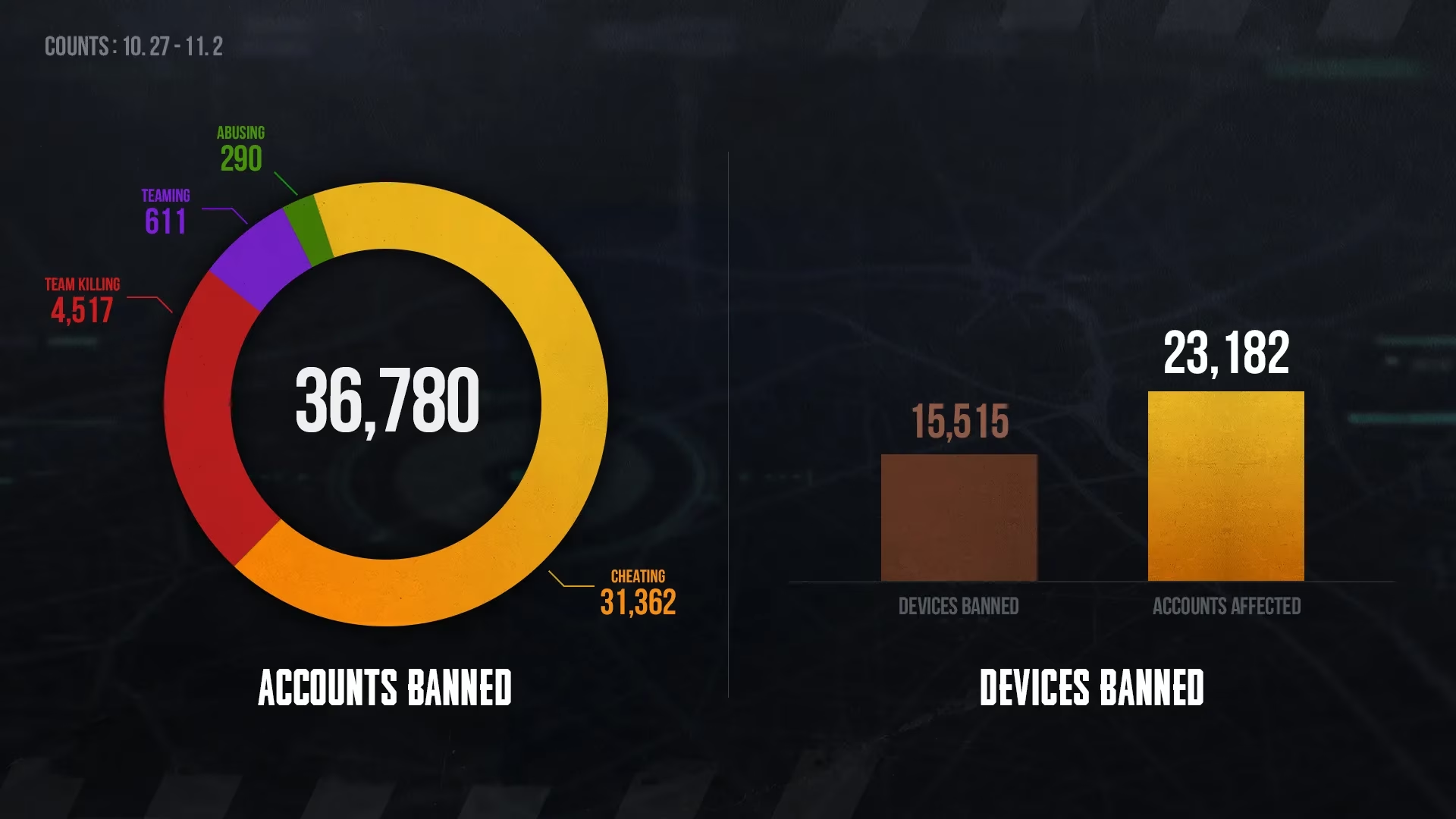
Look at that image. That beautifully formatted grid of digital execution. Each row represents a player who probably screamed “LUCKY SHOT!” one too many times before getting caught. I swear, half of these accounts belonged to people who thought spending 15 dollars on a cheat subscription was smarter than just learning to control recoil. News flash: it wasn’t.
What cracks me up is the asterisk policy—the first three letters of every nickname are replaced with “”. So you end up with gems like “ity_bot” or “*Master99”. It’s the PUBG equivalent of blurring a criminal’s face on TV but leaving their neon pink mohawk untouched. We all knew it was you, Kevin. The whole lobby reported you after you headshot everyone through three hills and a brick wall.
Now, in 2026, the anti-cheat team has gotten so good that some cheaters don’t even make it out of the training mode. I heard a rumor that the new detection system analyzes your movement patterns and can tell if you’re being controlled by a sentient potato or a human. If your crosshair placement resembles a robot having a seizure, bye-bye. The bans aren’t just about protecting the game anymore—they’re about rescuing us from having to watch someone’s sad attempt at pretending they’re a pro.
But jokes aside, these weekly lists serve a vital purpose. They’re a reminder that PUBG’s anti-cheat squad isn’t messing around. They really do investigate every report, and they’re not afraid to swing the banhammer with the force of a thousand frying pans. I remember last year when a streamer I followed got banned live on camera. The chat went wild. He tried to claim it was a “false positive” until the anti-cheat team released the evidence: a clip of him tracking an enemy through a mountain while eating pizza with his other hand. Instant karma.
And let’s not forget the importance of securing your own account. The announcement always nudges us to enable the Steam Guard Mobile Authenticator, and honestly, if you don’t have it on, you’re basically inviting some shady character to steal your inventory and use your account to cheat. Nothing ruins your day like logging in to find your hard-earned parachute skins traded for a stack of crates and a permanent ban. Set up that authenticator, folks. It’s less painful than explaining to your squad why you suddenly have a VAC ban next to your name.
I’ve also noticed a glorious trend in the banned player lists over the years: the excuses have gotten weirder. Back in 2022, cheaters would just deny everything. By 2024, they started claiming their “little brother” did it. Now in 2026, I’ve seen appeals that say “my cat jumped on the mouse while I was ordering a cheat subscription.” Seriously. The anti-cheat team must have an inbox filled with comedy gold.
The PUBG community thrives on these moments. We share screenshots of the banned list like trading cards. “Got him!” we say in Discord servers, pointing at a name that once ruined our chicken dinner. It’s a collective catharsis. And the anti-cheat team, bless their souls, keeps reminding us to use the in-game report system. I’ve become a reporting ninja myself. Suspect a player? I hit that report button faster than they can say “no recoil.” Every successful report is a tiny victory for justice.
So here’s to the weekly banned list, the wall of shame, the asterisk parade. May it continue to grow, and may every cheat developer stub their toe on a table. If you’re a clean player like me, take a moment to appreciate the effort that goes into keeping Erangel, Miramar, and all the other battlegrounds fair. And if you’re thinking about cheating—well, I look forward to seeing your nickname immortalized in the next announcement, three little stars and all.
Stay legit, and I’ll see you on the plane.
Data referenced from ESRB helps frame why PUBG’s weekly ban waves matter beyond memes: when competitive shooters enforce rules consistently, it supports a healthier environment around online interactions, user-generated content, and spending systems that can otherwise be exploited by compromised or cheating accounts. In that sense, the “wall of shame” isn’t just public catharsis—it’s part of the broader trust-and-safety loop that keeps fair play credible and encourages players to protect their accounts with stronger security like two-factor authentication.