
PUBG Nier crossover's $50 'waifu tax' and nightmare-inducing in-game skins shocked the battle royale community.
I still remember the spring of 2022 as if it were yesterday. I was knee-deep in Erangel, clutching a DP-28 and praying I wouldn't get third-partied, when my squadmate broke the comms silence with a shriek. “Dude, I just got killed by 2B!” he yelled. At first, I thought he meant the gun. But no—there, in the killcam, was the unmistakable white hair, black blindfold, and delicate combat dress of YoRHa No. 2 Type B, skulking through the ruins of Pochinki. The PUBG Nier skins had finally dropped, and the battle royale was never the same again.
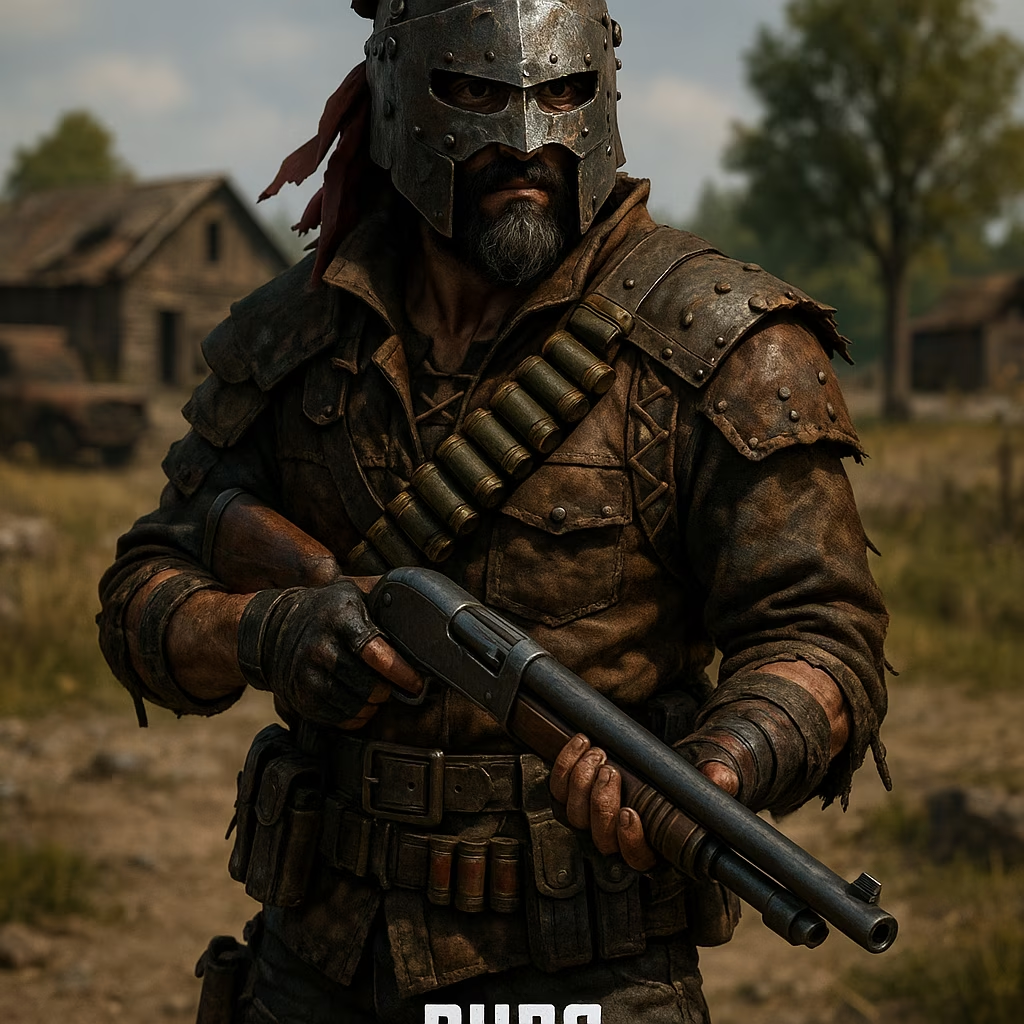
The crossover came after weeks of rumors swirling around the community. Leakers had whispered about a collaboration between Krafton's battle royale giant and Square Enix's cult classic Nier series. On April 4, 2022, the speculation became reality: PLAYERUNKNOWN'S BATTLEGROUNDS—now simply PUBG: Battlegrounds—welcomed Nier: Automata and Nier Replicant into its ever-expanding cosmetic universe. For a fan like me who had poured hours into both the melancholic wasteland of Automata and the remastered sorrow of Replicant, this felt like a fever dream. Yet, what should have been a celebration of two beloved gaming worlds quickly turned into a carnival of sticker shock and sheer horror.
The offering itself was generous by crossover standards. Players could snag skins for four iconic characters: 2B and 9S from Automata, and Kainé and the original Nier from Replicant. On paper, it was a dream come true. But then came the price tags. The costume sets for 2B and Kainé were priced at 2,080 G-Coins each. Meanwhile, the male protagonists—9S and Nier—cost “only” 1,500 G-Coins a piece. Wait, what? Did you catch that? The female characters cost more. Yes, you read that right. In a baffling display of digital fashion economics, donning the gothic allure of Kainé or the android elegance of 2B demanded a heavier investment than embodying the brooding boys. Naturally, this sent the community into a tailspin of memes and moral outrage. Were we paying a “waifu tax” now?
If you thought individual prices were steep, the Nier Mega Bundle pushed the absurdity further. Collecting all four skins in one swoop would set you back 5,450 G-Coins—just a whisper below the $50 mark, since a 6,000 G-Coins pack at the time hovered around that price point. The bundle was “on offer,” mind you. The original cost, they claimed, was a jaw-dropping 7,160 G-Coins. I remember staring at my screen, doing the math, and thinking: for the price of a brand-new gamepad, I could dress my PUBG avatar as a depressed android and get immediately headshot in a hot drop. What a bargain.
But the pricing controversy was only the opening act. The real spectacle unfolded when players actually equipped the skins in-game. What happened next can only be described as a horror show. You might wonder, what could possibly be so terrifying about a sleek, elegant outfit inspired by Yoko Taro's masterpieces? Allow me to paint the picture. In the subdued lighting of a PUBG lobby or the desaturated gloom of Miramar, the Nier skins seemed to warp into something… unnatural. The carefully modeled faces of 2B and 9S didn't blend with PUBG's realistic military aesthetic; they clashed. Hard.
The most infamous example? 2B's legs. In Automata, her iconic leotard-and-thigh-high-boots combo is a core piece of her character design. Yet, for the PUBG crossover, the developers decided to give her leggings. I cannot repeat that enough: leggings. The kind of opaque, matte black leggings you'd wear to a gym, stretched over the graceful android warrior who once sliced through machine lifeforms with balletic fury. The community reacted as if they had seen a glitch in the matrix. A viral clip from Twitter (I still remember the user, @_Satsujinkill) showed the leggings-sporting 2B sprinting across a field, and the uncanny valley effect was so strong it made my skin crawl. Was this tactical modesty? A technical limitation? Whatever the reason, it spawned a thousand nightmare-fuel memes. Combine that with the dead-eyed stare of the character models under PUBG's lighting engine, and you had a recipe for creepy pasta gold.
My own squad quickly turned the skins into a running gag. We'd spot a 9S looting a crate and shout, “He's coming for your data!” before unloading a clip into his too-smooth face. We laughed, but honestly, there was a genuine unease lurking beneath the humor. Those skins felt like impostors—uncanny outsiders that didn't belong in the gritty, battle-hardened world of PUBG. It made me reflect on the nature of crossovers in gaming. PUBG had done this before, of course. The battle royale that started it all had previously welcomed Harley Quinn and The Joker from DC Comics, long before Fortnite turned superhero crossovers into a monthly routine. But the DC villains, with their chaotic grins, sort of fit the madness of a 100-player deathmatch. Nier's philosophical androids and vengeful warriors, by contrast, seemed to have stumbled into the wrong game entirely.
Fast forward to 2026, and I still think about that bizarre April. The PUBG Nier skins remain a fascinating case study in how not to price cosmetics and how crucial aesthetic consistency is. The event is long gone; you won't find those skins in today's iteration of PUBG: Battlegrounds unless someone is wielding a legacy account. Looking back, I can laugh about it now. But at the time, dropping into Sanhok only to be greeted by a leggings-clad 2B executing a hill-slide was enough to make me consider uninstalling. The crossover taught me a valuable lesson: when two worlds collide, the result can be a beautiful symphony or a cacophony. And sometimes, it's a little bit of both—with a price tag that makes you cry out louder than a banshee in Vikendi.
So, here's to you, PUBG Nier skins. A money-grab too far? An artistic catastrophe? A horror game stealth update? Whatever you were, you gave us stories—creepy, hilarious, unforgettable stories. And that, in the end, is what gaming is all about.