
PUBG vs Fortnite highlights a dramatic battle royale legal war, redefining copyright and creative ownership in the gaming industry.
In the annals of video game history, few rivalries have been as publicly contentious and legally fraught as the one between PUBG Corp and Epic Games. As we look back from the vantage point of 2026, the courtroom battle that erupted in 2018, where PUBG's developers finally took Fortnite's creators to court over alleged copyright infringement, stands as a pivotal moment. This wasn't merely a dispute between two companies; it was a clash over the very soul and ownership of the "battle royale" genre, a formula that would go on to dominate the gaming landscape for nearly a decade. The lawsuit, filed in South Korea where PUBG Corp is based, alleged that Epic Games, once a partner, had created a suspiciously similar game mode, turning ally into adversary in the fight for digital supremacy.
The Genesis of a Genre War
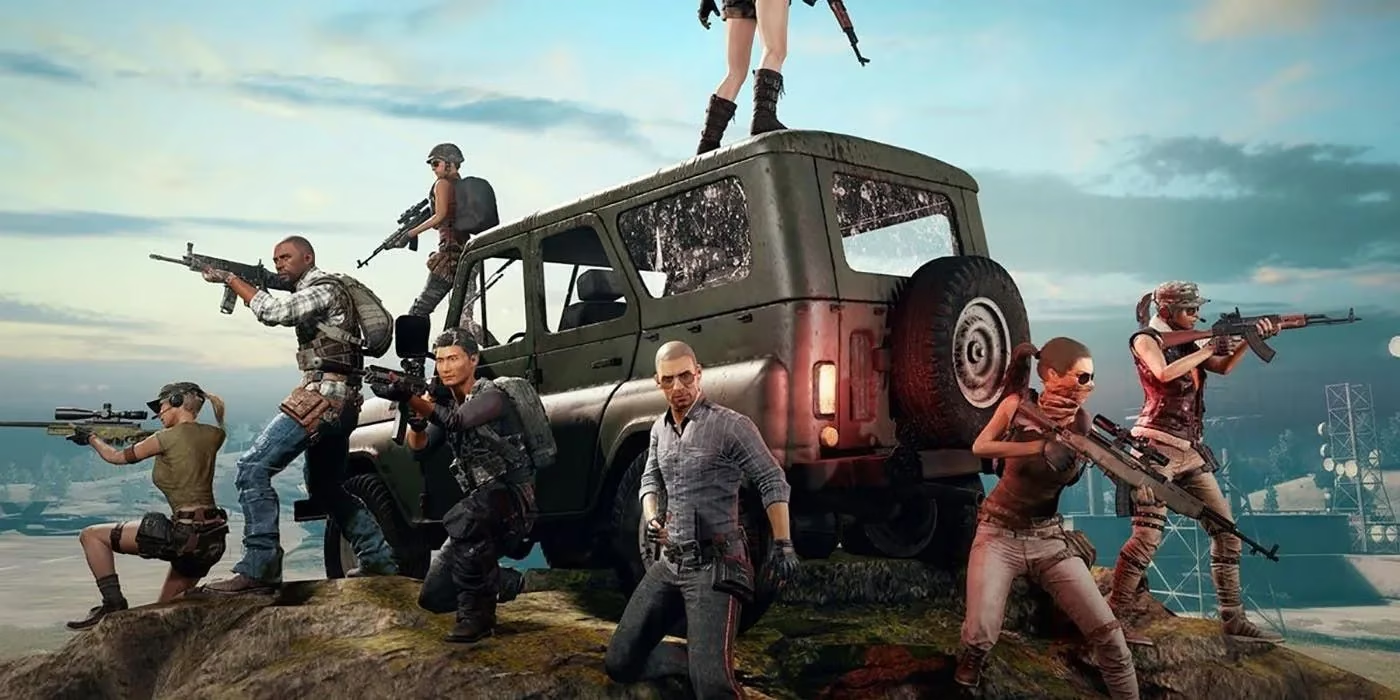
The timeline is crucial. PlayerUnknown's Battlegrounds (PUBG) had ignited a global phenomenon, popularizing the last-player-standing format with a gritty, realistic aesthetic. Fortnite, initially launched as a cooperative zombie defense game with base-building mechanics, was watching from the sidelines with a much smaller player base. In September of the previous year, Epic Games made a strategic pivot that would change everything: they released a free-to-play, 100-player battle royale mode. The similarities were undeniable, sparking immediate comparisons. From the core loop of scavenging and surviving in a shrinking play zone to specific UI elements, weapons, and items, the overlap was significant. Yet, PUBG Corp's lawsuit faced a fundamental philosophical challenge: how much of this was genuine intellectual property theft, and how much was simply the essential DNA of the battle royale concept itself? Like trying to patent the rules of a playground game of tag, the line between inspiration and infringement was perilously thin.
The Shared Corporate Bedfellow
A fascinating layer of complexity in this corporate drama was the shared ownership by Tencent, the world's largest investment corporation. At the highest level, both PUBG Corp's parent company, Bluehole, and a significant portion of Epic Games were under the vast umbrella of the same Chinese conglomerate. This created a scenario where, regardless of the lawsuit's outcome, Tencent's financial interests remained largely protected. The real stakes were elsewhere. For the developers, it was about creative credit, market dominance, and setting a legal precedent. For the millions of players worldwide, the risk was the potential disruption or alteration of the games they loved. The situation was a corporate Kobayashi Maru—a no-win scenario where the parent company profited from both sides of the conflict, while the fans could only watch nervously.
Beyond the First Mover: A Genre's Inevitable Evolution
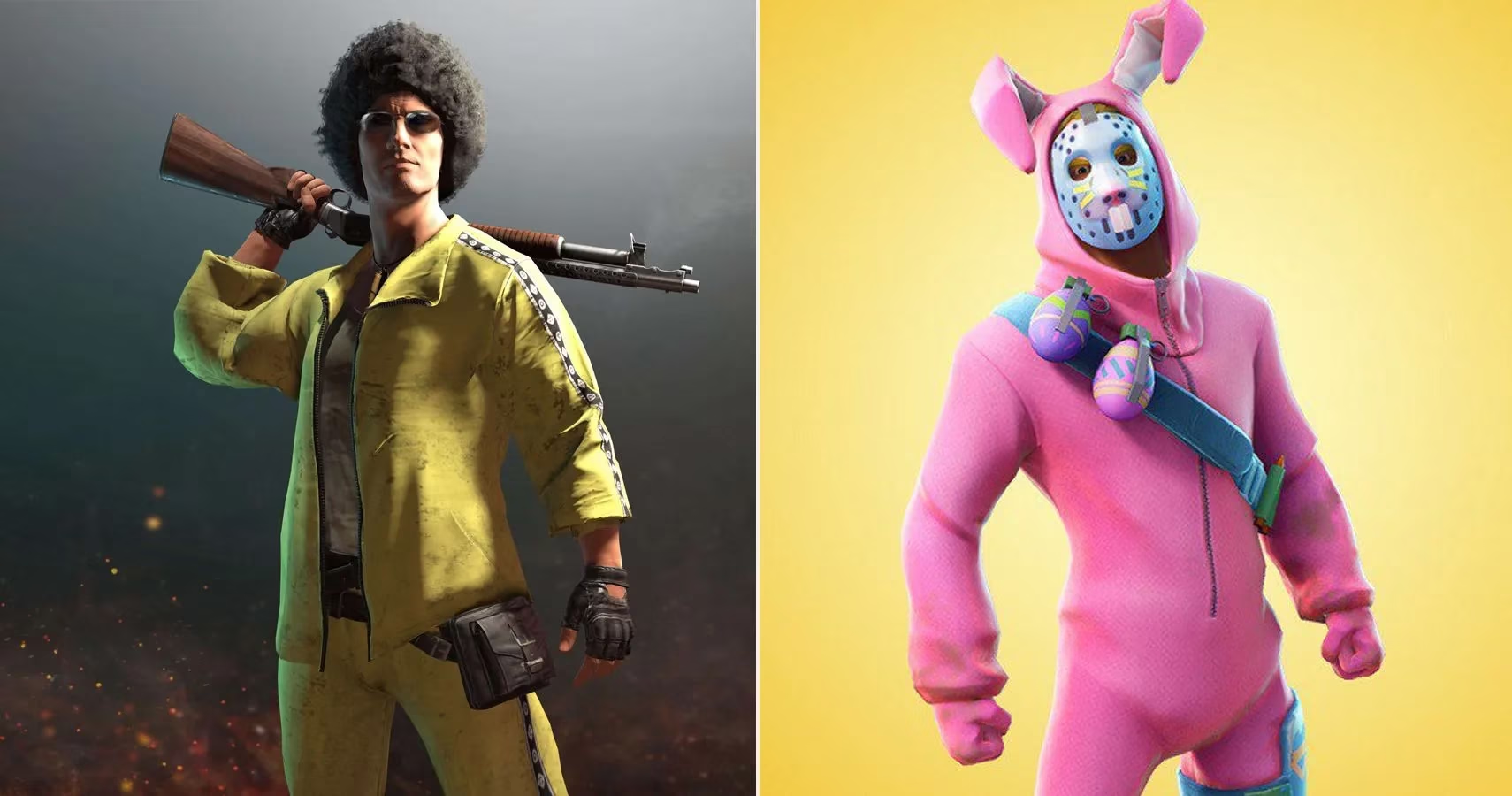
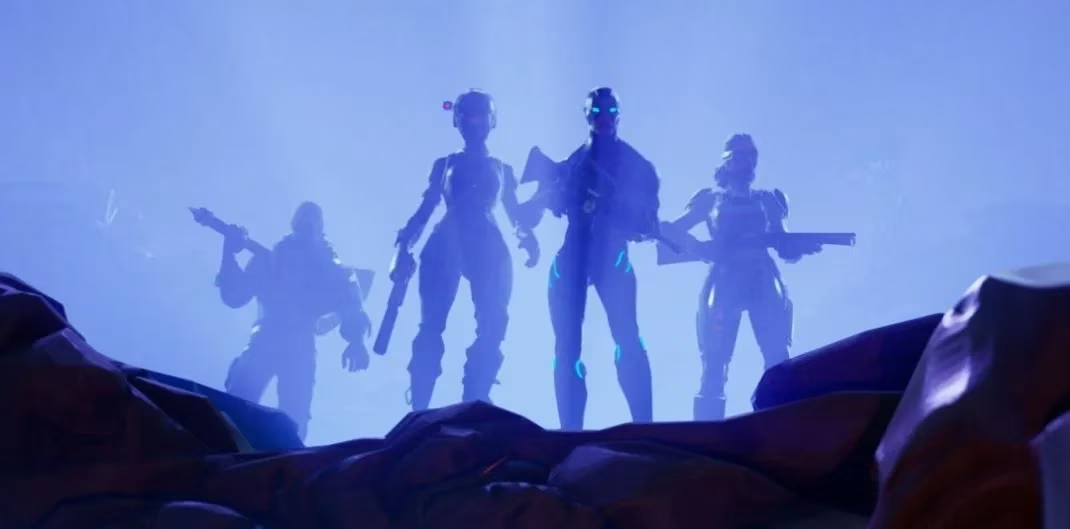
PUBG Corp's claim to originality was historically shaky. Long before its green fields and military bases, the battle royale concept had been germinating in digital culture. Mods for games like Minecraft (famously the "Hunger Games" mod) and the Japanese film Battle Royale had laid the foundational narrative and mechanical groundwork. PUBG's genius was in packaging and popularizing it for a massive audience. Epic Games' move, while clearly commercially motivated by PUBG's success, also represented the natural evolution and hybridization of genres. Fortnite's version fused the battle royale template with its own unique identity: vibrant, cartoonish visuals, frantic third-person shooting, and most importantly, its groundbreaking building mechanics. This wasn't just a clone; it was a mutation, an adaptation that proved more successful in the long-term evolutionary game. The lawsuit, in many ways, felt like a lighthouse keeper suing a shipyard for building faster ships after seeing his beacon's success.
The Lasting Impact and the 2026 Landscape
Looking back from 2026, the lawsuit's direct legal ramifications may have faded, but its legacy is etched into the industry. It set the stage for how intellectual property in game mechanics is debated. It accelerated the "live service" model, pushing both games into relentless cycles of updates, seasonal content, and cross-media events to stay ahead. Crucially, it proved that in the digital arena, execution often trumps being first. Fortnite's cultural staying power, its transformation into a social platform and metaverse precursor, has far outstripped its origins in the legal shadow of PUBG. PUBG itself evolved, streamlining and refining its experience, but the genre it championed has splintered into countless sub-genres, from fantasy royales to superhero brawls.
The rivalry, once as heated as a final-circle firefight, has cooled into a historical footnote—a testament to a time when the battle for the genre's crown was fought as fiercely in courtrooms as it was on virtual islands. The players, ultimately, were the true arbiters, voting with their time and engagement. In the end, the lawsuit was less like Alien vs. Predator and more like two master chefs arguing over who invented the soup, while the entire world happily learned to cook.
Key Takeaways from the Conflict:
-
Genre Definitions are Fluid: Attempting to legally own a game genre's core loop is as futile as trying to copyright a chord progression in music.
-
Execution is King: A superior user experience, consistent updates, and broader cultural appeal (like Fortnite's building and crossovers) can overcome a "first-mover" advantage.
-
Corporate Structures are Complex: Shared ownership can create conflicting incentives, where lawsuits between subsidiaries are more about market positioning than existential threats to the parent company.
-
The Consumer Holds the Power: While legal battles rage, the ultimate success of a game is determined by its community and its ability to innovate and entertain.
| Aspect | PUBG's Position | Fortnite's Position |
|---|---|---|
| Core Gameplay | Realistic military simulation, tactical gunplay. | Arcade-style, third-person action with building mechanics. |
| Visual Style | Gritty, photorealistic. | Colorful, cartoonish, and constantly evolving. |
| Business Model | Initially premium, later free-to-play with cosmetic purchases. | Always free-to-play with a robust seasonal Battle Pass and item shop. |
| Cultural Legacy | Defined and mainstreamed the modern battle royale template. | Evolved into a persistent social and entertainment platform beyond gaming. |
As we navigate the gaming world of 2026, filled with immersive VR royales and AI-driven dynamic worlds, the PUBG vs. Fortnite chapter remains a foundational story. It teaches lessons about innovation, competition, and the fine line between inspiration and imitation in the digital age. The legal skirmish may have ended, but the games, and the genre they fought over, are forever changed.