
Battle royale games and the Fortnite vs PUBG rivalry have transformed the gaming industry, driving innovation and massive revenue growth.
As we navigate through 2026, the battle royale landscape continues to be a dominant force in the gaming industry, though its form and key players have evolved significantly since the late 2010s. The genre, once a monolith built on a few titans, has matured into a diverse ecosystem. The early days of intense rivalry, like the one between Fortnite and PlayerUnknown's Battlegrounds (PUBG), feel like a nostalgic memory, a foundational chapter in a much longer story. The market's potential, once projected to hit staggering figures, has been realized and then some, but the path wasn't always a straight line.
The Titans of Yesteryear and Their Legacy
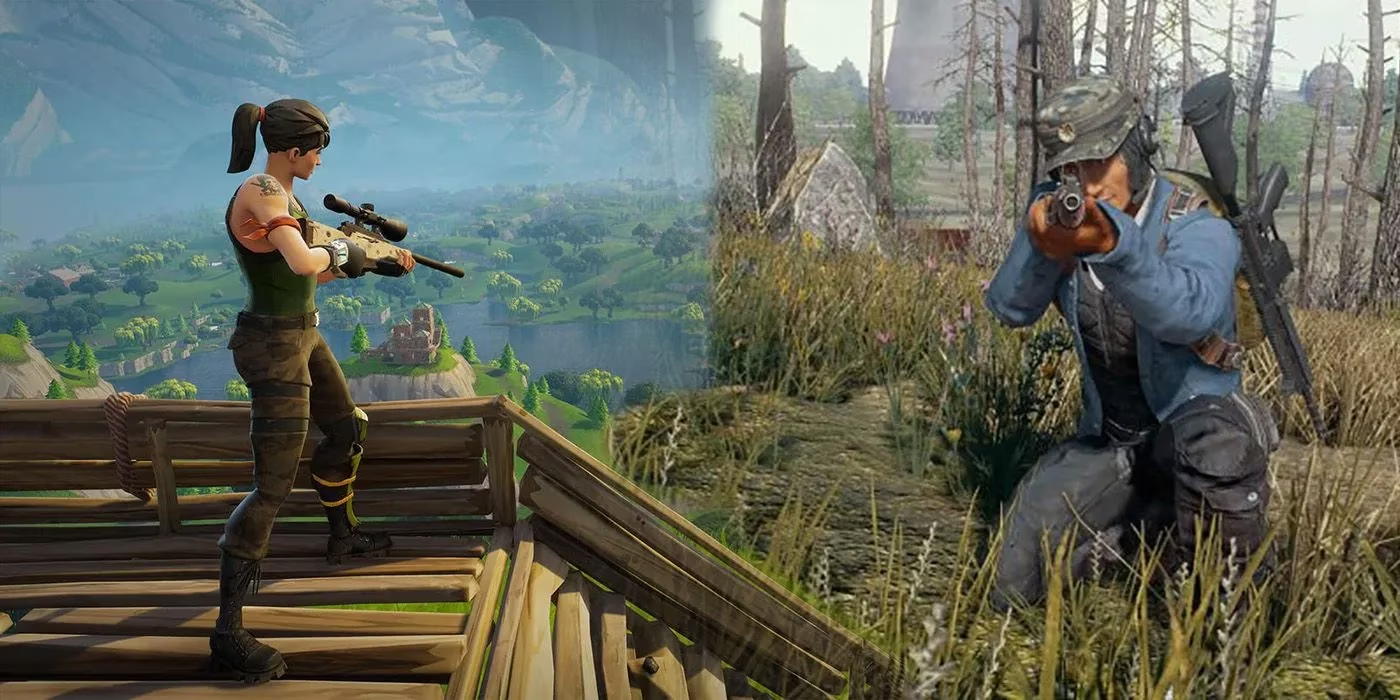
Looking back, the duopoly of Fortnite and PUBG was a phenomenon. Fortnite, in particular, was a cultural juggernaut. The fact that a free-to-play title could cross the billion-dollar revenue mark was, frankly, mind-blowing at the time. It wasn't just a game; it was a social space, a concert venue, a constantly evolving pop-culture event. Its growth trajectory seemed unstoppable, even as analysts noted it might be "slowing down"—a relative term for something moving at light speed. PUBG, on the other hand, carved its niche with a grittier, more tactical experience. Their competition defined an era, but as the old saying goes in gaming circles, "nothing stays on top forever."
The Challengers and the Shifting Sands
The prediction that the space would become "much more competitive" was an understatement. The arrival of Call of Duty: Black Ops 4's Blackout mode was a seismic event. Activision threw its hat into the ring with the confidence of a franchise that always sells. The gaming community held its breath for the September beta—would this be the Fortnite-killer? Blackout brought a polished, fast-paced, signature Call of Duty feel to the genre. It didn't so much "take down" Fortnite as it did successfully carve out a massive portion of the player base, proving there was room for multiple AAA interpretations of the last-player-standing formula. This fragmentation was the true beginning of the genre's modern era.
The $20 Billion Vision: Reality Check
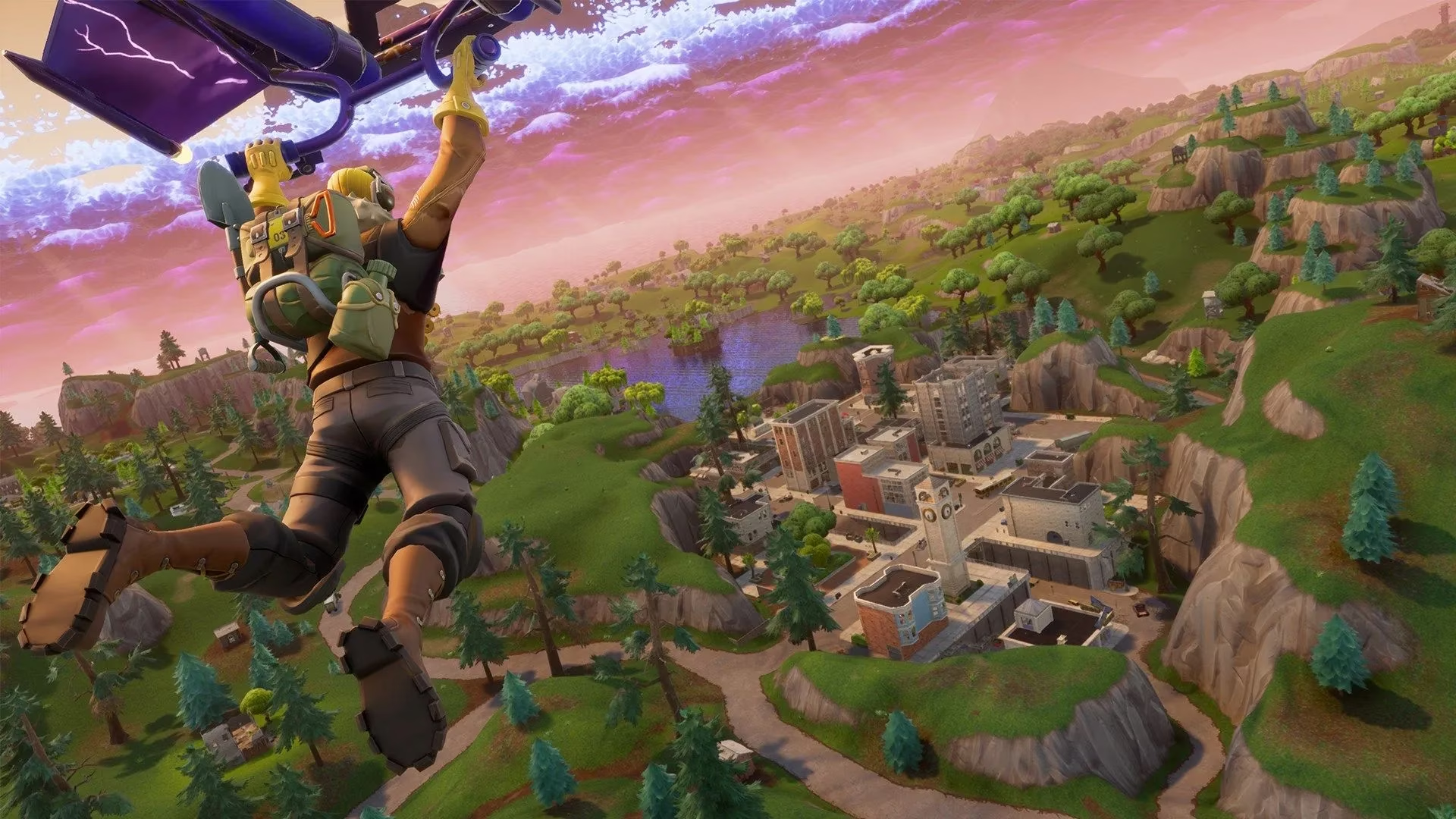
That headline-grabbing $20 billion estimate for battle royale-focused games? It was a bold projection of the genre's financial ceiling. While the combined revenue of games featuring BR modes has certainly reached and likely exceeded that figure over subsequent years, it didn't concentrate into a single annual pot for a handful of titles. Instead, the value disseminated across:
-
Live-Service Giants: Games like Fortnite, Call of Duty: Warzone (the spiritual successor to Blackout), and Apex Legends became perpetual revenue engines.
-
Genre Hybrids: Countless games, from shooters to MMORPGs, integrated "BR-lite" modes as a staple feature, not a defining one.
-
Mobile Dominance: The real explosion happened on mobile, with titles tailored for the platform achieving unprecedented scale.
The genre's worth was no longer just in pure BR titles but in its DNA, which was spliced into the core of mainstream gaming. It's everywhere now, you can't escape it!
The State of Play in 2026
So, where does that leave us today? The battle royale is no longer a "subgenre"; it's a fundamental gameplay loop, as common as deathmatch or capture the flag. The original kings have adapted. Fortnite continues its metamorphosis, less a battle royale game and more a digital platform. PUBG has solidified its core simulation-style audience. The hype cycle for "the next big BR" has cooled, replaced by a focus on sustaining and innovating within established worlds.
The player bases are divvied up, sure, but not just between two or three games. They're segmented by preference: fast-paced arcade action, tactical military simulation, hero-based abilities, or casual mobile drops. The lawsuit controversies and "this vs. that" debates of 2018 have given way to a more stable, if no less competitive, multiplayer landscape. The battle royale didn't just grow; it grew up, learned a few tricks, and settled in for the long haul. It's clear the genre is here to stay, but its crown is shared, and its throne room is much, much bigger than anyone initially thought.