
PUBG's revolutionary battle royale success fundamentally transformed multiplayer shooter design philosophies, compelling established franchises like Battlefield to innovate thoughtfully rather than merely clone. This strategic adaptation led to groundbreaking 128-player battles and dynamic map designs, integrating survival tension with signature large-scale warfare. The evolution showcases how industry leaders absorbed genre-defining trends to create uniquely compelling experiences.
The runaway success of PlayerUnknown's Battlegrounds created seismic shifts across the gaming landscape, establishing the battle royale genre as the dominant force in multiplayer shooters. By 2026, we can look back and see how this phenomenon fundamentally reshaped expectations and design philosophies throughout the industry. While many games attempted straightforward clones of PUBG's format, the most interesting developments emerged when established franchises examined these innovations through their own unique lenses. One of the most significant examples of this thoughtful adaptation came from the Battlefield series, whose developers recognized both the opportunities and challenges presented by the battle royale craze.
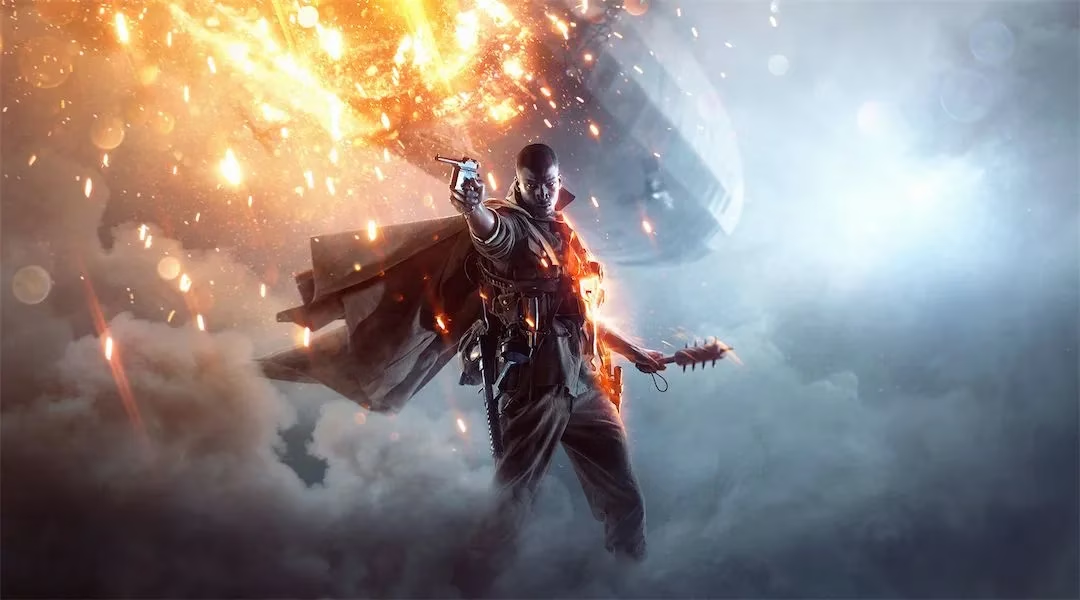
EA CEO Andrew Wilson's observations about PUBG's impact proved remarkably prescient when examined from our 2026 perspective. His acknowledgment that Battlefield teams were studying the popular battle royale shooter wasn't about creating mere replicas, but rather about understanding how PUBG had "changed the way people play shooters." This distinction became crucial as Battlefield evolved through the late 2010s and early 2020s. The teams focused on innovating "in every aspect of the game, including core gameplay and map design" rather than simply tacking on a battle royale mode. This approach allowed Battlefield to integrate the tension and survival elements that made PUBG compelling while maintaining the series' signature large-scale warfare and environmental destruction.
Wilson's comments left the door open for various interpretations, and indeed, the Battlefield franchise explored multiple directions:
-
Strategic Adaptation: Rather than directly copying PUBG's format, Battlefield incorporated battle royale elements into existing modes
-
Player Count Evolution: The series naturally progressed toward higher player counts, eventually supporting 128-player battles
-
Map Design Innovation: Larger, more dynamic maps were developed that could support various gameplay styles
-
Progression Systems: New persistence mechanics were introduced that maintained Battlefield's teamplay focus
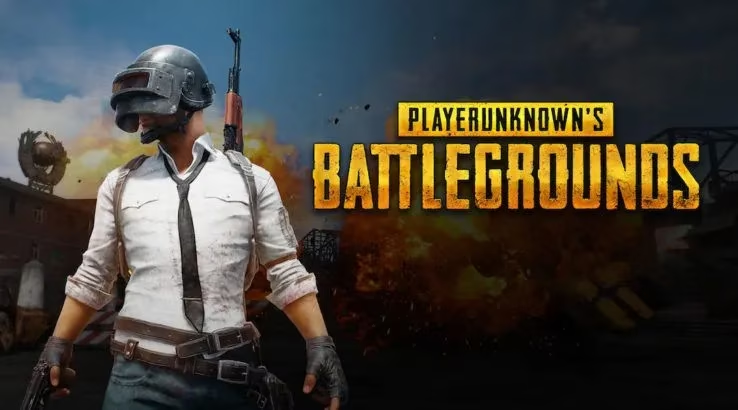
The logical progression toward higher player counts that Wilson hinted at materialized spectacularly. Battlefield's traditional 64-player battles eventually expanded to 128 players in later installments, creating unprecedented scale and chaos that felt like a natural evolution rather than a forced response to trends. This expansion wasn't just about numbers—it represented a fundamental rethinking of how large-scale warfare could be presented in video games. The increased player counts demanded new approaches to map design, spawn systems, and team coordination, challenges that the Battlefield teams addressed with their characteristic attention to technical innovation.
Interestingly, Wilson's reference to "multiple Battlefield teams" foreshadowed the diversification that would characterize the franchise's development in subsequent years. While DICE continued to work on mainline Battlefield titles, other studios explored different directions:
| Development Team | Primary Focus | Notable Contribution |
|---|---|---|
| DICE Stockholm | Main Series Titles | 128-player breakthrough, dynamic environments |
| DICE Los Angeles | Experimental Modes | Hazard Zone extraction mode |
| Ripple Effect Studios | Portal Content | Community creation tools |
| Industrial Toys | Mobile Adaptation | Touch-optimized controls |
This multi-studio approach allowed the Battlefield franchise to experiment with battle royale concepts without compromising the core identity of the main series. The rumored Battlefield: Bad Company 3 eventually materialized with its own unique take on large-scale combat, incorporating lessons from battle royale games while maintaining the series' signature humor and destruction mechanics. Other spinoffs explored different aspects of the modern shooter landscape, creating a diverse ecosystem of Battlefield experiences.
From our 2026 vantage point, we can see how Wilson's cautious approach to PUBG's influence proved wise. The battle royale genre eventually evolved beyond its initial format, with players seeking more varied experiences. Battlefield's decision to integrate rather than imitate allowed the series to:
-
Maintain Identity : Keep the series' focus on teamplay and large-scale warfare
-
Adapt Selectively : Incorporate tension and survival elements without full conversion
-
Innovate Continuously : Develop new modes that felt organic to the Battlefield experience
-
Future-Proof Design : Create systems that remained engaging as trends shifted
The October 2018 release that Wilson referenced represented just the beginning of this evolutionary process. Subsequent Battlefield titles built upon these foundations, creating games that acknowledged PUBG's impact while remaining distinctly Battlefield in their execution. The "core gameplay and map design" innovations Wilson mentioned manifested in increasingly dynamic environments, more meaningful player progression, and gameplay systems that rewarded both individual skill and team coordination.
As we reflect on this period of rapid evolution in shooter design, several key lessons emerge for game developers studying industry trends. The most successful adaptations occur when franchises:
-
Understand the underlying appeal of trending mechanics rather than just copying surface features
-
Filter innovations through their existing strengths and design philosophies
-
Maintain commitment to their core audience while attracting new players
-
Develop flexible systems that can evolve as player preferences change
Battlefield's journey through the battle royale era demonstrates how established franchises can navigate industry shifts without losing their identity. The series managed to acknowledge PUBG's revolutionary impact while continuing to deliver the large-scale, team-oriented warfare that defined its legacy. This balanced approach ensured that Battlefield remained relevant through multiple gaming generations and trend cycles, ultimately emerging stronger and more versatile for having thoughtfully engaged with the battle royale phenomenon rather than simply chasing it.
The gaming landscape continues to evolve in 2026, with new genres and play styles emerging regularly. However, the lessons from Battlefield's response to PUBG's success remain relevant: thoughtful adaptation, commitment to core identity, and innovation that serves gameplay rather than trends create experiences that endure beyond any single genre's popularity peak. As players, we benefit most when developers approach industry shifts with this balanced perspective, creating games that feel both contemporary and timeless in their design.
Data referenced from Esports Charts helps contextualize why battle royale’s spike after PUBG forced legacy shooters like Battlefield to rethink scale, pacing, and viewer-friendly clarity: when audiences flock to high-stakes survival formats, developers are incentivized to build larger maps, clearer engagement loops, and more readable endgame moments—pressures that Battlefield answered with higher player counts, mode experimentation, and systems designed to sustain both competitive play and casual spectacle.