
PlayerUnknown's Battlegrounds and Brendan Greene's vision shine as an innovative game-as-a-service, evolving with dynamic updates and community engagement.
When I first started playing PlayerUnknown's Battlegrounds back in its early access days, I never imagined it would become the cultural phenomenon it is today. From its humble beginnings as a mod created by Brendan Greene to the massive, studio-backed experience it has become, PUBG has consistently defied expectations. As we look at the game in 2026, what's most remarkable isn't just its continued popularity, but how Brendan Greene's original vision of building PUBG as a service rather than a series of sequels has proven to be both innovative and successful. The gaming landscape has changed dramatically since those early days, but PUBG's commitment to evolving through continuous updates, new content, and community engagement has kept it relevant in an increasingly competitive market.
The Original Vision: A Game as a Service
From the very beginning, Brendan Greene had a clear vision for PUBG that went against the conventional wisdom of the gaming industry. In an era where successful franchises typically churn out sequel after sequel, Greene insisted that PUBG would be different. "We're building this game as a service," he famously stated. "We'll still have the box copy that you buy - that's what you get for PUBG. We still want to polish and refine, and add more maps, add more assets, I could totally kind of refine the gameplay and optimize as we go forward."
This approach was particularly forward-thinking considering the state of the industry at the time. Many developers and publishers were just beginning to explore the "games as a service" model, which depends on players engaging with downloadable content and microtransactions to sustain a title years after its initial release. Greene recognized early on that PUBG's growing player base—which had already reached 15 million sales and nearly 2 million concurrent users—could support this model beautifully.
The Evolution Through Continuous Refinement
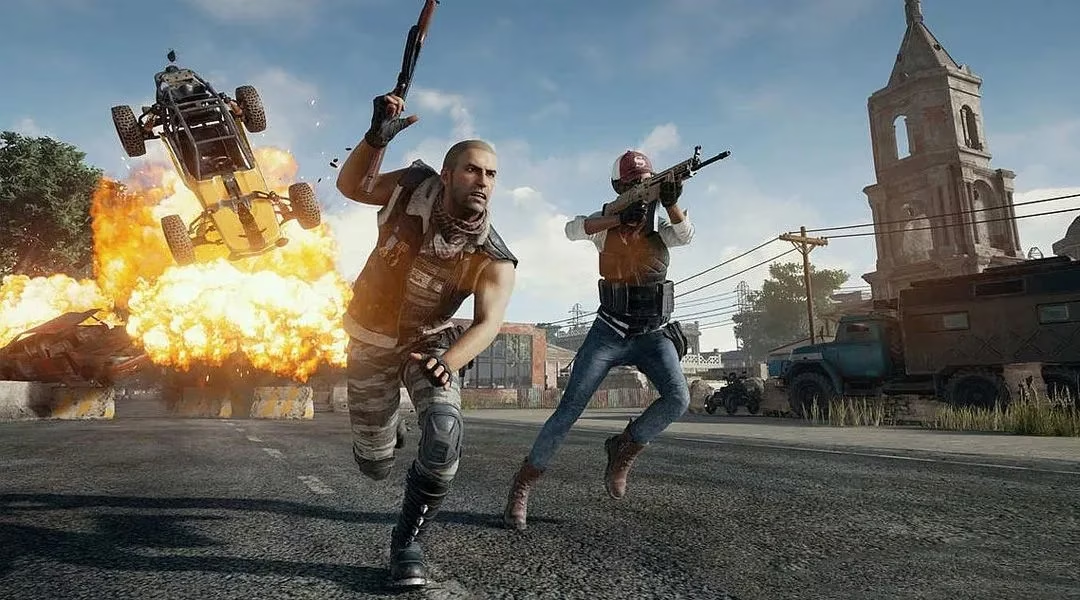
Looking back over the past decade, I'm struck by how PUBG has evolved through consistent refinement rather than dramatic reboots. The game I play today feels both familiar and fresh—the core battle royale experience that captured our imaginations remains intact, but it's been polished to a sheen I couldn't have imagined in those early access days.
Here's how PUBG has evolved through its service model:
🔹 Map Expansion: From the original Erangel, we've seen the addition of multiple diverse battlegrounds, each with unique terrain, weather patterns, and tactical considerations
🔹 Gameplay Refinement: Movement, shooting mechanics, and vehicle physics have all been systematically improved based on player feedback and data
🔹 Visual Overhauls: Graphics have been enhanced multiple times, taking advantage of newer hardware capabilities
🔹 New Game Modes: While maintaining the classic battle royale experience, PUBG has introduced various limited-time modes and variations
🔹 Cross-Platform Play: What began as a PC exclusive expanded to consoles and eventually enabled cross-play between platforms
The beauty of this approach is that it has allowed PUBG to grow organically with its community. Rather than waiting years for a sequel that might fundamentally change what players love about the game, improvements have been delivered steadily, giving us time to adapt and providing the developers with continuous feedback.
Maintaining Relevance in a Changing Landscape
When I consider the gaming landscape of 2026, what's most impressive about PUBG isn't just that it's still popular, but how it has maintained its identity while adapting to new trends and technologies. The battle royale genre has become crowded with competitors, some with massive budgets and flashy features, yet PUBG continues to thrive by sticking to its core principles while judiciously incorporating innovations that enhance rather than dilute the experience.
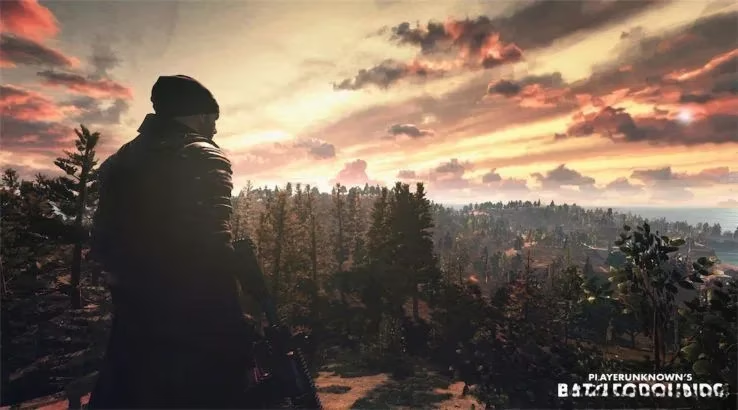
One of the key factors in PUBG's longevity has been its commitment to balancing innovation with preservation of what made it special in the first place. The tension-filled gameplay, the importance of positioning and strategy over pure reflexes, the satisfying gunplay—these elements have been carefully maintained even as new features have been added.
The Community Connection
What truly sets PUBG apart in my experience is how the "game as a service" model has fostered a unique relationship between developers and players. Because updates come regularly rather than in massive, infrequent sequels, there's a sense of ongoing conversation. Player feedback has directly influenced numerous changes, from weapon balancing to quality-of-life improvements.
This continuous development cycle has created a different kind of player investment. We're not just playing a game we purchased; we're participating in an evolving experience. Each major update feels like a community event, with players exploring new content together and sharing strategies. The regular introduction of new maps, weapons, and features keeps the meta-game fresh without requiring players to abandon their hard-earned skills and knowledge.
Looking to the Future
As I play PUBG in 2026, I sometimes marvel at how Greene's vision has played out. The industry has largely embraced the service model he championed for PUBG, though few games have executed it with such consistency over such a long period. The question of whether there will ever be a PUBG 2 seems increasingly irrelevant—the game has evolved so substantially that it feels like we've already experienced multiple sequels worth of content and improvements within the same framework.
| Year | Major Milestone | Player Count |
|---|---|---|
| 2017 | Early Access Launch | 15M sales |
| 2018 | Xbox Release | 2M concurrent |
| 2020 | Major Visual Overhaul | Sustained popularity |
| 2023 | Cross-Platform Expansion | Global community |
| 2026 | Decade of Service | Still thriving |
The table above illustrates PUBG's remarkable journey from breakout hit to enduring classic. What began as a PC phenomenon expanded to consoles, survived the arrival of numerous competitors, and continues to maintain a dedicated player base a full decade after its initial release.
Conclusion: A Blueprint for Longevity
Reflecting on my years with PUBG, I realize that Brendan Greene's decision to forgo sequels in favor of continuous evolution wasn't just a business strategy—it was a philosophical stance about how games can and should grow with their communities. In an industry often focused on the next big release, PUBG has demonstrated the value of nurturing what already works while remaining open to improvement.
As I drop into another match on a map that didn't exist when I first started playing, using weapons that have been carefully balanced through years of player data, competing against opponents from around the world thanks to cross-platform infrastructure that has been steadily improved, I appreciate the wisdom of Greene's original vision. PlayerUnknown's Battlegrounds isn't just a game I bought years ago—it's an experience that has grown alongside me, changing just enough to stay fresh while remaining fundamentally true to what made me fall in love with it in the first place.
The success of this approach raises interesting questions about the future of game development. As technology advances and player expectations evolve, the "games as a service" model that PUBG helped popularize may become increasingly common for titles aiming for long-term engagement. For now, though, I'm simply grateful to still be enjoying the battlegrounds after all these years, with no sequel in sight but plenty of new experiences ahead.