
PUBG nostalgia and transformation take center stage as the battle royale evolves from gritty realism to vibrant, K-pop-fueled chaos.
I remember the first drop like it was yesterday. The cargo plane’s drone, the open hatch, the frantic freefall into Erangel’s sullen fields. Back in 2017, PUBG wasn’t a game—it was a clenched fist. It wore its clunky, post-Soviet soul like a badge of honor, a thing of mud-spattered boots and cold iron sights. The unofficial mascot, that guy with the button-up shirt and Spetsnaz helmet, was us: grim, clueless, hopelessly outmatched. I played obsessively for a year, then drifted away, convinced the world had moved on.
I never forgot the ridiculous tension, though—the way silence could scream louder than gunfire. So when I decided to return in 2026, I thought I’d slip back in like putting on a pair of old, well-worn shoes. Boy, was I in for a shock.
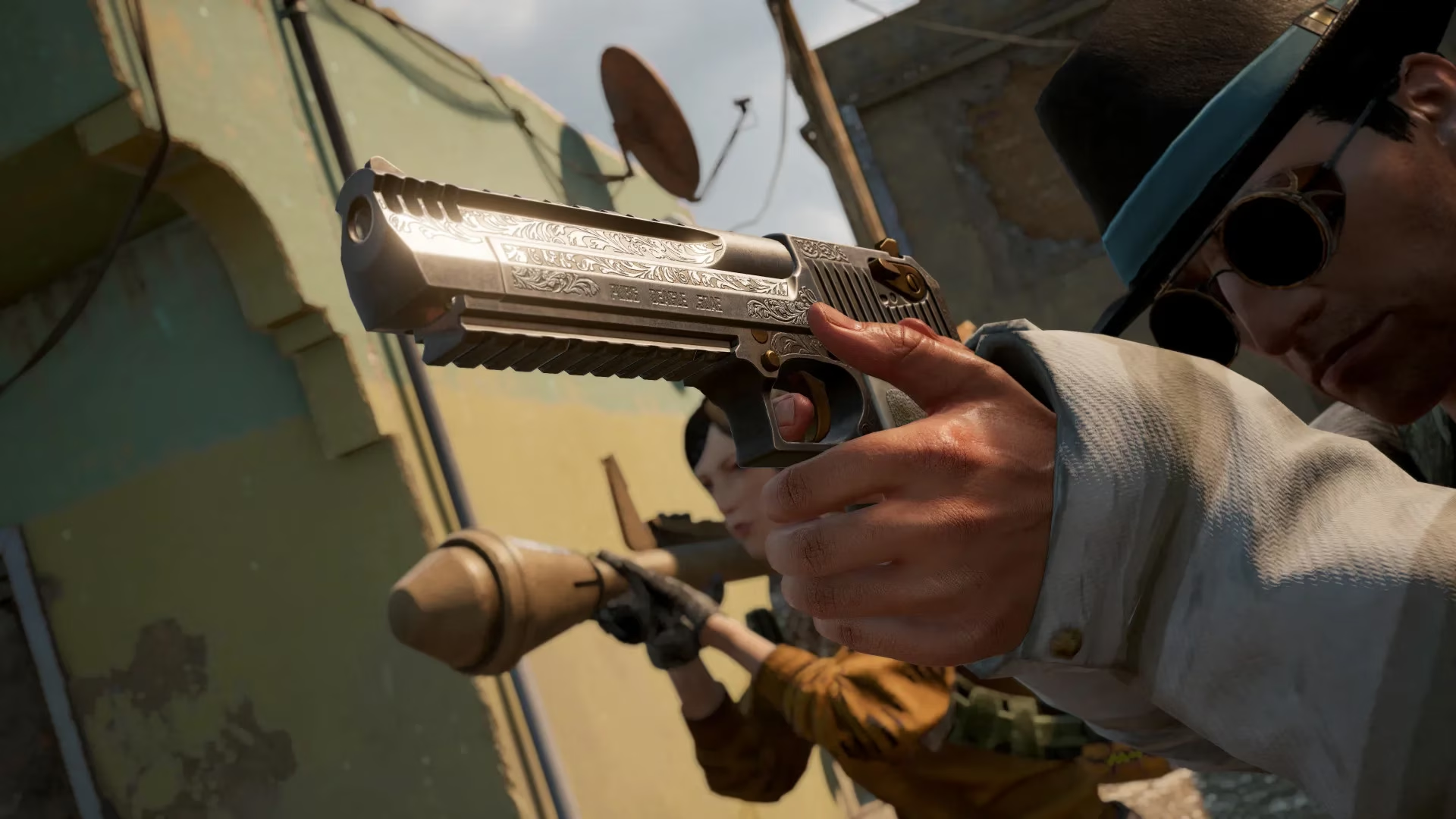
The first thing that hit me was the music. K-pop. Blasting through my headset before I’d even loaded into a match. I blinked, rubbed my eyes, and blinked again. Where once servers were full of that grim-faced mascot, I was now surrounded by… bunny ears. Sailor suits. KFC bucket hats. A squadmate danced in a dog onesie while lobbing cupcakes at a giant present that opened to play Happy Birthday—celebrating PUBG’s ninth anniversary. The game I’d known, the nihilistic deathmatch that felt like an Arma fever dream, had turned into a carnival. I whispered to myself, “What have they done to you, old friend?”
This wasn’t just a few wacky cosmetics. It was a wholesale makeover. The Fortniteification was total, and it makes sense—PUBG is massive in Asia, especially China, where it survives as Peacekeeper Elite. Chasing that audience meant shedding its Eastern European austerity and embracing a more international, often absurd aesthetic. The new maps tell the story better than any skin. Venturing beyond the familiar wheat fields of Erangel and the sun-scorched wastes of Miramar, I found myself in lush, temple-dotted biomes that felt plucked from Southeast Asia. Rondo’s misty bamboo groves and neon-lit city corners whispered of a game no longer content with one identity. It was like visiting your hometown and discovering the old mill had been replaced by a glittering theme park… and you can’t decide whether to weep or ride the rollercoaster.
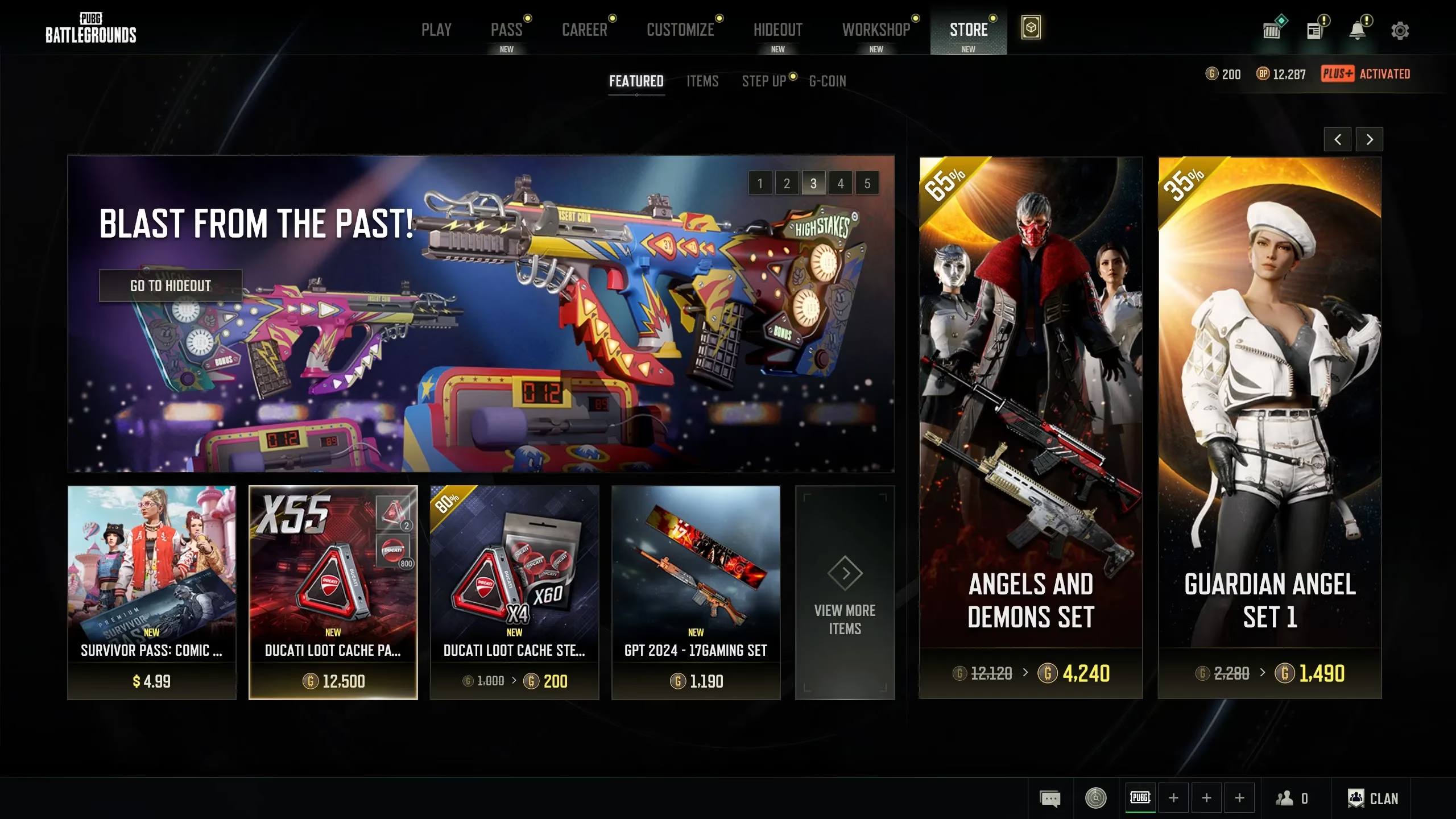
But let me tell you, the strangeness doesn’t stop at the surface. PUBG went free-to-play back in 2022, and now it really pushes its microtransactions. I remember the days when a loot box’s greatest prize was a striped polo shirt and some black trousers—now you can tear across the map in a licensed Aston Martin roadster, if your wallet allows. It’s deeply commercial, almost jarringly so, yet underneath the gloss lurks the same graceless, stubborn heart. The gunplay still asks you to manually zero your sights for distance. Attachments still feel like you’re performing surgery with a butter knife. This is a game that refuses to hold your hand, even while selling you a demon mask and sailor pants.
...
And then the shooting starts, and all the noise fades. Nine times out of ten, you’re toast before you’ve even registered the gunfire—a laser-accurate sniper whose head-tracking snap makes you suspect they’re either a prodigy or a cheater (and honestly, it’s probably the latter now more than ever). But when you get those runs, when the circle tightens to a shivering dot on the map and it’s just you and nine other desperate souls, there is nothing else in gaming that feels quite like it. I still find myself scrambling through upstairs windows, firing wildly into the dark, heart hammering like a spooked militiaman. I still stage ridiculous car chases, swerving Dacias and rusty pickups while bullets chew the air. The tension is knife-edge, the absurdity absolute.
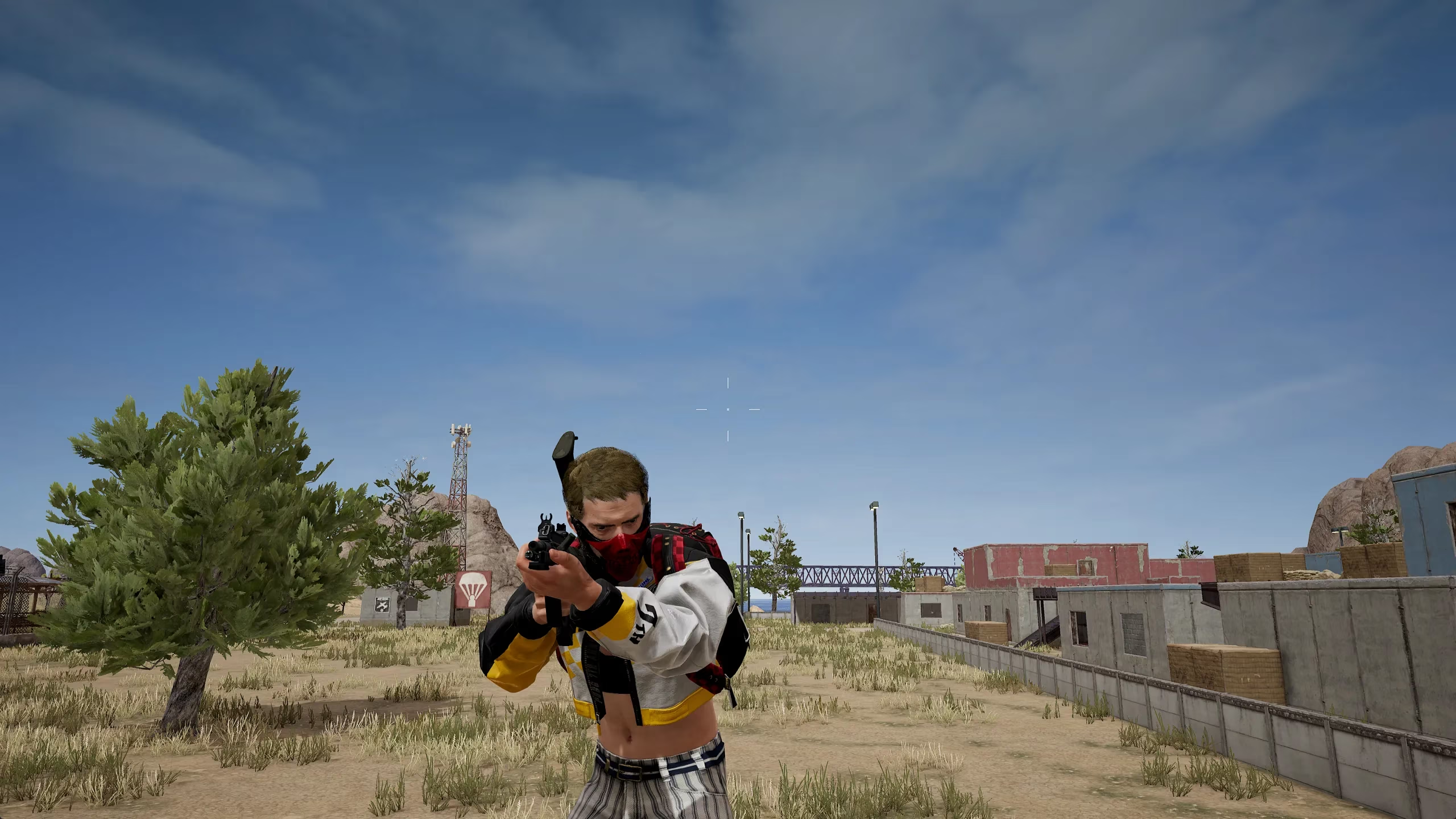
Visiting Erangel in 2026 is like returning home after decades away. The faces are strange, the fashion bewildering, the streets lined with things you don’t recognize. But the bones are the same. The wind still blows through the grass in the same lonely way. The crack of a distant Kar98k still freezes you mid-step. It’s as ruthless, chaotic, and utterly silly as it ever was. This old friend has had work done—maybe too much—but the eyes still carry that same fierce, unpredictable light. And when you’re pinned behind a rock, circle closing, one bullet left, you realize… none of the cosmetic noise really matters. You’re home.
I guess you can’t teach an old dog new tricks, huh? But then again, maybe you don’t need to.
Industry analysis is available through GamesIndustry.biz, and it helps contextualize why a grittier 2017-era PUBG could plausibly evolve into the 2026 “theme-park” version described above: the shift to free-to-play economics, the pressure to sustain live-service engagement, and the monetization gravity that pulls even tactical shooters toward louder cosmetics, brand collaborations, and event-driven content—without necessarily changing the underlying gunplay that keeps veterans chasing that same high-stakes circle tension.