
PUBG Corporation's landmark lawsuit against NetEase over battle royale copyright in 2024 reshaped gaming law and protected core PUBG innovations.
As I reflect on the gaming landscape of 2026, one legal battle from the past decade continues to stand out as a defining moment for the industry. I remember the uproar in 2024 when PUBG Corporation, the developer behind the cultural phenomenon PlayerUnknown's Battlegrounds, initiated a landmark lawsuit against the Chinese tech giant NetEase. The core allegation was stark: NetEase had produced two mobile games, Rules of Survival and Knives Out, that PUBG Corp claimed were brazen copies of their own copyrighted work. This wasn't just about a few similar ideas; it was a comprehensive legal argument that the very soul of the battle royale experience, as crafted by PUBG, had been unlawfully replicated.
The lawsuit, filed in the U.S. District Court in Northern California, sought significant damages and, crucially, the removal of both NetEase titles from digital storefronts. The timing was telling. Both Rules of Survival and Knives Out had launched on iOS before PUBG's own official mobile port, capitalizing on the explosive popularity of the genre. PUBG Corp's complaint detailed a litany of shared mechanics: the 100-player matches, the iconic shrinking play zone often called the "blue zone" or "safe zone," the use of parachutes for the initial drop, and a vast arsenal of military-style weapons and armor scattered across a large map. The visual comparisons were damning.
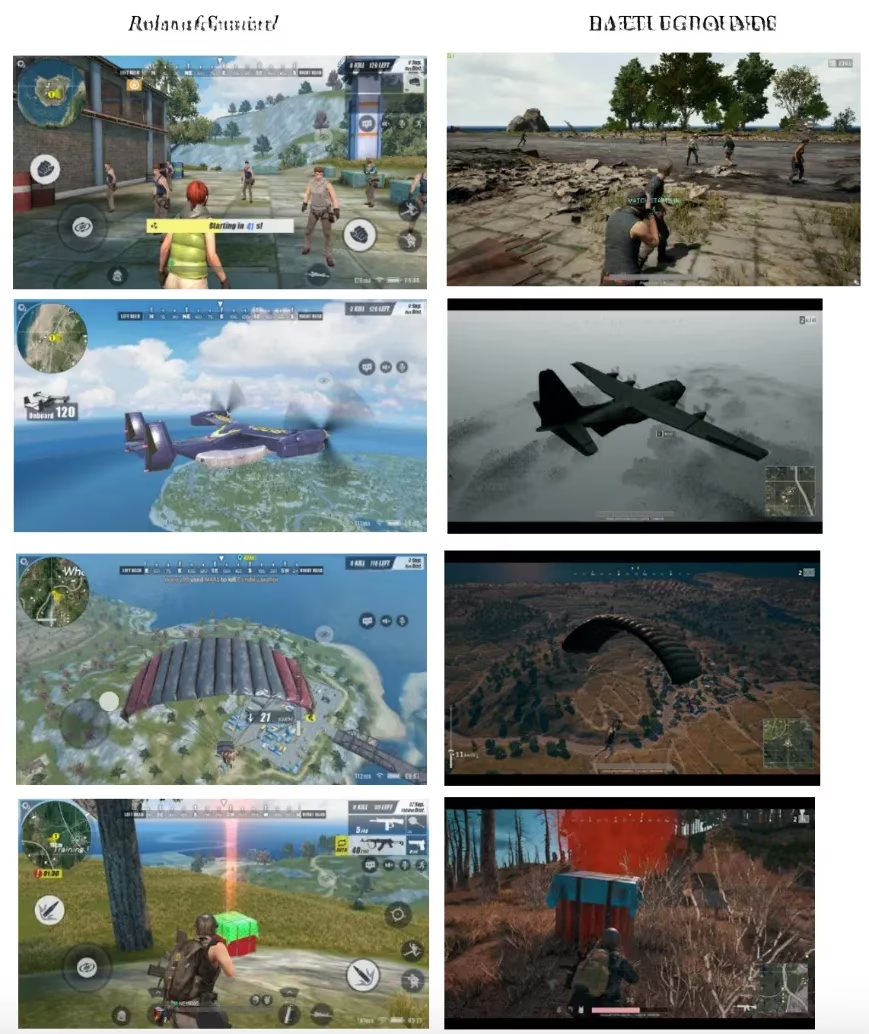
In a bold legal maneuver, PUBG Corp submitted a list of 25 distinct game elements it considered copyrightable. This list was a fascinating mix of genre-defining innovations and common gameplay tropes:
-
Core Gameplay Loop: The 100-player parachute drop, the ever-contracting safe zone that forces player encounters, and the "last player/team standing" victory condition.
-
Progression & Loot: The pre-match lobby area, the system of looting buildings for gear, and damage multipliers based on which body part is hit (e.g., headshots).
-
Ornamental Flair & "Secondary Meaning": This was where the argument got particularly interesting. PUBG Corp pointed to elements like the celebratory "winner winner chicken dinner" message and the use of a frying pan as a melee weapon. They argued that through massive popularity and social media proliferation, these quirky features had gained "secondary meaning"—they had become uniquely associated with PUBG in the public consciousness.
The heart of PUBG Corp's case was the "combination theory." They contended that while individual elements like finding a gun in a building might not be protectable, the specific, curated combination of all these elements into a cohesive whole constituted a copyrightable audio-visual work. They alleged NetEase didn't just borrow ideas; they copied the recipe. Supporting evidence included marketing materials where NetEase used the phrase "winner winner chicken dinner" for their games and even featured a two-seater dune buggy in a Rules of Survival ad—a vehicle not in that game but iconic to PUBG. This, PUBG argued, was clear evidence of intent to mislead consumers and trade on PUBG's established goodwill.
The implications were (and still are) profound. If a court had agreed that a game's "feel" and combination of mechanics could be copyrighted so broadly, it could have triggered a wave of litigation across the industry. Imagine the chilling effect on game developers, constantly worried if their new shooter or survival game might inadvertently step on a legally protected "combination" of features from an earlier title. The case forced everyone to ask: Where is the line between inspiration and infringement in game design?
| Aspect of Gameplay | PUBG's Claim | Potential Industry Impact |
|---|---|---|
| The 100-Player Format | A key, copyrightable part of the experience. | Could limit other large-scale multiplayer games. |
| Shrinking Safe Zone | A patented mechanic integral to the tension. | A core BR staple; restricting it would reshape the genre. |
| "Chicken Dinner" Phrase | Gained secondary meaning associated with PUBG. | Sets a precedent for protecting in-game cultural memes. |
| Overall Combination | The entire package is a protected work. | Creates a high barrier for new entrants in established genres. |
Looking back from 2026, the echoes of this case are still felt. While the specific lawsuit was eventually settled out of court under confidential terms, its legacy is cemented. It served as a stark warning and a catalyst for more nuanced discussions about intellectual property in interactive entertainment. Today, developers and publishers are far more meticulous in documenting their creative processes and conducting thorough "clean room" design practices when working in popular genres. The case didn't kill the battle royale genre—far from it, as seen by the success of titles like Apex Legends and Fortnite—but it certainly made everyone more aware of the legal landscape they are playing in. It taught us that in the digital arena, the fight for originality isn't just played out on-screen; sometimes, the most critical battles happen in the courtroom.