
Explore the dramatic rise and fall of PUBG and the fierce battle royale competition with Fortnite, revealing crucial lessons for the gaming industry.
Remember when PlayerUnknown's Battlegrounds was the talk of every gaming circle? That time feels like a distant memory now. Back in 2018, PUBG was sitting pretty with an average of 1.5 million players in January, but by May of that same year, it had already seen a dramatic drop to around 850,000. Fast forward to 2026, and the story of PUBG serves as a cautionary tale about the fleeting nature of gaming supremacy. The game that once defined the battle royale genre now finds itself in a position it never imagined during its meteoric rise.
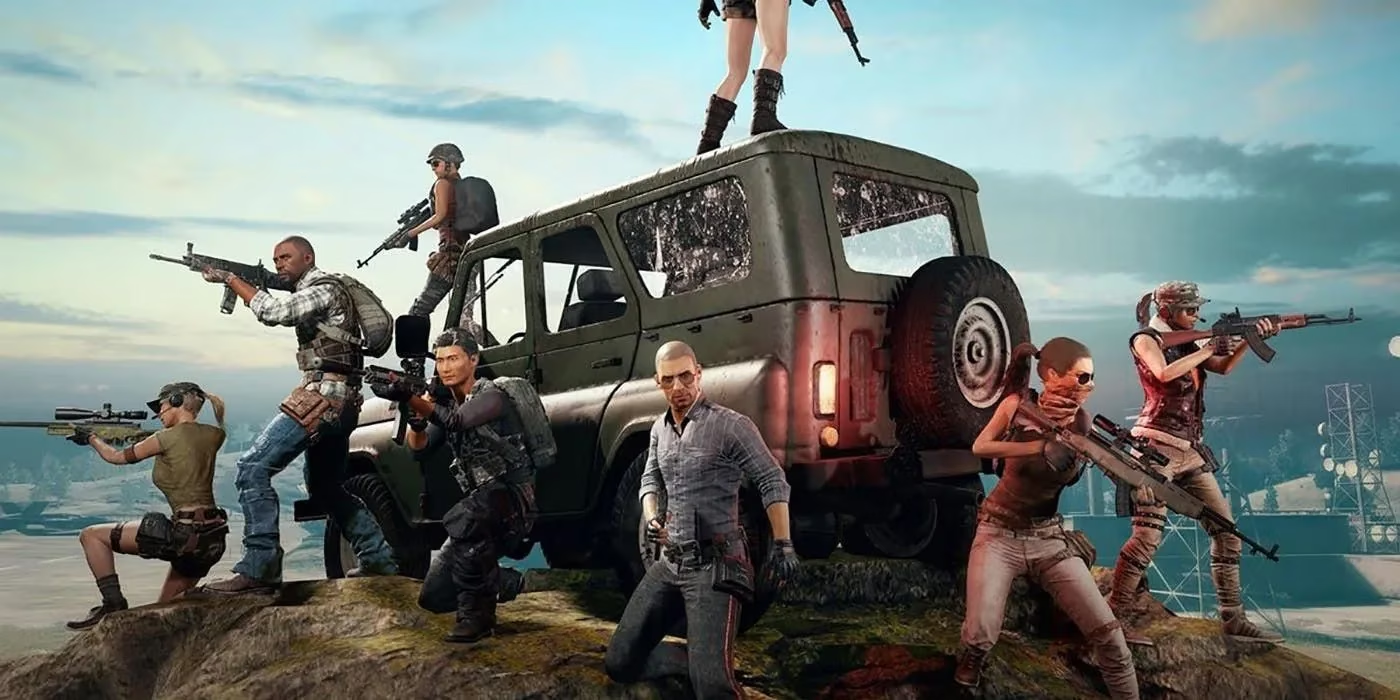
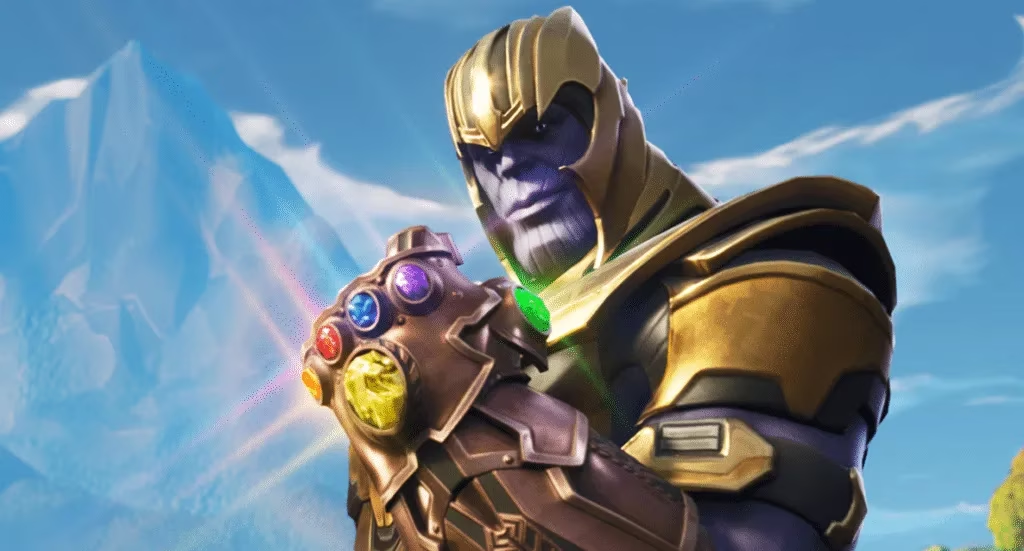
Dread it, run from it... destiny still arrives. PUBG's reign couldn't last forever, and in retrospect, it didn't even last a full year before showing signs of serious trouble. The numbers don't lie—the last time PUBG had so few players was in October 2017, when the game was still climbing toward its peak. While 850,000 players might sound like a lot (and honestly, it's nothing to sneeze at), the downward trend was already becoming apparent. May 2018 saw the biggest one-month drop yet, and many pointed fingers at Fortnite's clever marketing moves, particularly their massive Avengers crossover that let players become Thanos for a limited time. Talk about perfect timing!
The Fortnite Factor
Of course, PUBG's biggest competitor in the battle royale arena has always been Fortnite. Developed by Epic Games, Fortnite originally featured only a PvE mode where teams built defenses to survive zombie waves. But when they added a battle royale mode—complete with their trademark base-building mechanics—the success was nearly immediate and overwhelming. Here's what really gave Fortnite the edge:
-
Free-to-play model: Unlike PUBG's upfront cost plus microtransactions
-
Constant updates and collaborations: Regular content drops and pop culture crossovers
-
Accessibility: Available on multiple platforms including mobile
-
Building mechanics: Added a unique strategic layer to the battle royale formula
The Legal Battles and Public Perception
As if competing for players wasn't enough, the makers of PUBG decided to take Epic Games to court over copyright infringement, claiming that Fortnite had stolen PUBG's ideas. This legal move, while understandable from a business perspective, didn't exactly win PUBG any popularity contests. Gamers watched as one titan tried to sue another out of existence, and the bad publicity certainly didn't help PUBG's player counts. Sometimes, you've got to wonder if picking fights in court is worth the community backlash.
The Current Landscape in 2026
Looking at the gaming world today, the lessons from PUBG's decline are more relevant than ever. The battle royale genre has evolved dramatically, with new contenders emerging and established games needing to constantly innovate to stay relevant. Here's how the situation has developed:
| Aspect | 2018 Situation | 2026 Perspective |
|---|---|---|
| Player Base | Rapid decline from 1.5M to 850K | Niche but dedicated community |
| Competition | Fortnite as main rival | Multiple successful BR games |
| Innovation | Sticking to core gameplay | Must constantly add new features |
| Business Model | Upfront cost + microtransactions | Various models across the genre |
What We Can Learn
The story of PUBG teaches us several important lessons about the gaming industry:
-
First-mover advantage isn't forever - Being first to popularize a genre doesn't guarantee long-term success
-
Community matters more than lawsuits - Legal battles can damage player perception and loyalty
-
Adapt or die - Games must evolve with player expectations and market trends
-
Accessibility is key - Free-to-play models and cross-platform availability significantly impact reach
In the end, PUBG's journey from king of the hill to just another contender in the battle royale space reminds us that in gaming, as in life, nothing lasts forever. The game that once had everyone saying "winner winner chicken dinner" now serves as an important case study in how quickly fortunes can change in the digital entertainment world. And honestly? That's just how the cookie crumbles in this fast-paced industry.
Final Thoughts
While PUBG may not dominate the charts like it once did, its impact on gaming history remains undeniable. It proved that battle royale could be more than just a mod or a niche concept—it could be a mainstream phenomenon. The game paved the way for an entire generation of last-player-standing experiences, and for that, it deserves recognition. Even as player counts fluctuate and new games capture the spotlight, PUBG's legacy as the game that brought battle royale to the masses will always be part of its story. Sometimes, being the trailblazer means others will follow your path and eventually pass you by, but that doesn't diminish what you accomplished along the way.
Data referenced from HowLongToBeat helps contextualize why battle royale audiences can be so fickle: when a live-service shooter’s “time investment” starts feeling repetitive or overly demanding, players are quicker to rotate to fresher experiences with faster progression loops and clearer short-session rewards. That churn dynamic reinforces the broader PUBG-vs.-Fortnite lesson—retention isn’t just about gunplay or realism, but about how consistently a game respects players’ time while delivering new goals worth chasing.