
PUBG and China’s gaming ban reveal a dramatic clash of global gaming culture and domestic regulation, reshaping the battle-royale landscape forever.
PlayerUnknown's Battlegrounds, or PUBG as it's more commonly known, stands as a monumental pillar in the video game industry, a title that practically wrote the rulebook for the battle-royale genre. Its impact was nothing short of revolutionary, spawning countless imitators and becoming a cultural touchstone for a generation of gamers. However, its journey has been far from smooth sailing. As of 2026, the game's legacy is a complex tapestry woven with threads of unprecedented financial success, persistent controversy, and significant geopolitical hurdles, most notably its dramatic exit from the world's largest gaming market.
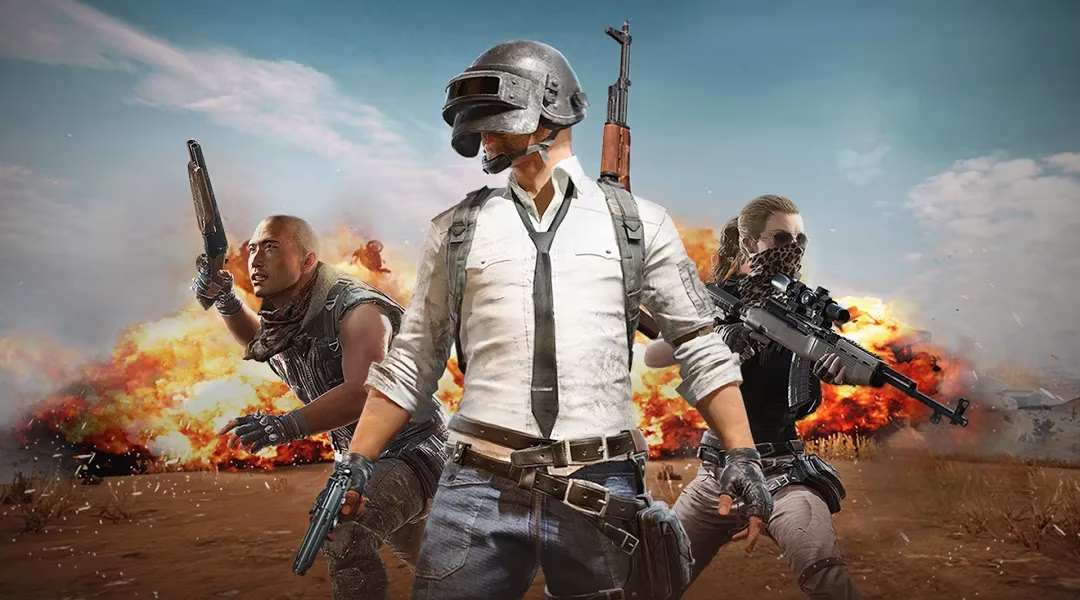
The story of PUBG in China is a classic case of a clash between global gaming culture and domestic regulatory frameworks. For years, the game enjoyed a massive player base in the region, with estimates suggesting a staggering 70 million dedicated fans. This was a goldmine waiting to be tapped by tech behemoth Tencent, which held the distribution rights. The potential revenue from in-app purchases alone was projected to be a mind-boggling $1.48 billion. Yet, this potential remained just that—potential. Tencent hit a regulatory brick wall, unable to secure the crucial government license required to monetize the game. This failure wasn't just a business setback; it was the beginning of the end for PUBG's Chinese operations.
The government's refusal to grant the license wasn't arbitrary. It was deeply rooted in a growing, and some would say intensifying, national stance against video games perceived as promoting violence or fostering addiction. PUBG, with its last-player-standing shooting mechanics, had become somewhat of a poster child for these concerns globally. Reports from other countries, like India where student groups controversially claimed PUBG addiction was "worse than drug addiction," only fueled the Chinese authorities' apprehensions. The writing was on the wall: a game celebrated elsewhere was becoming a liability at home.
Making matters more complicated was the geopolitical landscape. PUBG is licensed from Bluehole, a South Korean developer. Given the periodic tensions and hostilities between China and South Korea, the game's origins likely served as another nail in its coffin. In the high-stakes game of international relations and cultural influence, PUBG became an unfortunate casualty.
So, what happened to those 70 million players left in the lurch? Well, Tencent and the Chinese government had a solution ready to go, a classic case of "if you can't beat 'em, replace 'em." Players were systematically migrated to a new, government-approved title: Heping Jingying, translated as Game for Peace or Elite Force for Peace. On the surface, the gameplay was, for all intents and purposes, a carbon copy of PUBG. The core battle-royale loop remained intact. But the devil, as they say, is in the details—details meticulously scrubbed clean and repainted with a patriotic brush.
The key differences between PUBG and its Chinese successor were stark and deliberate:
-
Sanitized Violence: In Game for Peace, characters do not bleed when shot. Instead of collapsing in a heap, defeated players politely put down their gear, wave goodbye, and vanish. The visceral feedback of combat was replaced with a strangely courteous and non-violent spectacle.
-
Patriotic Narrative: The game is framed not as a chaotic fight for survival among strangers, but as a training exercise for anti-terrorism forces. The thematic focus shifted to protecting peace and serving the state, aligning perfectly with nationalistic sentiments.
-
Government Endorsement: With its altered themes and removed violent elements, the title sailed through the regulatory process, securing the monetization license that PUBG could not. It was a masterstroke by Tencent, salvaging a business model by completely rebranding the product.
This whole saga highlights a fascinating and growing trend in global tech: the "Sinicization" of popular media. It's not just about censorship; it's about active transformation to fit a specific ideological and cultural mold. Game for Peace is perhaps the most prominent example of a global hit being remade for Chinese sensibilities, proving that when a door closes, a window—with a very specific view—opens.
| Aspect | PUBG (Global) | Game for Peace (China) |
|---|---|---|
| Core Gameplay | Battle Royale | Battle Royale |
| Violence Depiction | Realistic blood & death animations | Sanitized; no blood, courteous exits |
| Theme | Survival competition | Patriotic anti-terrorism training |
| Regulatory Status | Banned/Unlicensed | Fully Licensed & Monetized |
| Developer | Bluehole (South Korea) | Tencent (China) |
Despite this major setback in China, proclaiming the end of PUBG would be premature, to say the least. The game continues to thrive globally, receiving consistent updates and maintaining a loyal player base on PlayStation, Xbox, PC, and mobile platforms. Its influence is indelible. However, in a poignant twist, the game's own creator, Brendan "PlayerUnknown" Greene, has publicly moved on. He's stated he's "done with the battle-royale genre" and has no interest in developing a sequel. His departure marks the end of an era, symbolizing a shift from the pioneering wild west of battle royale to a more mature, corporatized, and regionally fragmented landscape.
In the grand scheme of things, the story of PUBG is a rollercoaster ride of modern gaming. It's a tale of lightning-in-a-bottle innovation, of creating a genre phenomenon that took the world by storm. But it's also a cautionary tale about the limits of a global hit in a world of diverse and often rigid regulatory environments. The game's spirit lives on in two distinct forms: the original, unadulterated version for the rest of the world, and its patriotic, peace-promoting doppelgänger in China. As we look at the gaming landscape in 2026, PUBG's legacy is secure, but its history is a definitive reminder that in the gaming industry, no victory, no matter how big, is ever final. It's a constant grind, a never-ending battle against shifting trends, public perception, and the invisible hand of geopolitics. Game on, indeed. 🎮➡️🕊️