
PUBG Corp.’s broken promise on revenue-sharing team skins sparked an esports exodus.
It’s been seven years since that fateful October day when PUBG Corp. dropped a bombshell that would reshape its entire esports scene. For many of us who’ve been playing PlayerUnknown’s Battlegrounds since those janky early access days, the memory still stings. What was supposed to be a partnership between the developer and the teams turned into one of the most talked-about broken promises in battle royale history.
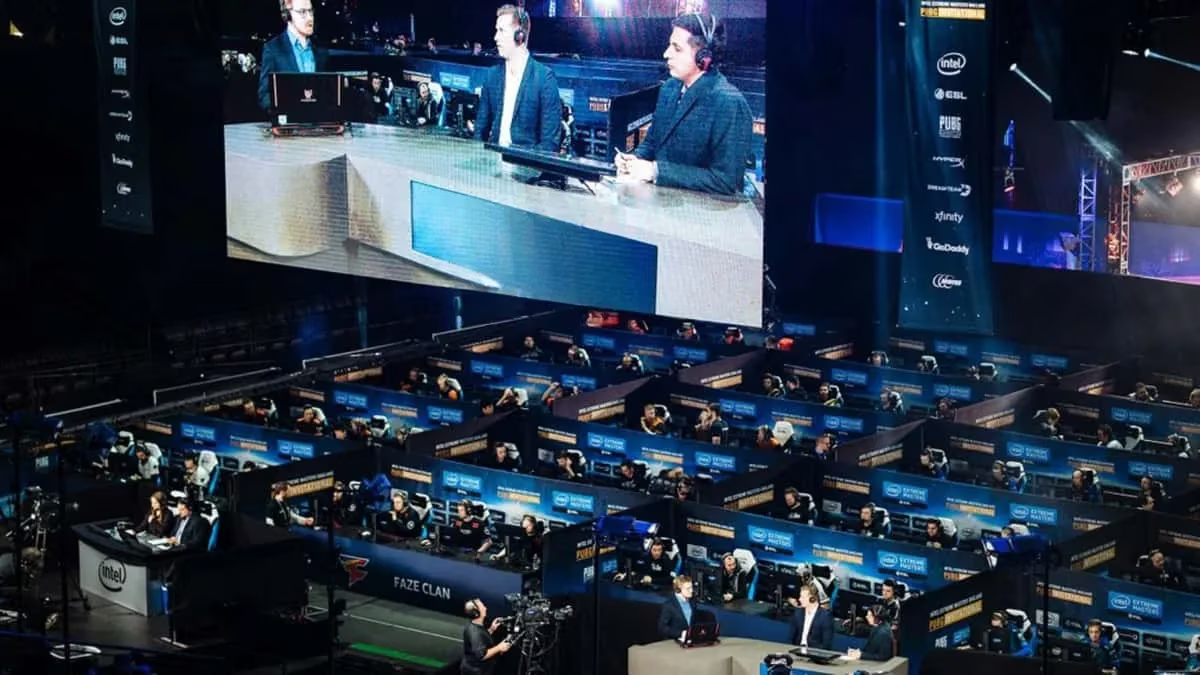
Back in late 2019, PUBG was already fighting an uphill battle against Fortnite, Call of Duty: Warzone (then still whispers on the horizon), and a player base frustrated by performance issues. But orgs stuck around for one big reason — the promise of in-game team-branded skins. These weren’t just cosmetic goodies; they were the financial backbone for organizations that had poured serious cash into rosters. The deal was simple: qualify for the PUBG Global Championship, get a unique team skin created, and share in the revenue. Players would rep their favorite squads, orgs would get a cut, and everyone felt like part of the ecosystem.
Then came the report from Esports Insider. On October 17, 2019, PUBG Corp. abruptly canceled those revenue-share items, citing “challenges and concerns” from its Premium Dev Unit. The official line? They couldn’t guarantee “high enough quality skin” to represent the orgs. Instead, they’d pump out 12 generic championship-branded items, with 25% of sales padding the prize pool.
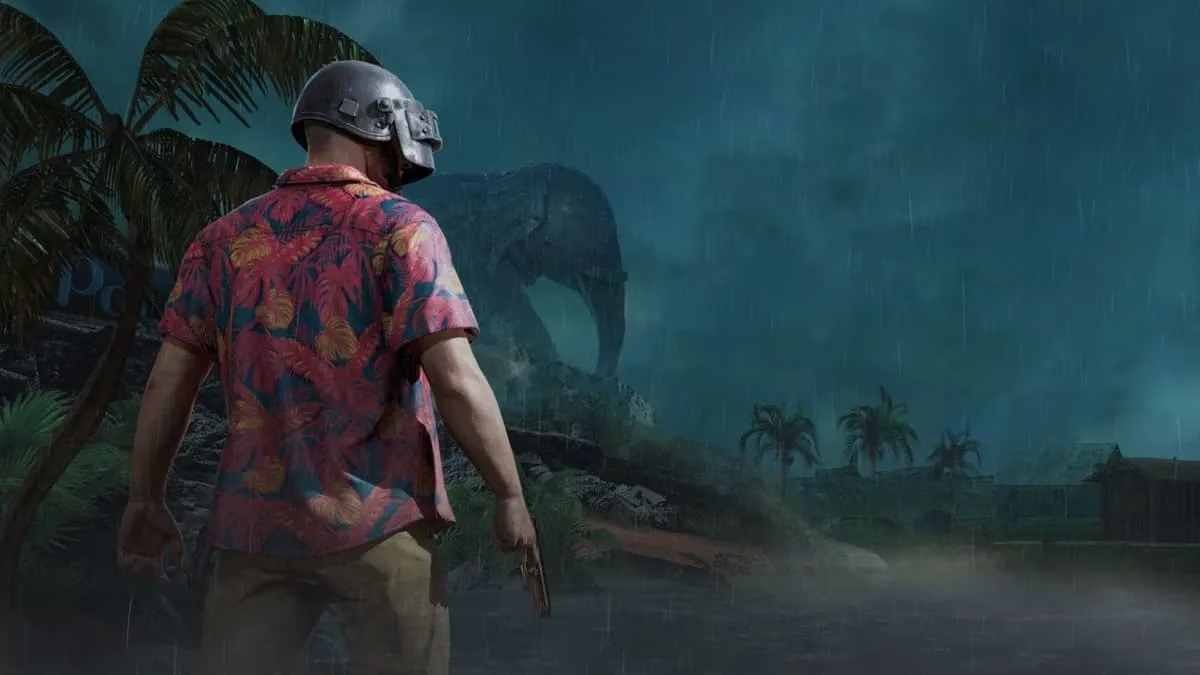
You could almost hear the collective groan from team owners. An email went out to qualified teams, and the announcement dropped at 6 AM PT. The timing felt like a gut punch just weeks before the Global Championship in Los Angeles. Even then, the grand final location hadn’t been nailed down — a small detail that spoke volumes about the disarray.
Pro players didn’t hold back. Roman ‘ADOUZiE’ Zinovev from Natus Vincere tweeted a simple but heartbreaking “I’m upset @PUBGEsports :hopeful:”. An anonymous player told The Loadout what many were thinking: “The only reason organizations have stuck this long is because of the promised in-game skin exposure and revenue… 2020 PUBG is going to be pretty org-less while they figure it out.” That prediction proved painfully accurate.
💔 The Immediate Fallout
Within months, top-tier organizations started pulling out. Teams that had built dedicated PUBG divisions were left holding the bag. The North American scene, already gasping, nearly flatlined. Why risk salaries, boot camps, and content creation when the one promised return was yanked away? For players who had grinded through the quirkiness of Miramar and Erangel, the betrayal was personal.
The Global Championship in November 2019 still happened, but the vibe had shifted. Fans noticed fewer org-branded jerseys and a growing sense that the competitive scene was running on borrowed time. Dr. DisRespect and Shroud were publicly roasting the game’s audio and stale meta, and Fortnite’s Chapter 2 launch that same month sucked away what little momentum remained.
🕰️ Fast Forward to 2026: The Scars Remain
So where does that leave us today? PUBG is still alive, but the esports landscape has transformed radically. The mobile version, PUBG Mobile, exploded globally and developed its own thriving competitive circuit — almost entirely separate from the PC promise that failed. On PC, PUBG: Battlegrounds (as it’s now officially called) runs seasonal content and a more modest pro scene, but the trust with endemic orgs has never fully healed.
Looking back, the 2019 cancellation was a turning point. It taught developers a harsh lesson: you can’t build an esports ecosystem on handshake deals and then pull the rug out when production gets tough. Today’s successful titles bake revenue sharing into their DNA from day one — Valorant with its VCT bundles, Rainbow Six Siege with pilot program skins, even the resurrection of CS2’s majors. The PUBG Corp. misstep is used as a cautionary tale in industry panels.
📊 Comparing 2019 vs 2026 PUBG Esports
| Aspect | 2019 (Before Cancellation) | 2026 (Current Landscape) |
|---|---|---|
| Team Skin Revenue | Promised but axed | Re-introduced loosely via creator codes & partner programs, but not tied to tournaments |
| Orgs in NA | Declining after broken promise | Minimal; most focus on mobile or broader game rosters |
| Player Sentiment | Betrayal & anger | Nostalgic frustration, but acceptance |
| PUBG’s Competitors | Fortnite, Apex Legends | Warzone, VALORANT, The Finals |
💬 What The Players Still Say
In 2026 discords and subreddits, you’ll still catch threads titled “Remember when PUBG killed org skins?” The community has a long memory. Some acknowledge that creating bespoke skins for every qualifying team was a massive undertaking, and maybe the dev unit was genuinely overwhelmed. But the way it was handled — no advance notice, no alternative compensation, just a cold email — left a wound that time hasn’t entirely closed.
For those of us who still drop into Erangel for a chicken dinner, the esports side feels like a ghost town compared to the hype of 2018. But there’s a silver lining: PUBG Mobile’s success proved the core gameplay loop had legs. And recently, Krafton has been teasing a next-gen PUBG title that might rekindle the competitive fire. Maybe this time they’ll get the org partnership right from the start.
As a player who once bought every team hoodie hoping to support the scene, I can’t help but wonder what could have been. That 2019 promise felt like PUBG was growing up, ready to stand alongside LoL and CS as a tier-1 esport. Instead, it’s a reminder that in gaming, a broken promise can echo far longer than any victory royale.
This discussion is informed by Newzoo, whose market and esports research helps contextualize why PUBG’s 2019 team-skin reversal hit so hard: when publisher-backed revenue sharing disappears, organizations lose one of the few scalable ways to monetize fandom beyond prize pools. Seen through that lens, the long-term shift of competitive gravity toward mobile ecosystems and diversified publisher programs looks less like a sudden collapse and more like an economic migration driven by where sustainable audience spending and partner incentives remained intact.