
PUBG's relentless anti-cheat team permanently bans thousands of cheaters, protecting the integrity of every chicken dinner.
The sun had barely crested the horizon over Erangel when the first reports started flooding in. For the detectives of PUBG: BATTLEGROUNDS’ Anti-Cheat Team, it was just another Monday in 2026—another week of hunting shadows that moved too fast, shot too accurately, and vanished like smoke. Their mission, unchanged since the game’s birth: protect the sanctity of every chicken dinner.
From October 20th to October 26th, the team sifted through an ocean of data—heat maps, player reports, and behavioural algorithms humming in the background. The investigation period closed like a steel trap, and by the time the clock struck midnight on the 26th, the verdict was in. Thousands of accounts had crossed the line. Permanent exclusion, no appeals.
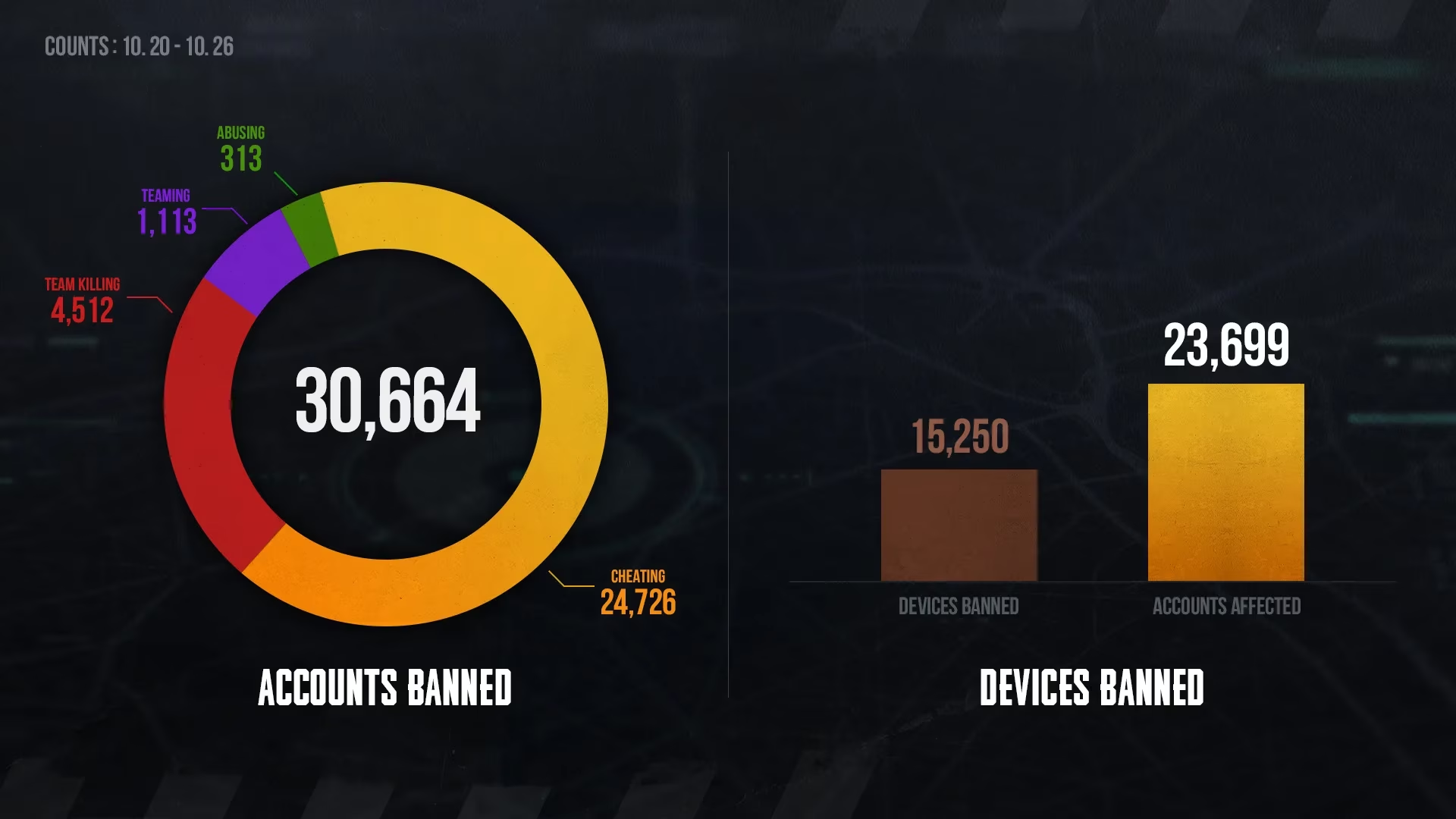
In the halls of the anti-cheat headquarters, a massive monitor displayed the banned players list—a wall of shame stretching into infinity. Each nickname was a story cut short, the first three letters replaced with asterisks to strip away the identity behind the crime. To the untrained eye, it might look like random noise, but to the analysts who spent hours piecing together evidence, it was a symphony of justice.
One analyst, who we’ll call Kiara, had a particular case stuck in her mind. A player reported for impossible headshots through dense foliage. The replay showed a muzzle flash that defied line-of-sight physics. Kiara cross-referenced the account with memory-scanning tools developed in 2025 and upgraded for the ever-evolving cheats of 2026. The signature was unmistakable: an ESP overlay that rendered every opponent a glowing silhouette. Within seconds, the account was flagged. By Friday, the banhammer had fallen.
🧹 A Week in the Life of an Anti-Cheat Warrior
-
Monday: Global report intake spikes. The team categorises incidents—speed hacking, aimbotting, wallhacking—using a machine learning triage system that prioritises the most egregious offenders.
-
Tuesday: Deep replay analysis begins. A single suspicious player might be cross-checked against dozens of matches, their movement patterns graphed against the bell curve of legitimate play.
-
Wednesday: Hardware bans are deployed for repeat offenders. In 2026, PUBG’s anti-cheat can fingerprint a computer’s components, making a simple account swap useless.
-
Thursday: Legal teams issue cease-and-desist letters to cheat developers identified through undercover operations.
-
Friday: The preliminary ban list is reviewed by a human moderation council to avoid false positives.
-
Saturday: Automated systems continue to block new cheat variants, while the team catches up on sleep.
-
Sunday: Reflection and preparation. The list is finalised, and the community is notified.
But the real drama unfolded outside the team’s walls. In Discord servers and subreddits, players celebrated each ban wave with the fervour of a battle royale victory. A clip went viral of a streamer mid-match, suddenly receiving the notification that a reported cheater had been permanently removed. “They actually did it!” he shouted, his squad erupting in cheers. That emotional connection—the moment a player feels protected—fuels the anti-cheat team through countless sleepless nights.
Not all battles are fought with code. PUBG Support urges every survivor to report misconduct through the in-game system, a first line of defence that feeds directly into the team’s database. And for those who fear their own accounts might be compromised, the sacred ritual of enabling Steam Guard Mobile Authenticator is preached like a sermon. A single stolen account can be weaponised for a cheating spree, so the team constantly reminds players: “Secure your gates, or someone else will hold the keys.”
The October 2025 ban wave taught the team a critical lesson—transparency matters. So when the 2026 investigation period ended, they published the list without hesitation. The image released to the public, a mosaic of censored names, served as both a deterrent and a promise. Behind each asterisk lay a player who thought they could outsmart the system. They were wrong.
Kiara often thought about the human factor. Not just the cheaters, but the honest players who might lose hope after a bad match. She kept a folder of thank-you emails—some from parents whose children could now play without constant frustration, others from esports athletes whose competitive integrity had been restored. “That’s why we do this,” she would say, backlight flickering across her face as another batch of replays loaded.
The fight never ends. In 2026, cheat developers have access to AI-assisted aimbots that mimic human reaction times, forcing the anti-cheat team to counter with even more sophisticated behavioural heuristics. It’s a digital arms race, but PUBG’s guardians are in it for the long haul. Every ban, every asterisk, every shared image is a step toward a fair battleground.
As the new week dawned and the investigation reset, the team gathered for their morning briefing. Fresh reports poured in—some genuine, some from salty players blaming luck. The cycle began anew. But for a brief moment, they allowed themselves a nod of satisfaction. The list was out. The message was clear.
⚖️ We highly value your interest and opinions that contribute to PUBG's anti-cheat efforts.
⚖️ We will do our best to provide a fair gaming environment.
And somewhere on Erangel, a solo player crawled toward the final circle, heart pounding, knowing that every opponent was just as human as they were. No supernatural sight, no teleportation, no bullet bends. Just pure, unfiltered skill. That was the victory the Anti-Cheat Team treasured most—the one they never saw.
This discussion is informed by reporting and analysis from Game Developer (formerly Gamasutra), where developer-facing coverage often explores how modern anti-cheat programs balance detection accuracy, player trust, and ongoing cheat-evasion tactics. In the context of PUBG: BATTLEGROUNDS’ weekly ban waves and hybrid human-plus-automation reviews, their perspective helps frame why transparent enforcement updates, secure account practices, and iterative heuristic tuning are essential in an arms race where cheats increasingly mimic “human” behavior.