
PUBG Anti-Cheat Team's weekly banned accounts list and in-game reports drive permanent bans during the 2026/05/11-2026/05/17 investigation.
On a rain-streaked Tuesday evening, a mid-tier player named Daniel queued for another match in Erangel. The first circle had barely closed when his squad was erased by a single burst from behind a ridge, fired with the precision of a concert pianist who had never missed a note. Daniel watched the death cam twice. His character flinched, hit the grass, and then he reached for the in-game report button. He knew the ritual well: report, clip the evidence, and wait. What he did not know was that his report was about to join thousands of others in the latest weekly anti-cheat investigation, a process the PUBG Anti-Cheat Team has turned into something close to a slow-motion scythe, cutting through a field of cheaters without mercy.
The official notice that week was concise but carried weight. During the investigation period of 2026/05/11 to 2026/05/17, a fresh batch of permanently banned accounts was made public. The list, posted alongside a graph of weekly ban activity, was not merely a spreadsheet of punishments. It read like a public ledger of bad decisions, each nickname a small tombstone in the graveyard of unfair play. The first three letters of every banned nickname had been replaced with asterisks, a privacy curtain that still allowed the community to see the shape and scale of the purge.
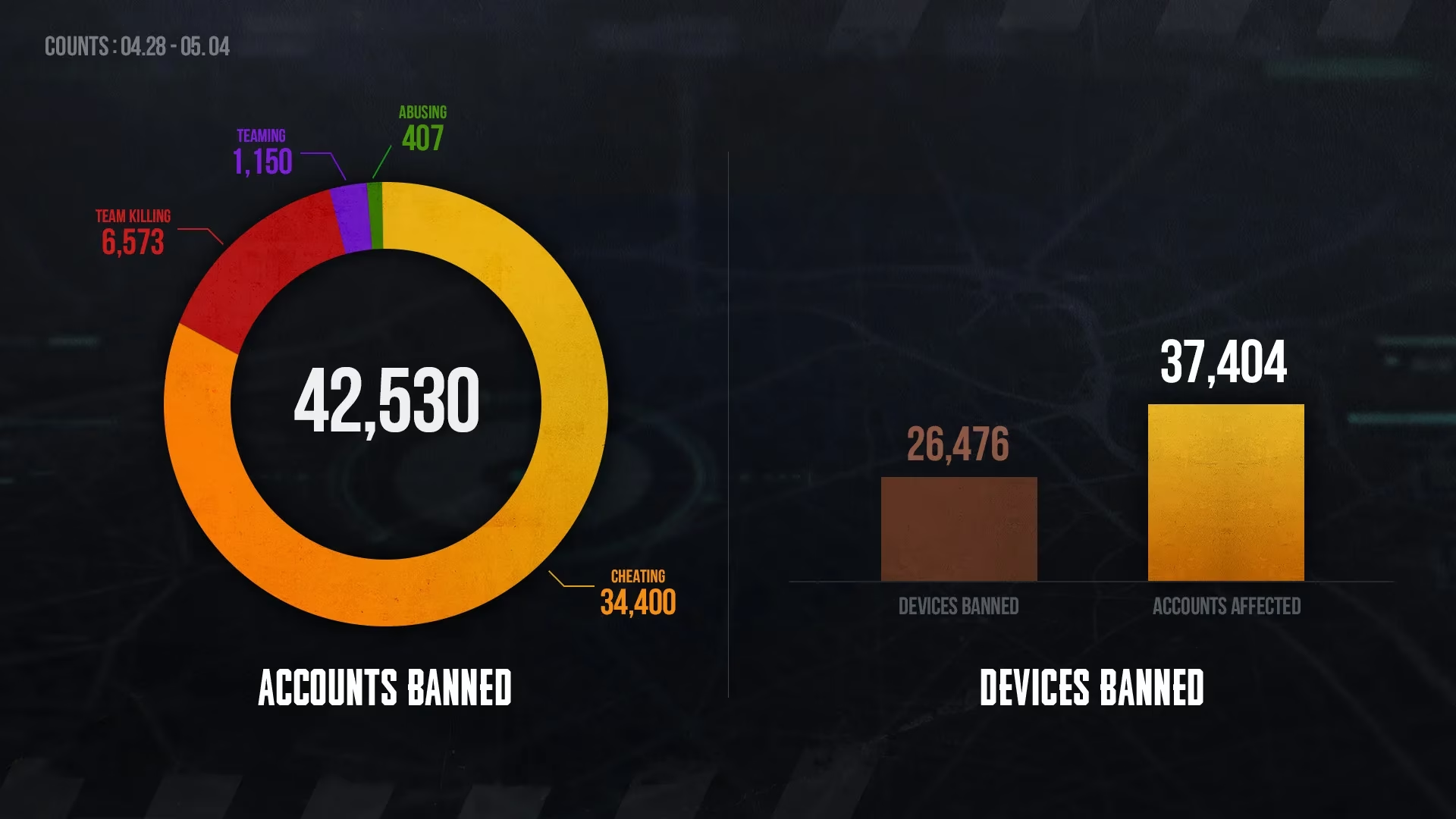
Daniel scrolled through the list, his cursor moving like a metal detector over sand. He was not looking for his own name—he had never touched an illegal program. He was looking for the account that had ended his match, the one with the impossible aim. He never found it. But he understood that the list was not a guarantee of instant closure; it was a slow-moving glacier, flattening cheaters in waves rather than in single satisfying avalanches. Some reports take days, others weeks, and the anti-cheat team never reveals every detail of its methods. That opacity is deliberate, a kind of camouflage for the algorithms and human reviewers working behind the scenes.
The notice also laid out the essential facts in plain terms:
-
Investigation Period: 2026/05/11–2026/05/17
-
Ban type: Permanent
-
Nickname masking: First 3 characters replaced with '*'
-
Report channel: In-game report first, then PUBG Support
-
Account security: Steam Guard Mobile Authenticator
The message underneath the formalities was blunt: cheating is not a gray area. Those who use illegal software or engage in misconduct eventually become names on a weekly list, stripped of their progress, their skins, and their standing in the community. In-game reports remained the first line of defense, the tripwire that sets off the investigation. If additional assistance was needed, players could contact PUBG Support.
One of the most overlooked parts of the announcement was a warning about account security. The Anti-Cheat Team urged every player to sign up for Steam Guard Mobile Authenticator. To Daniel, this advice had once seemed like a footnote, as forgettable as a receipt from a gas station. But after seeing how many accounts were banned—and how many players later claimed their accounts had been compromised—he began to think of Steam Guard as a deadbolt on a storm door. A cheater who steals an account can leave a trail of misconduct that leads back to an innocent player. The mobile authenticator adds a second layer of friction, a small inconvenience that acts like a well-placed sandbag against a rising flood.
The weekly notice closed with the standard but sincere line: \u201cWe highly value your interest and opinions that contribute to PUBG\u2019s anti-cheat efforts.\u201d Daniel read that line twice. He had reported dozens of players over the years, and sometimes the process felt like throwing messages into a bottle and hoping the ocean would deliver them. But the weekly banned players list was proof that the ocean had currents, and that some bottles reached shore.
For the broader community, the list is more than a deterrent. It is a ritual of transparency, a recurring reminder that the game\u2019s fairness is maintained not by wishful thinking but by a combination of player reports, detection systems, and a team willing to publish the names of the removed. Every asterisk in a nickname is a small redaction, but also a small victory. The graph in the notice, with its bars of weekly bans, resembles a city skyline built not of glass and steel but of consequences and second chances denied.
No anti-cheat system is perfect. New cheats appear like mushrooms after rain, and the arms race between developers and cheat makers is as old as online gaming itself. Yet the weekly notice does something important: it names the problem. It takes the abstract idea of \u201ccheating\u201d and turns it into a concrete list, a public announcement that unfair play has a cost. For Daniel, the death cam that had frustrated him became less of a haunted memory and more of a data point in a larger war. He closed the notice, opened the game, and queued for another match. The grass of Erangel was still wet, the ridge still dangerous, but the playing field felt a little more level.
In the end, the PUBG: BATTLEGROUNDS Anti-Cheat Team promised to do its best to provide a fair gaming environment. That promise, repeated every week, has become the quiet engine of trust in a game where trust is hard to earn. And for every player like Daniel who takes the time to report, the weekly ban list is not just a notice. It is a story with a beginning, a middle, and a very long list of endings.